



TACTICAL ANALYSIS: Tusker's masterclass that delivered first Mozzart Bet Cup in 10 years against Police







Reading Time: 6min | Mon. 15.06.26. | 20:04
Combined with an elite stubborn mid-block display and commanding goalkeeping performance in the final twenty minutes, Tusker proved that structural discipline and transitional execution remain the ultimate currencies in championship-winning football
Tusker FC secured a hard-fought 2-1 victory over Kenya Police in a captivating Mozzart Bet Cup final defined by tactical adjustments, clinical wing transitions, and high-stakes defensive resilience.
Download our MozzartSport App For More News
The showpiece event, thick with the prestige of domestic silverware and continental qualification implications, lived up to its billing as a chess match between two contrasting football philosophies.
Ian Simiyu emerged as the definitive match-winner, weaponising his acceleration and tactical awareness to secure a devastating first-half brace.
While Kenya Police dominated large patches of territory and asked deep questions of the Brewers' defensive structure, it was Tusker's efficiency in transition and superior game management that ultimately ruled the day.
Tusker lined up in a balanced, structurally disciplined 4-4-2 formation designed to optimise width and facilitate rapid vertical transitions.
Pavehl Ndzila anchored the team from goal, protected by a centre-back pairing of Thomas Teka and Charles Momanyi. Eugene Ikutwa started at right-back, while Servyl Akouala occupied the left-back slot, bearing significant crossing responsibilities.
The midfield engine room relied on the central partnership of Fabian Adikiny and Chrispine Erambo, flanked by Yakeen Mutheheli on the right wing and Stephen Etyang on the left.
Up front, Ian Simiyu and Erick Kapaito formed a highly dynamic dual-striker partnership, with one consistently dropping or drifting wide to exploit vacant channels while the other pinned the opposition's central defenders.

Kenya Police countered by deploying a flexible, attack-minded 4-2-3-1 reference structure under the guidance of head coach Nicholas Muyoti.
Daniel Ogembo started between the sticks, positioned behind a central defensive duo of Charles Ouma and Abud Omar, while Daniel Sakari and Hernest Malonga assumed the right and left-back roles, respectively.
Nana Kusi and Brian Musa formed the double-pivot base in midfield, looking to dictate the tempo and control central possession.
In the advanced attacking lines, Marvin Nabwire operated as the central attacking midfielder, flanked by Brian Otieno on the left wing and Zakayo Ngava on the right, all supporting lone centre-forward Yves Koutiama.
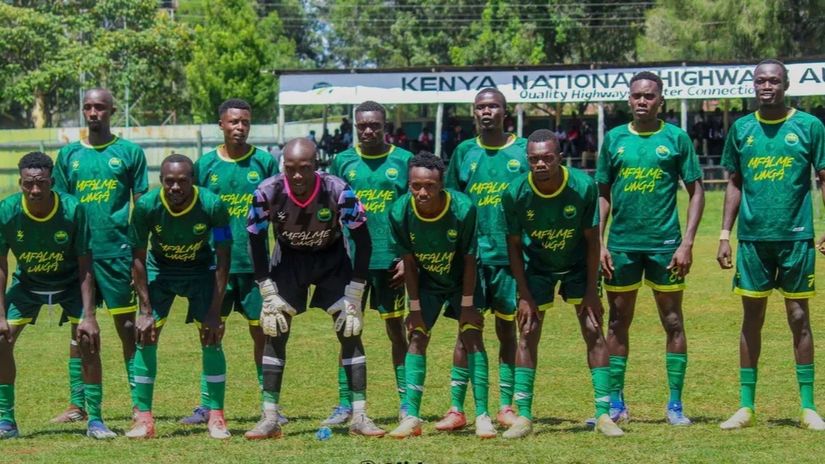
Out of possession, Kenya Police looked to compress space, but their primary tactical identity in this match manifested through their highly aggressive attacking mechanism.
They focused heavily on overloading the left flank to unbalance Tusker's defensive lines. Left-back Hernest Malonga marauded forward relentlessly, overlapping past winger Zakayo Ngava, who frequently rotated or interchanged positions.
To sustain this asymmetric threat, central attacking midfielder Marvin Nabwire consistently drifted into the wide left channels, combining with Ngava and Malonga to create a potent 3v2 numerical advantage against Tusker’s right-back Eugene Ikutwa and the right winger.
This structural choice had a clear effect on the pitch. By aggressively flooding the left side, Kenya Police forced Tusker’s right winger, Yakeen Mutheheli, to drop deep into his own half, pinning him into heavy defensive duties to support his isolated fullback.
When possession was established, Police looked to work the ball through these tight wide triangles, testing Tusker's lateral shifting, or used centre-back Abud Omar to launch sweeping diagonal switches to the isolated right flank as an alternative method to breach the Brewers' low block.
In the initial phases of the match, Tusker utilised a highly calculated deep build-up template designed to manipulate the opposition's defensive lines. They frequently engaged goalkeeper Pavehl Ndzila as an extra outfielder, creating an artificial numerical superiority deep inside their own box.
This 4-2/5-2 passing structure was explicitly designed to bait Kenya Police into executing a high press.
Once the Police midfield stepped up to press the short passing options, Tusker would bypass the pressure entirely by going direct, playing long balls into the wide channels for their drifting strikers and rapid wingers to contest the second balls.
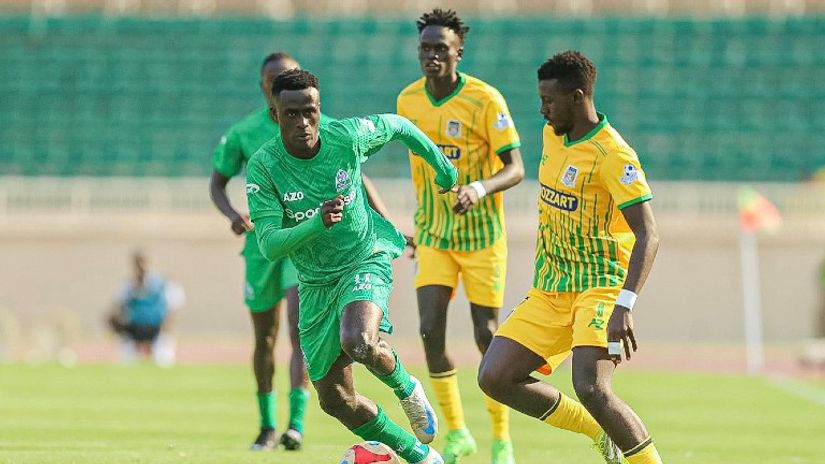
Kenya Police, however, found early joy by forcing high-value turnovers against this low build-up scheme, generating a shot on target from Yves Koutiama just one minute into the game.
This vulnerability forced Tusker into a crucial game-state adjustment. As the match progressed, and especially into the second half, the Brewers completely abandoned their risky short-passing sequences at the back.
Ndzila shifted exclusively to a direct long-ball approach, eliminating the threat of central turnovers and shifting the tactical battleground into the middle and attacking thirds of the pitch.
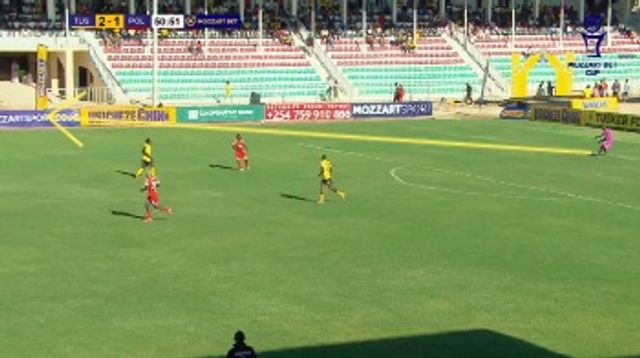
Tusker’s entire attacking blueprint relied on rapid, vertical transitions targeted primarily through the wide right areas the moment they won back possession.
Because Kenya Police pushed their fullbacks high to sustain their possession overloads, they regularly left their central defenders exposed to isolated, large-space duels. This structural vulnerability directly led to both of Tusker's goals, serving as perfect case studies for their transition efficiency.
The opening goal in the 24th minute materialised when Fabian Adikiny aggressively pressed and won the ball back in the middle third from a dallying Police midfield.
He immediately fed Ian Simiyu, who utilised his movement to find space on the left side of the box, flashing a clinical, tight-angle strike past Ogembo.
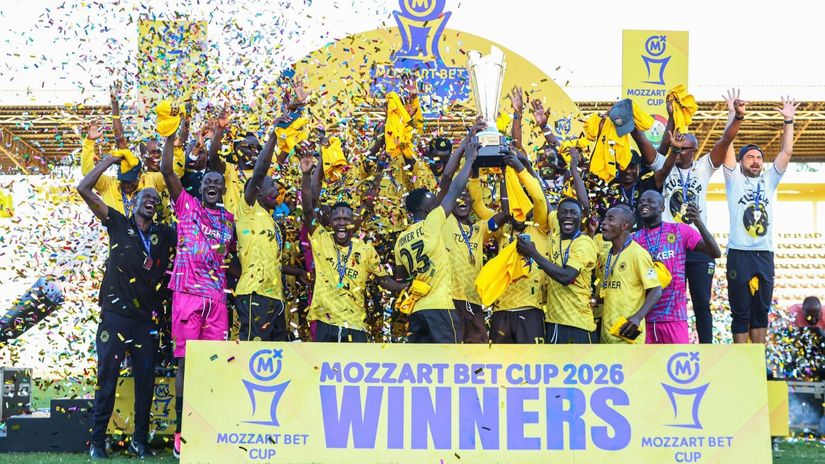
Although Kenya Police equalised just four minutes later in the 28th minute - courtesy of a magnificent Abud Omar free-kick after Eugene Ikutwa fouled Koutiama outside the box - Tusker’s transitional blueprint struck again in the 36th minute.
A defense-splitting through-pass from deep on the left side from Yakeen Mutheheli released Simiyu; the forward showcased incredible acceleration to blast past the recovery run of the Police right-back, calmly slotting the ball through the legs of the oncoming goalkeeper to make it 2-1.
The tactical battle shifted dramatically in the second half as both managers adjusted their out-of-possession structures.
Kenya Police, chasing the equaliser, opted for an immediate double substitution at halftime, introducing Samuel Quansah and Ambrose Sifuna in place of Brian Otieno and Brian Musa to inject energy into their midfield rotations.
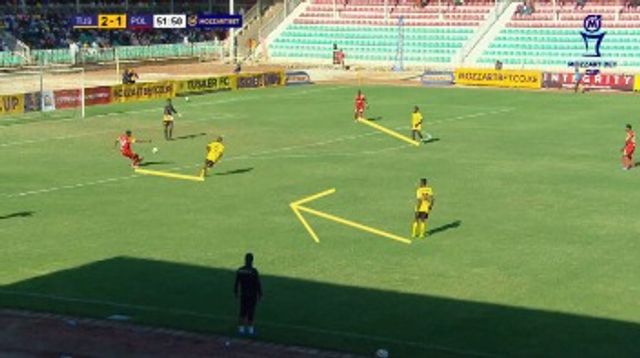
In response, Tusker completely reorganised their defensive phase, transitioning from their conservative mid-block into a highly aggressive, man-oriented high press.
Tusker structured their pressing triggers around lateral passes. Whenever Kenya Police circulated the ball sideways across their backline or out to the fullbacks, Tusker’s advanced lines would lock onto their direct opponents.

This intense, man-to-man pressure cut off short progression lanes, neutralising the Police’s ability to build through Quansah and Nana Kusi.
By disrupting their short-passing rhythm, Tusker successfully forced Kenya Police into hitting hopeful, long direct balls into wide areas, where Tusker's backline was structurally prepared to win the aerial duels and claim the second balls.
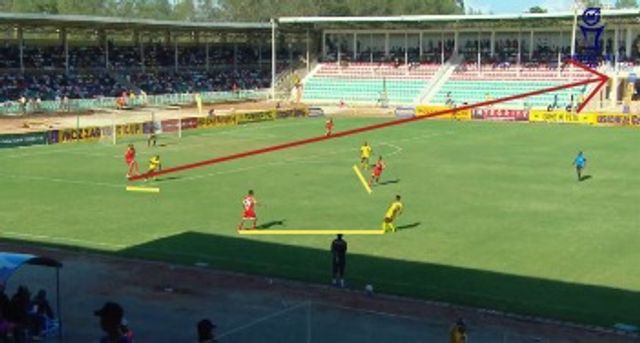
As the clock ticked down, the match transformed into a classic test of defensive resilience against a desperate attacking siege. In the 68th minute, Kenya Police made a drastic tactical adjustment, withdrawing winger Zakayo Ngava for Clinton Kinanga and shifting from their 4-2-3-1 baseline into a direct, two-striker system.
Their strategy pivoted entirely to utilising great switches of play via diagonal balls, unlocking space out wide to deliver a barrage of crosses into the box targeting the aerial profile of Kinanga.
Daniel Sakari nearly forced an equaliser in the 65th minute with a ferocious long-range strike from outside the box, but Ndzila produced a spectacular save to preserve the lead.
Sensing the shift in momentum, Tusker head coach Julien Mette withdrew Yakeen Mutheheli in the 74th minute to introduce Thomas Omole, signalling a complete transition into game management mode. The Brewers dropped into a compact, defensive block, prioritising absolute protection of the penalty area.

Tusker excelled in their deep defensive phase; the centre-backs executed flawless box defending by tracking runners and blocking cutbacks, while goalkeeper Pavehl Ndzila dominated his six-yard box, confidently coming off his line to claim crosses and diffuse high-pressure aerial situations.
Despite intense probing from Kenya Police during the seven minutes of agonising stoppage time, Tusker's defensive wall remained unbroken.
Tusker’s victory was a triumph of systematic adaptability. By identifying the fragility of their own deep build-up early on, switching to a direct long-ball approach, and implementing a suffocating press in the second half, the Brewers completely neutralised Kenya Police’s midfield adjustments.
.