

From Origi to Mabil: Four players with Kenyan roots who made FIFA World Cup history
.jpg)
.jpg)
Reading Time: 7min | Thu. 25.06.26. | 08:18
Origi arrived at the 2014 FIFA World Cup in Brazil as a promising but relatively unknown teenager. By the end of the tournament, the football world knew his name.
As the 2026 FIFA World Cup captivates audiences across the United States, Mexico and Canada, it has also reignited conversations about Kenya's unique connection to football's biggest spectacle.
While Harambee Stars are still pursuing a historic first appearance at the global showpiece, Kenya's presence at the World Cup has not been entirely absent.
Over the years, a select group of footballers with Kenyan roots have featured at the tournament while representing other nations, carrying with them stories of migration, identity, resilience and global success.
Their journeys span continents and cultures, illustrating how Kenyan heritage has quietly but significantly found its place on football's grandest stage.
From Belgium and Sweden to Australia and Austria, these four players have ensured that Kenya's footprint can be found in the history of the FIFA World Cup.
Divock Origi: The Kenyan-Belgian who announced himself to the World
Few footballers of Kenyan heritage have enjoyed a career as celebrated as Divock Origi.
Born in Ostend, Belgium, to former Harambee Stars striker Mike Okoth Origi, Divock inherited footballing talent from a family deeply rooted in Kenyan football.
Though eligible to represent Kenya, he chose to play for Belgium, a decision that would ultimately see him become one of the most recognisable footballers with Kenyan roots on the international stage.
Origi arrived at the 2014 FIFA World Cup in Brazil as a promising but relatively unknown teenager. By the end of the tournament, the football world knew his name.
At just 19 years old, he scored Belgium's decisive winner against Russia in the group stage, becoming Belgium's youngest-ever World Cup goalscorer.
The strike not only secured qualification for the knockout rounds but also marked his arrival on the global stage.
His performances helped Belgium reach the quarter-finals before their journey was ended by Argentina, but Origi's breakthrough had already captured the imagination of football fans around the world.
Despite forging his international career with the Red Devils, his Kenyan heritage has remained an integral part of his identity.
His father Mike remains one of Kenya's most respected football figures, having represented Harambee Stars and played professionally in Europe.
Origi would later elevate his status even further through a memorable club career with Liverpool.
He became a cult hero at Anfield, producing decisive goals in some of the club's greatest modern moments, including their remarkable UEFA Champions League triumph in 2019.
From a teenager making headlines in Brazil to a Champions League winner in Europe, Origi remains arguably the most accomplished footballer of Kenyan descent to feature at the World Cup.
Martin Olsson: Sweden's Kenyan connection and a family link to NBA royalty
Four years after Origi's breakthrough in Brazil, another footballer with Kenyan roots stepped onto football's biggest stage.
Martin Olsson represented Sweden at the 2018 FIFA World Cup in Russia, becoming another player of Kenyan heritage to leave his mark on the tournament.
Born to a Swedish father and a Kenyan mother, Olsson had already established himself as a dependable defender in European football before arriving in Russia.
Operating primarily at left-back, he played in all five of Sweden's matches as they enjoyed an impressive run to the quarter-finals, where they eventually fell to England.
Yet Olsson's World Cup story extended beyond football.
His family connection to NBA icon Dirk Nowitzki generated widespread international interest during the tournament. Nowitzki is married to Martin's sister, Jessica Olsson, making the Swedish defender the basketball legend's brother-in-law.
The relationship became a fascinating subplot at the 2018 World Cup when Sweden and Germany found themselves drawn into the same group.
With Olsson representing Sweden and Nowitzki passionately supporting Germany, the competition sparked a light-hearted family rivalry that attracted global media attention.
Another intriguing aspect of Martin's journey is his connection to his twin brother, Marcus Olsson. Like Martin, Marcus represented Sweden internationally and enjoyed a successful professional career.
However, despite their remarkably similar footballing paths, Marcus never featured at a FIFA World Cup.
That distinction belongs solely to Martin, making him the only member of the twins to experience football's ultimate stage.
Awer Mabil: From Kakuma refugee camp to the World Cup
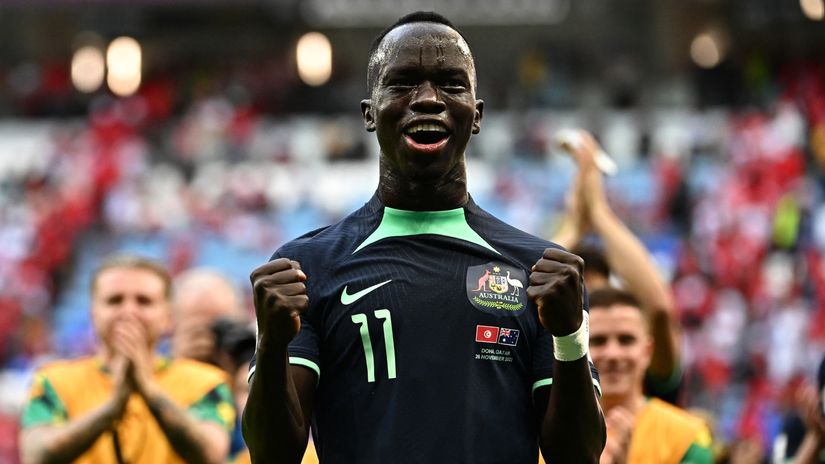
Among all footballers connected to Kenya who have appeared at the World Cup, few stories are as powerful and inspiring as that of Awer Mabil.
Born in Kakuma Refugee Camp in northwestern Kenya to South Sudanese parents fleeing civil war, Mabil's journey is one of extraordinary resilience and determination.
His family eventually resettled in Australia through a humanitarian programme, where football became both an escape and an opportunity. What followed was a remarkable rise from refugee camp beginnings to the pinnacle of world football.
Mabil fulfilled that dream when he represented Australia at the 2022 FIFA World Cup in Qatar.
As part of the Socceroos squad, he helped Australia reach the Round of 16 before they were narrowly eliminated by eventual champions Argentina. His appearance carried significance far beyond football, serving as a symbol of hope for refugees and displaced communities around the world.
Four years later, Mabil has returned to the World Cup stage as part of Australia's squad for the 2026 tournament, achieving another historic milestone in the process.
By featuring at a second FIFA World Cup, he has become the first footballer born in Kenya to appear in multiple editions of the tournament.
Throughout his career, Mabil has spoken passionately about diversity, inclusion and the opportunities afforded to him through Australia's multicultural society.
"Australia is one of the most multicultural countries in the world, and in my view, that is what makes it one of the greatest places on earth," he once reflected.
His life story continues to resonate far beyond football. From the dusty surroundings of Kakuma to packed World Cup stadiums watched by millions across the globe, Mabil's journey stands as a testament to the transformative power of sport.
His message remains simple but profound:
"Never stop believing in what is possible. Your circumstances do not define your future."
Phillipp Mwene: Austria's Kenyan representative
The newest member of this exclusive group is Austrian international Phillipp Mwene.
Born in Vienna to a Kenyan father and Austrian mother, Mwene has steadily built a reputation as one of Austria's most reliable and versatile defenders.
Capable of operating as a full-back, wing-back or wide midfielder, he earned his first senior international call-up in 2021 and gradually established himself as a valuable member of Austria's national team setup.
His inclusion in Austria's squad for the 2026 FIFA World Cup represents another important chapter in the growing story of Kenyan heritage at football's biggest tournament.
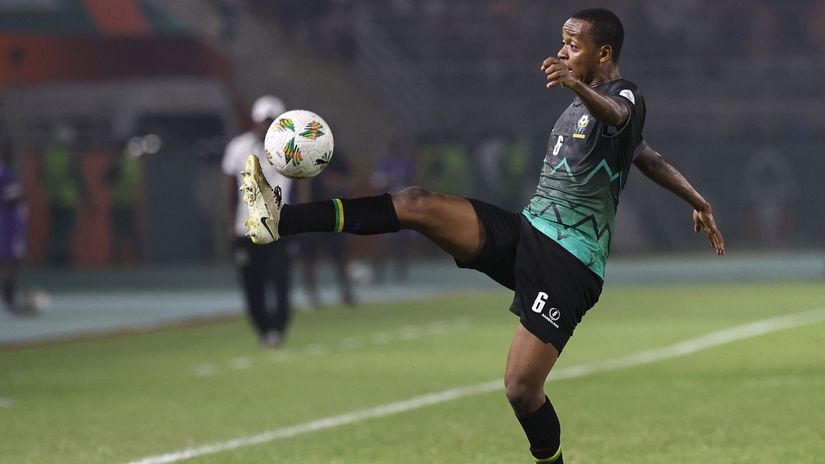
Unlike Origi, Olsson and Mabil, the 2026 edition marks Mwene's first appearance at a World Cup, making him the latest footballer with Kenyan roots to reach the sport's most prestigious stage.
At club level, he has enjoyed a successful career in European football, earning widespread recognition through his performances for FSV Mainz 05 in Germany's Bundesliga.
For Kenya, his participation serves as another reminder of the global reach of the country's footballing diaspora.
Kenya's Quiet Presence on Football's Greatest Stage
Although none of these four players ultimately chose to represent Kenya at international level, their stories remain deeply intertwined with the country through family, heritage and personal history.
Whether through Divock Origi's footballing lineage, Martin Olsson's maternal roots, Mabil's birth in Kakuma Refugee Camp or Phillipp Mwene's Kenyan father, each carries a unique connection to Kenya.
Collectively, they represent more than individual achievements.
Their journeys reflect the global nature of modern football and the far-reaching impact of Kenyan heritage across continents.
As Harambee Stars continue their pursuit of a historic first FIFA World Cup qualification, the accomplishments of these players serve as both inspiration and evidence that Kenyan roots have already reached football's greatest stage.
For now, they remain members of an exclusive fraternity of footballers connected to Kenya who have experienced the spectacle of the World Cup firsthand, ensuring that even before the Kenyan national team earns a first World Cup appearance, the country's story has already been written, in part, into the history of the world's biggest sporting event.