


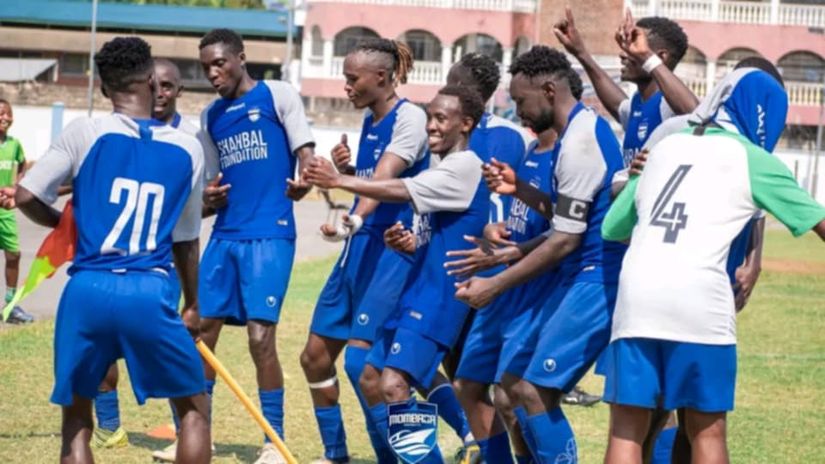
How Mombasa United transformed from relegation candidates to promotion challengers in six months
.jpg)
.jpg)
.jpg)


Reading Time: 6min | Wed. 25.02.26. | 14:09
In an exclusive sit-down with Mozzart Sport, the club’s CEO Nick Arunga retraced a journey that has been anything but smooth, a six-year pursuit defined by restructuring, disagreement, reflection and an unwavering dream to build the first true community-driven club from Mombasa to compete in the top flight
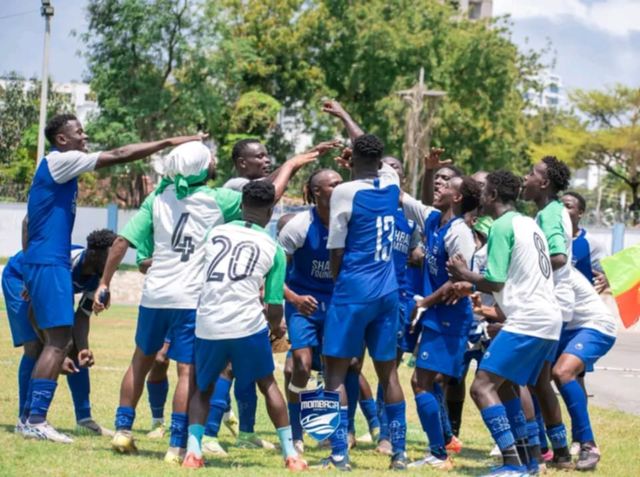
Following spells of doodling in the trenches and ashes of the National Super League (NSL) for more than half a decade, Mombasa United look to be rising from the ruins to mount a strong promotion charge to the FKF Premier League.
Follow our WhatsApp channel for more news
The Coastal-based side boasts a record five-match winning streak, the first since the project began its steady climb, and they have suffered only one defeat this year.
After spending more than 150 days at the summit of the table, they have now managed to dislodge Migori Youth and currently sit top with 43 points, creating a three-point buffer as the race for promotion gathers momentum.
On paper, they look well-positioned to secure a place in the FKF Premier League, but how did things change so quickly for a side that was flirting with relegation just last season?
In an exclusive sit-down with Mozzart Sport, the club’s CEO Nick Arunga retraced a journey that has been anything but smooth, a six-year pursuit defined by restructuring, disagreement, reflection and an unwavering dream to build the first true community-driven club from Mombasa to compete in the top flight.
A Vision That Dates Back to 2020
United secured promotion to the second tier at the start of the 2024/2025 season after merging with Mombasa Elite.
Though the name changed, the drivers of the project remained the same, individuals who initiated the vision in 2020 with a common objective.
“It is a journey that we started in 2020,” Arunga tells Mozzart Sport. “When we took over Mombasa Elite, we were working with Omar Masika, then, of course, some issues arose along the way.”
The dream took clearer shape in October 2021, shortly after the COVID-19 pandemic disrupted football structures across the globe.
Modern Coast Rangers could no longer continue operating in the second tier, and an opportunity emerged.
Renowned scout Omar Masika, Charles Okwemba, alongside Arunga and other stakeholders, stepped in to take over the slot and formed Mombasa Elite, a side they designed to nurture talent from the Coast while simultaneously pursuing promotion.
The early signs were promising as the team finished eighth in the 2021/2022 campaign, a respectable achievement for a developing project.
However, the following season exposed deeper cracks.
The club became relegation candidates, internal alignment weakened, and according to Arunga, it reached a point where the vision they had initially set began to feel compromised.
“Sometimes, if you are a dreamer and you are working with people who are not dreaming, it becomes a problem. So it got to a point we decided to just leave along the way because this project was the same as what we had started at Elite, but we felt it had become intertwined with other interests,” he explains.
Searching for a Shared Vision
Rather than abandon the project, Arunga and Anza Fresh founder Abdirahman Hussein approached Mombasa Stars, carrying the same idea, to elevate another Mombasa side to join Bandari FC in the Premier League and strengthen the region’s presence in Kenyan football.
“We saw it becoming tough at Elite, so we left and went to Mombasa Stars, who had invited us. We went there and sold to them the idea of having another Mombasa side in the top tier and probably the first community club from Mombasa to play in the Premier League,” Arunga says.
The start at Mombasa Stars was encouraging as the 2023/2024 season began with a bang, and the team quickly emerged as promotion contenders.
But midway through the campaign, the momentum faded. “They bought into the idea, but weeks later, we realised again we were working with people who did not have the same vision,” reflects the youthful CEO.
“When you push for new ideas and excellence, when you demand too much, some people feel like you are aiming a dig at them. They did not take criticism positively, yet it is out of positive criticism that you grow and learn.”
Five years into the project, the dream still seemed distant, but shutting down was never an option.
Rebirth and Reflection
At the end of the 2023/2024 season, leadership changes at Mombasa Elite reshaped the structure once more.
Shortly after, Mombasa United were reborn under new leadership, with Abdirahman Hussein backing the project.
The philosophy at the time was bold: to compete exclusively using largely Coast-based players and prove that regional talent could carry the club to the top tier, but football rarely rewards sentiments alone.
United needed a final-day 4-1 victory over Kibera Black Stars in Taveta to preserve their NSL status, which was termed as 'survival came, but it forced serious introspection.'
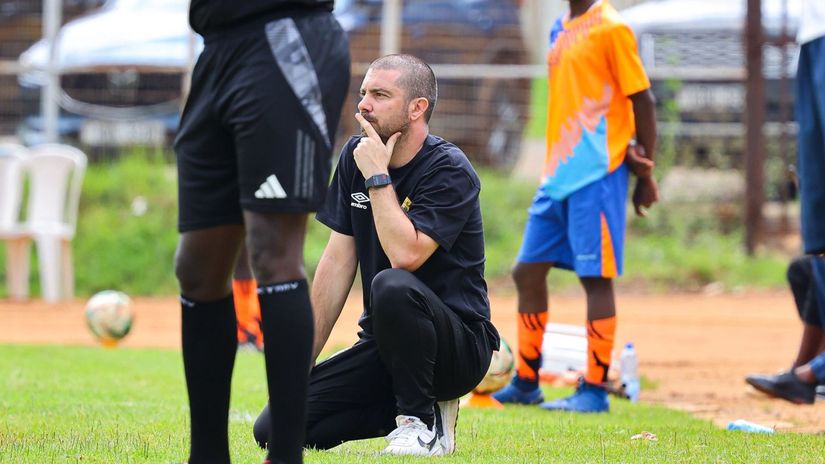
“We had a very tough board meeting after that season,” Arunga recalls. “We asked ourselves hard questions, to the extent that it was not an easy discussion about why we had failed as a team.”
He points to two major issues: the technical bench and the playing unit.
“We had issues with coaching, and at the same time, issues with players. That season, we only had Coast-based players; we did not have players from outside. Of course, there are ambitious Mombasa players, but not most of them at that time.”
He then recounts the moment that crystallised the need for change.
“Even the last match of the season against Kibera Black Stars, which we were supposed to win to remain in the league, just imagine that week we trained with only five players. They were not coming for training but still wanted to claim payment. That told us we had to rethink everything.”
Striking the Necessary Balance
Ahead of the current campaign, the board made a strategic decision to strike a balance, not abandon their identity, but strengthen it.
“We said as much as we have our own players from Mombasa, at least we go for players from outside, and also find a coach from outside Mombasa because sometimes local coaches do not have the same ambition or authority needed to push the team forward,” explains the club head.
The recruitment process was thorough, attracting several qualified candidates and after interviews that included experienced tacticians, former AFC Leopards and Congo United coach Gilbert Selebwa was appointed.
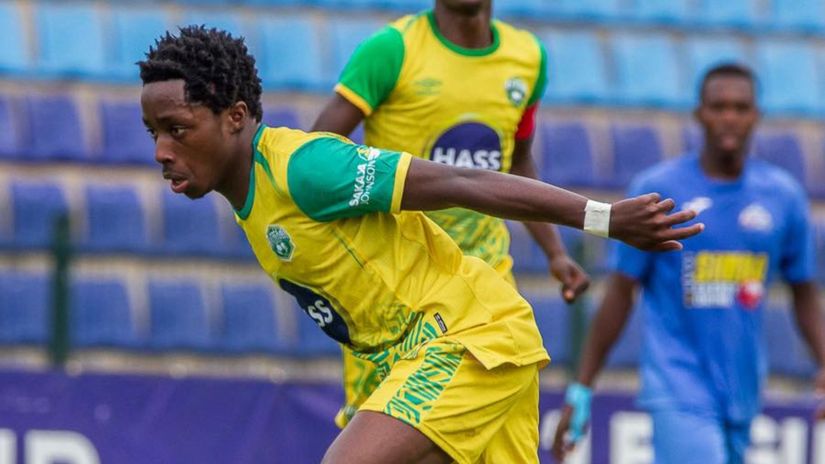
“We had four coaches on board. We interviewed them and even paid for accommodation for some. Selebwa stood out because we felt we needed someone who is more of a manager, someone who can command the players, the team, and ensure that everyone hears the same voice and understands what is required.”
The changes extended beyond the technical bench as the squad was reinforced with players from outside the Coast, increasing competition and accountability within the dressing room.
“That is why you are now seeing the difference,” Arunga says.
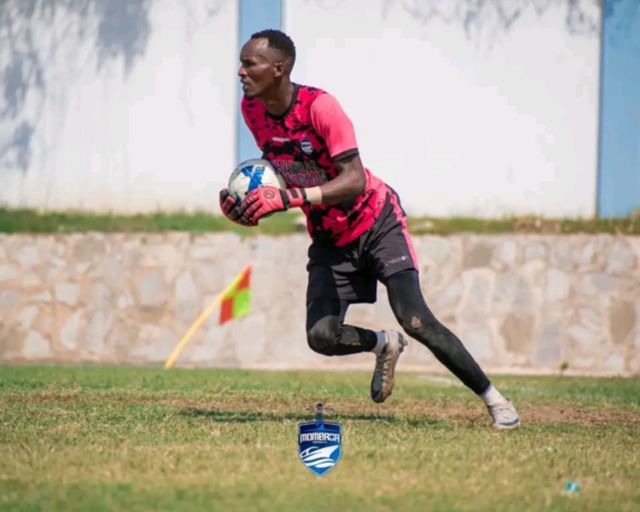
Stability Behind the Surge
Arunga is also quick to credit their sponsor, Anza Fresh, for providing stability during this transition.
“Our sponsor has played a very critical role in their performance. He has made sure the boys are paid monthly and on time. There is motivation in the team.
They win home matches and pocket Ksh2,000, they win away matches and get Ksh3,000, and the allowances increase if they win consecutively.”
In a league often disrupted by financial woes, that consistency has provided structure.
Now, Mombasa United find themselves at the summit, five straight wins, just one defeat in 2026, and 43 points as the promotion race intensifies. Arunga, though, remains cautiously optimistic.
“This may be the season,” he concludes. “The dream may finally be actualized and at least we start working at the top level after six years of dreaming.”
The journey has been long and at times fractured, but it has also been deliberate. Whether Mombasa United secures promotion will be decided on the pitch in the coming weeks.
What is certain is that for the first time in six years, the dream does not feel distant; it feels within reach.