


Kabras Sugar RFC backrower opens up on carpentry side hustle
.jpg)

.jpg)
Reading Time: 6min | Thu. 02.07.26. | 20:19
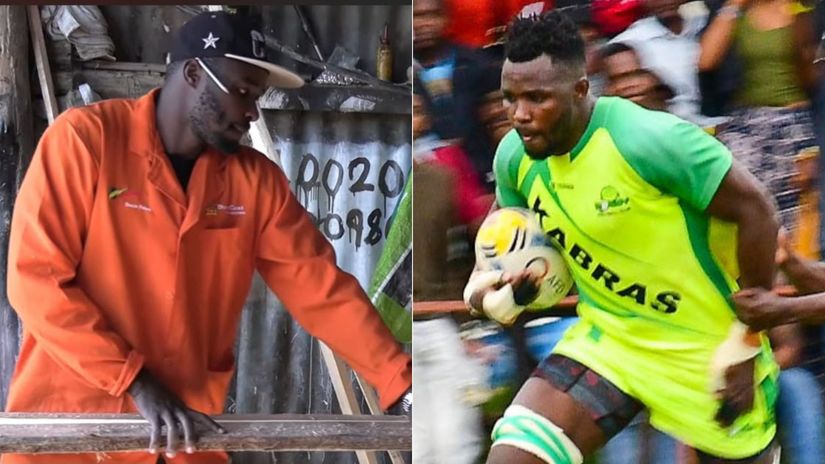
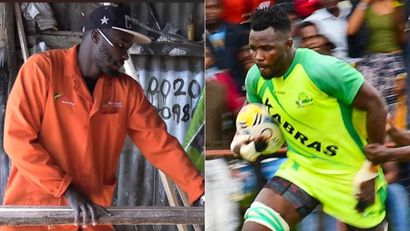
The player spends his free time in a carpentry workshop in Kakamega, quietly building beds, TV stands and other furniture
For most rugby players, life after an intense training session is reserved for rest, recovery, or catching up with friends.
Download our Mozzart Sport app for more news
However, for Kabras Sugar RFC backrower Patrick Sabatia, it often means swapping boots for overalls, a rugby ball for timber, and a scrum for a saw.
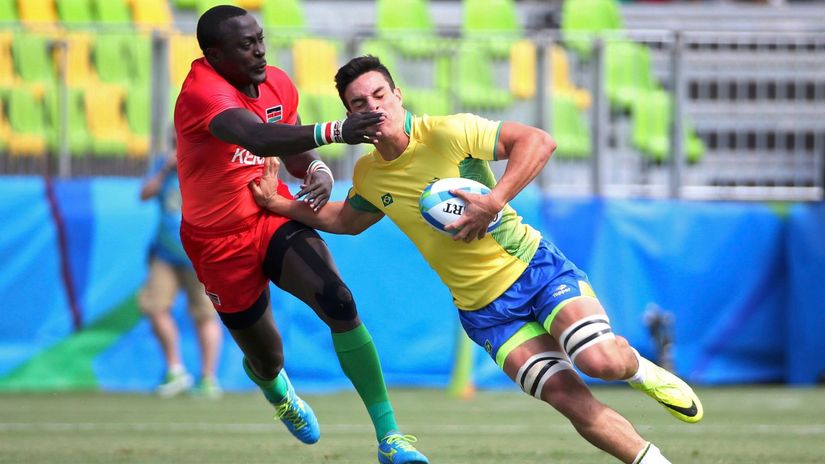
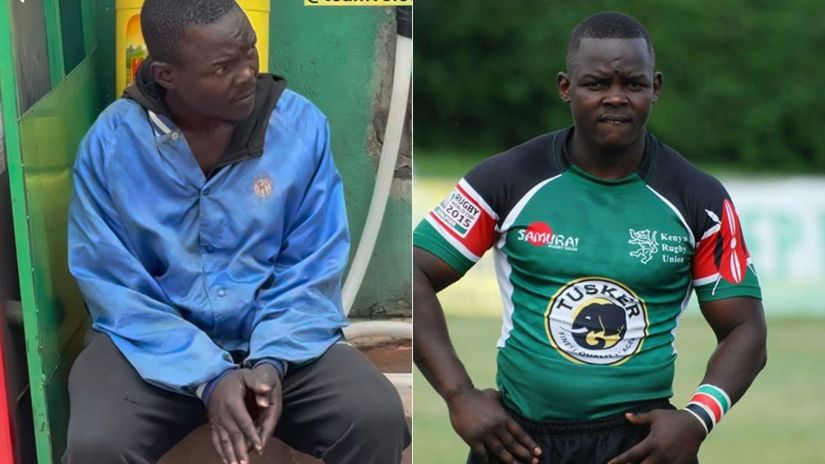
Away from the bruises and collisions that have made him one of Kenya's fastest-rising rugby stars, Sabatia spends his free time in a carpentry workshop in Kakamega, quietly building beds, TV stands and other furniture.
It is a world far removed from packed pitches and roaring crowds, but one he believes has been just as important in shaping the player and person he has become.

Sabatia’s rise in rugby has been nothing short of remarkable.
On Tuesday, 8 July, 2025, he earned his first cap for the Kenya Simbas, making his senior national team debut against Uganda at Nelson Mandela Stadium in Kampala.
The call-up was another milestone in a journey that has gathered momentum over the past two seasons.
He first announced himself on the national stage during the 2024 Safari Sevens, where he made his Kenya Morans debut and helped the side secure bronze with a 26-5 victory over Zimbabwe.
Before that, the hard-running forward had been one of Kabras RFC's standout performers during the 2024 National Sevens Circuit, earning the nickname "Field Gun" for his relentless displays.
His breakthrough came during the Christie 7s, when several senior Kabras players were away on national team duty.
With Kevin Wekesa, Brian Tanga, and Lameck Ambetsa representing Shujaa at the Paris Olympics, while Derrick Ashiundu, Alfred Orege, Walter Okoth, and Barry Robinson featured for the Simbas in the Rugby Africa Cup, Sabatia stepped into the spotlight.
He grabbed the opportunity with both hands, playing a leading role as Kabras lifted the Christie 7s title.
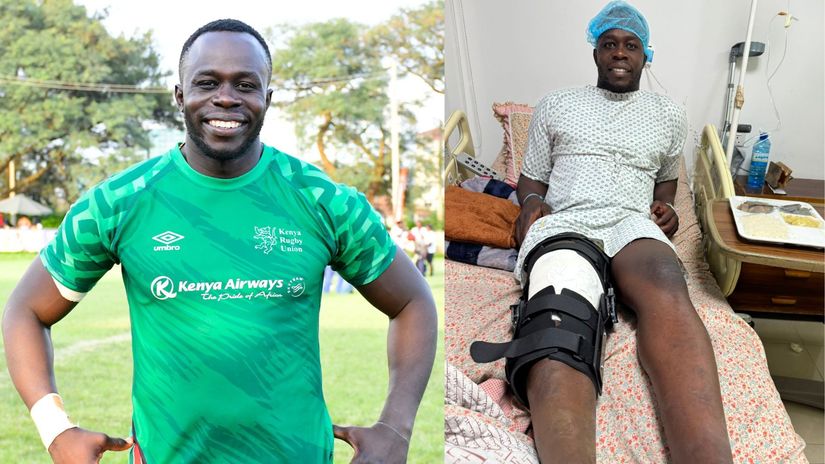
His consistency carried into the 2024/25 Kenya Cup season as he helped the Sugarmen defend both the Kenya Cup and Enterprise Cup crowns.
In the Kenya Cup final, he produced a Player-of-the-Match performance as Kabras edged Menengai Oilers 27-26 to secure a fourth straight league title.
Last season, he was also part of the squad that completed an unprecedented Kenya Cup five-peat and Enterprise Cup six-peat.
But behind the medals and growing reputation lies another passion.
From chopping boards to furniture
Sabatia's introduction to carpentry happened almost by accident.
"I am a carpenter. That's what I do outside rugby. I've been doing it for a few years now," he told Scrummage Africa TV.
Unlike many teammates who unwind after training, Sabatia found himself spending time at a local workshop where his brother works.

"After rugby, most people go and relax with their friends. One day, I visited a carpentry workshop where my brother was working and became interested in what he was doing,” he offered.
He started with the basics.
"I started by making chopping boards and selling them to mutura vendors. As I gained experience, I progressed to making furniture like seats."
The process, he says, mirrors rugby.
"You can't wake up one day and build a chair. You first have to observe, learn and help someone else do it,” he explained.
A brother's influence
The man responsible for introducing Sabatia to the trade is his older brother, Micah.
"My brother inspired me to get into carpentry. He's easy-going and means everything to me. He encouraged me not to be afraid and showed me that I could earn money from the craft,” Sabatia said.
Interestingly, Micah trained as an accountant before eventually choosing carpentry full-time.
"My brother is actually an accountant, but today he's fully involved in the workshop. Once he realised his skills could make him money, he chose this path instead,” he continued.
That lesson has stayed with Sabatia.
"Education is important, and having academic qualifications is great. But if you're not street-smart, life can still be difficult,” he averred.
Building more than furniture
Among the many items he has learned to make, beds remain his favourite.
"They were among the first furniture items I learned to make, and I've become very good at them,” he said.
Not every project comes easily.
"TV stands can be quite challenging, especially if you don't have proper guidance. They require a lot of precision because the measurements have to be exact for the drawers and fittings to work perfectly,” he offered.
That attention to detail has taught him lessons he now carries onto the rugby field.
"The biggest lesson carpentry has taught me is discipline. Without discipline, you can't succeed. It has also taught me patience. Sometimes a customer gives you a job and disappears for a while; you simply have to wait and trust the process."
Where rugby meets carpentry
Sabatia sees more similarities between rugby and woodworking than most people would imagine.
"The two are more similar than people think. Both require patience, discipline, and determination. You also have to pay close attention to detail and make good decisions.
Whatever is happening in your personal life shouldn't affect the quality of your work, whether you're on the rugby field or in the workshop,” he said.
Decision-making, he says, can determine success or failure in both careers.
"If you're desperate to score a try, you might force a play that ends up costing the team. In carpentry, if I rush a client's order, it may look good at first, but later the furniture starts making strange noises or develops faults.
The client may never complain, but they also may never come back,” he offered.
Preparing for life beyond rugby
Like many elite athletes, Sabatia understands that a sporting career has an expiry date.
For him, carpentry is not simply a hobby but an investment in the future.
.jpeg)
"Rugby isn't the end goal because I know my playing career will eventually come to an end. That's why it's important to have something else that gives you an advantage in life.
The more skills you have, the more peace of mind you enjoy because if one opportunity doesn't work out, you always have a backup plan,” he explained.
His philosophy extends to financial independence.
"I focus on sustainability because money will never be enough. You have to live within your means while also finding ways to earn extra income. That way, when emergencies come, you're in a better position to deal with them."
It is advice he believes every athlete should embrace.
"It's important for athletes to have skills outside rugby because sport doesn't last forever. You need to start building something while you're still playing so that by the time you retire, you're not starting from scratch."
Finding the right balance
Balancing elite rugby with a growing side business is not always easy.
Training remains the priority.
"I don't take on too many jobs because I have to balance carpentry with rugby training. I only accept work that I know I can deliver. When I'm not training, I come to the workshop and help my brother."
It is a simple routine, but one that reflects the same values that have propelled his rugby career: discipline, patience, and consistency.
On the field, Patrick Sabatia is known as "Field Gun," a fearless forward who thrives in the physical battles of rugby.
Off it, he is simply a craftsman, patiently building furniture and, more importantly, constructing a future that will stand long after the final whistle has blown.