


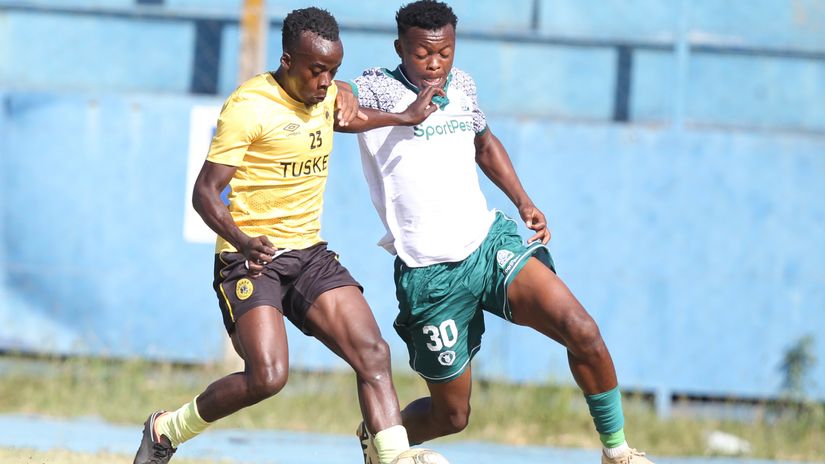
Tactical Analysis: Key battles, formations that will likely decide winner in Tusker vs Gor Mahia league clash
.jpg)





Reading Time: 5min | Fri. 21.11.25. | 21:31
Tusker’s tendency to play out from deep can be risky against Gor’s structured pressing schemes, particularly when K'Ogalo create 3v2 overloads on the flanks using third-man combinations and passing triangles
The FKF Premier League returns, with one of its most iconic fixtures that pits Gor Mahia against Tusker highlighting this weekend's matches.
The two giants are scheduled to lock horns on Saturday at the Moi International Sports Centre, Kasarani from 4 pm.
Follow Our WhatsApp Channel For More News
This match will mark the 100th league meeting between Kenya’s two most decorated clubs, making it the most-played rivalry in the country’s top-flight history.
Both sides enter this historic game with contrasting objectives, and the clash promises high stakes and intense action.
K'Ogalo head into this landmark fixture as league leaders, holding 16 points from just seven matches and boasting a +9 goal difference.
Their campaign has been built on an almost impenetrable defensive structure, conceding only two goals all season.
The record champions come off a 2-0 victory over Kenya Police, a result that not only cemented their top spot, but also reinforced their defensive dominance.
Tusker, on the other hand, have experienced a mixed start to the season.
They occupy seventh place with 12 points from nine matches and carry a -1 goal difference.
The Brewers were on a steady rise before their six-match unbeaten run was halted by a 2-1 loss to Police, leaving them four points behind Gor Mahia.
A positive result in this Kasarani showdown is crucial if Tusker are to maintain genuine top-spot ambitions.
Gor Mahia’s form has been exemplary in recent weeks.
![New completion date for Talanta Stadium announced as construction reaches 66% [VIDEO]](https://cdn3.mozzartsport.co.ke/upload/825x464/News/Image/2025_11/1763656162882_Untitled_design_-_2025-11-20T192750.435.jpg)
In their last five FKF Premier League outings, they have registered W-D-W-W-W, accumulating an impressive 2.29 points-per-game average.
Their defensive organization has been particularly outstanding, with five clean sheets in seven matches.
Tusker FC’s form over the same stretch has been L-W-D-W-W, and while they have demonstrated attacking intent, their defensive frailties - nine goals conceded - remain an area of concern coming into the derby.
The Gor Mahia vs Tusker FC rivalry is steeped in history.
In the last six league meetings, Gor have won three, Tusker one, with two draws.
The most recent meeting - a 0-0 stalemate in February 2025 - captures the typically tight and tactical nature of this clash.
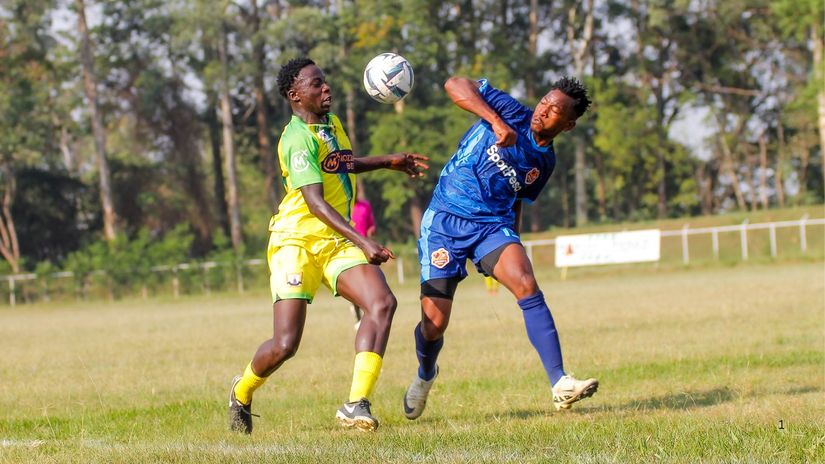
Gor Mahia have kept three clean sheets in the last four league encounters, and the previous two matches at Kasarani ended 1-0 and 0-0, reinforcing the trend of cagey, defensive battles between these two giants.
Coach Charles Akonnor enters the game with a largely fit squad, offering tactical flexibility.
Felix Oluoch, Ebenezer Adukwaw and Shariff Musa are expected to spearhead the attack.
Defender Mike Kibwage, a former Tusker centre-back,will most-likely anchor the backline alongside Sylvester Owino or Joshua Onyango.
Midfield decisions may see Alpha Onyango rested after international duty, opening a potential slot for Fidel Origa to accompany Enock Morrison and Austin Odhiambo.
This stability gives Akonnor the foundation to dominate possession and control the rhythm of the match.
Tusker coach Charles Okere is likewise expected to field his strongest XI.
Erick Kapaito ,who returned from injury and scored against Police, will be central to breaking down Gor Mahia’s defense.
Denis Iguma and other seasoned players bring composure, experience, and leadership into this high-pressure fixture.
With a largely fit squad, Tusker will rely heavily on transitions, set-pieces, and exploiting wide channels to create scoring opportunities.
In possession, Akonnor is likely to deploy a structured flexile 4-3-3.
Gor Mahia will emphasize patient buildup, using short passes, combination play, and controlled circulation from the back to bait the press.
Their attacks naturally funnel through wide areas, using the pace and dynamism of Shariff and Ebenezer, while the striker drops in to create central overloads and facilitate link play.
Out of possession, Gor Mahia adopt a compact 4-4-2 mid block with a high defensive line and aggressive pressing triggered by lateral wide passes from opponents, allowing them to force turnovers and launch direct counters.
Tusker FC, by contrast, will likely approach the match with a physical and direct 4-4-2 setup.
Their play hinges on high pressing, vertical transitions, and consistent delivery of crosses from wide areas.
They will aim to disrupt Gor’s midfield pivots and capitalize on Kapaito’s movement and predatory instincts.
Defensively, they sit in a mid-press block, remaining compact centrally while looking for opportunities to break quickly or win set-pieces in advanced zones.
This game will heavily hinge on how each side manages the key individual and structural battles across the pitch.
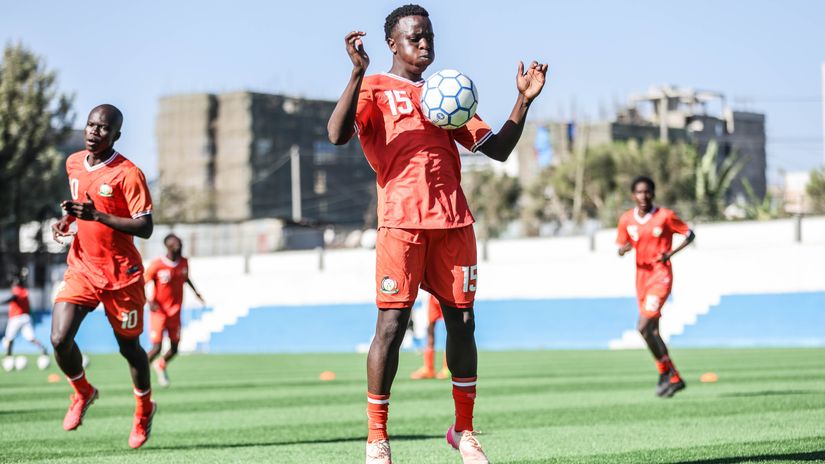
Tusker must find a way to contain the pace and unpredictability of Gor Mahia’s wingers - particularly Sharif, whose swerving runs, quick feet, and decisive movement make him devastating in transition.
Ebenezer’s horizontal and vertical runs in behind will further stretch Tusker’s defensive line, forcing Charles Momanyi and Thomas Teka (or Francis Oduor) into constant recovery actions.
If Tusker’s centre-backs fail to manage these wide transitional threats, Gor could create clear scoring chances early and often.
On the other end, Gor will need to contain Kapaito, Tusker’s primary goal threat.
Kapaito’s link-up play with Denis Oalo, as well as wingers like Curtis Wekesa and Thomas Omole, will be crucial in creating penetration through the half-spaces.
His ability to pin centre-backs, drag them off their line, and release wingers or late-arriving midfielders poses a real danger.
The duel between Kibwage and Kapaito could define the tempo and psychological direction of the game.
.jpg)
Another decisive battle will emerge in midfield between Austin and Denis Iguma.
Austin’s ability to drop deep, draw out Iguma, and initiate attacks through incisive line-breaking passes and switches gives Gor a major creative focal point.
If Iguma cannot restrict Austin’s influence, Gor Mahia will control the game’s rhythm.
Meanwhile, Tusker may rely on midfielders like Fabian Adikiny to supply long switches toward Kapaito or their wingers, targeting aerial mismatches and quick second-ball recoveries.
On the flank, the matchup between Adukwaw and Dennis Wanjala could significantly shape Tusker’s defensive approach.
Wanjala normally pushes high to support attacks, functioning almost as a wing-back, but Adukwaw’s pace and directness may force him to stay more conservative - or require a Tusker midfielder to provide consistent cover.
If left exposed, this corridor could be heavily exploited by Gor.
Additionally, Gor Mahia will attempt to use their high press to force errors in Tusker’s low build-up phases.
Tusker’s tendency to play out from deep can be risky against Gor’s structured pressing schemes, particularly when K'Ogalo create 3v2 overloads on the flanks using third-man combinations and passing triangles.
If Tusker cannot evade the press, Gor will create goal-scoring opportunities through turnovers in advanced zones.
Probable starting line-ups
Gor Mahia (4-3-3):
Byrne Omondi (GK); Paul Ochuoga, Mike Kibwage, Sylvester Owino, Siraj Mohammed; Enock Morrison, Fidel Origa, Austin Odhiambo; Ebenezer Adukwaw, Felix Oluoch, Shariff Musa
Tusker FC (4-4-2):
Brian Opondo (GK); Collins Odhiambo, Charles Momanyi, Dennis Wanjala, Thomas Teka; Denis Iguma, Fabian Adikiny; Cliff Oruko, Curtis Wekesa; Dennis Oalo, Erick Kapaito