


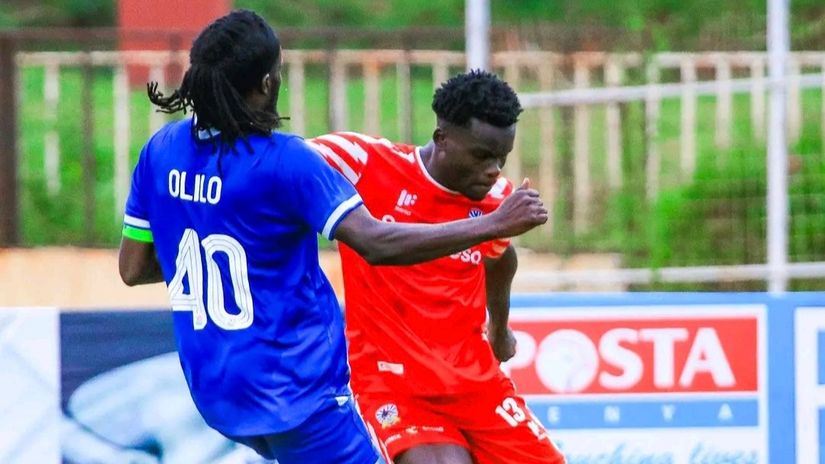
TACTICAL ANALYSIS: Inside Pamzo's plan that sunk Shabana in grudge match showdown







Reading Time: 5min | Fri. 17.10.25. | 19:52
Despite Shabana's aggressive pressing and dominance in spells, Coach Pamzo's structured shape and well-timed attacks proved the difference
Posta Rangers claimed a gritty 2-1 away victory over Shabana in a tense fourth-round of the FKF Premier League encounter held at Gusii Stadium on 15 September 2025.
Follow our WhatsApp channel for more news
The match was a tale of tactical discipline, structured transitions, and missed opportunities, with Posta Rangers ultimately emerging the more composed side.
Despite Shabana's aggressive pressing and dominance in spells, Posta’s structured shape and well-timed attacks proved the difference.
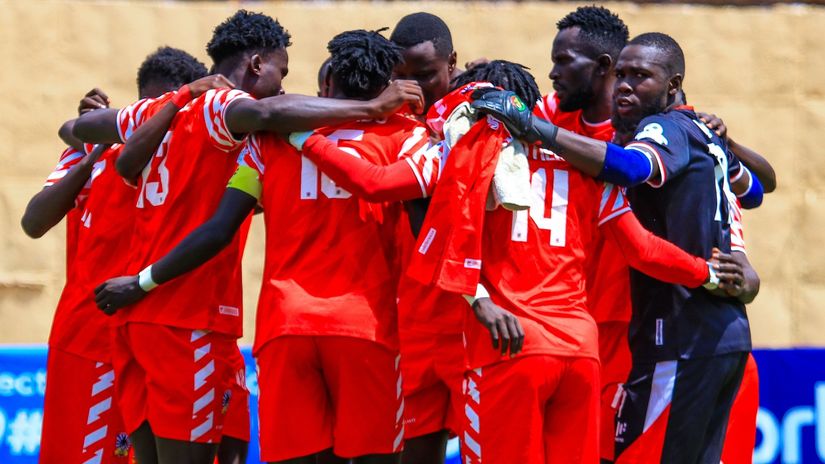
Shabana started in a 4-3-3 formation with Maxwell Mulili between the sticks.
Their backline featured Mark Oduor and Kevin Musamali as fullbacks, while Wycliffe Omondi partnered Mark Okola centrally.
The midfield trio comprised a deep-lying double pivot in Byron Otieno and Justine Omwando.
Omwando took a more progressive role, while Derick Otieno operated as the attacking link, floating between the lines.
Upfront, the trio of Ezekiah Omuri on the left, Douglas Mokaya on the right, and Erick Otieno through the middle posed direct threats.
In possession, Shabana favoured wide constructions, particularly overloading the left flank.
The technical quality of Omuri and the progressive support from Omwando made the left wing the central avenue of their attacks.
Long balls from deep and goal kicks aimed to target aerial duels in advanced areas, seeking second-ball advantages and quick breakthroughs.
Shabana also employed a mid-to-high pressing system, especially in moments when Posta attempted to build from the back.
However, the press often failed to isolate Posta’s wide centre-backs or pivot, allowing the visitors to maintain composure under pressure.

Posta Rangers lined up in a flexible 4-2-3-1 that shifted into a 4-4-2 and later a 5-3-2 out of possession.
Fredrick Odhiambo started in goal, with Leon Kimungui operating as an adventurous right-back.
Musa Mohammed and Faustin Ojiambo provided central defensive solidity, with Dimpol Omamo at left-back.
Kevin Juma sat as the pivot, often turning with his back to goal to connect with centre-backs and resist pressure, while Jackson Dwang offered vertical support in central midfield.
Ahead of them, Brian Otieno was initially deployed as the advanced playmaker, orchestrating moves, but was later replaced by Trevor Omondi after just 24 minutes.
On the flanks, Caleb Olilo and Brian Marita offered pace and width, with Eliud Lokuwam tasked as the central striker, excelling in hold-up play and running in behind.
.jpg)
From the onset, Posta Rangers opted for a methodical build-up, pulling Shabana’s pressing line out of shape.
Their centre-backs split wide, the fullbacks pushed slightly high, and the midfield pivots dropped deep to draw pressure, creating space between Shabana’s midfield and defence.
Posta exploited these pockets with third-man runs and switches of play, especially transitioning quickly from left-side overloads to the right wing, where space opened up.

In the first half, Shabana created more half-chances by exploiting their left side, where Omuri was lively and supported by overlapping fullbacks and quick switches.
Their approach to long goal kicks aimed to avoid Posta’s structured mid-block, relying on chaos in aerial battles and second balls.
Posta, in contrast, were more composed in possession and effective in attacking transitions.
Lokuwam’s runs in behind caused trouble for the Shabana backline, and their set-pieces showed planning - especially a corner routine that saw players making late runs into the six-yard box to cause disarray.
The breakthrough came in stoppage time of the first half. Posta earned a free-kick just outside the Shabana box after substitute Humphrey Obina fouled Marita.
Trevor Omondi’s initial effort struck the wall but rebounded kindly.
A header assist from Musa Mohammed found Marita, who reacted quickly to slot home near post - Posta leading 1-0.
Shabana nearly responded immediately when Humphrey Obino stepped up for a free kick of his own, but his strike clipped the post, summing up their unlucky half.
Shabana came out flying in the second half, buoyed by a vocal home crowd.
They pressed higher, moved the ball faster, and began to pin Posta back.
Their clearest opportunity came in the 63rd minute when Omuri was brought down in the box by Leon Kimungui after a sweeping cross.
Kevin Omundi stepped up to take the penalty, but Fredrick Odhiambo made a fantastic save to preserve Posta’s lead.
Posta responded by adjusting to a 5-3-2 shape, sitting deeper and inviting pressure.
Trevor Omondi joined Lokuwam upfront but often dropped into midfield to help manage possession. Their attacks now came primarily through fast transitions and direct long balls.
Despite Shabana’s sustained pressure and several long shots and crosses, Posta remained compact and well-organized. In the 76th minute, their direct approach paid dividends.
A long goal kick was flicked on by Lokuwam, followed by a smart header exchange with Trevor.
The substitute showed great technique to control and fire home from just outside the box, doubling the lead against the run of play.
After the second goal, Posta slowed the tempo and controlled possession, managing the game effectively.
Lokuwam was often left alone up top, with supporting runners joining only when safe to do so.
The substitutes, Maxwel Odada and Vincent Wasambo came on adding fresh legs and balance.
Shabana, meanwhile, threw numbers forward in desperation.
Their persistence paid off in the 91st minute when a corner kick resulted in a scramble inside the box.
Victor Otieno cleverly positioned himself to ghost behind Posta’s defenders and slotted home from close range, reducing the deficit to 2-1.
Despite the late goal, there was no enough time for Shabana to find an equalizer, and Posta Rangers held firm to seal a hard-fought win.
This encounter highlighted the tactical contrast between a patient, transition-heavy Posta Rangers and a direct, wide-oriented Shabana side.
While Shabana’s left flank was their biggest threat, they lacked the clinical edge in decisive moments.

Posta, on the other hand, were pragmatic, efficient, and capitalized on key moments - particularly through well-coordinated transitions and set pieces.
The win reinforces Posta Rangers’ growing reputation as one of the league’s most tactically disciplined sides, while Shabana will feel aggrieved for not converting their spells of dominance into a better result.