


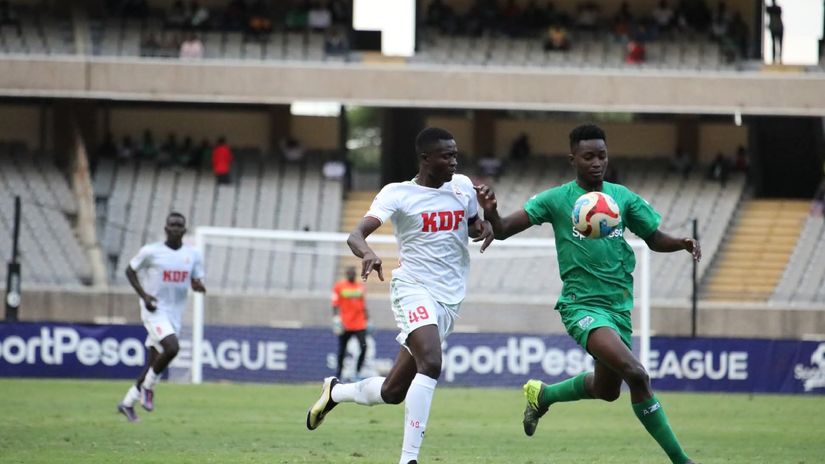
TACTICAL ANALYSIS: How Ulinzi Stars frustrated Gor Mahia to deny them top spot

.jpg)
.jpg)
.jpg)

Reading Time: 5min | Mon. 03.11.25. | 21:15
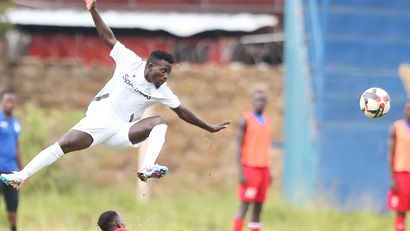
Ulinzi attempted to neutralise Gor’s intensity through compact shape and occasional long throws from Telena
A tactical masterclass was witnessed at the Kasarani Stadium, where Gor Mahia and Ulinzi Stars played out to a 1–1 draw that showcased the growing tactical sophistication in Kenyan football.
From disciplined organisation to fluid positional interchanges, both teams executed their game plans with precision, turning the encounter into a captivating chess-like duel.
To the neutral, it was an intense and intelligent battle of contrasting ideas; to the tactical purist, it served as an intriguing study in structure, adaptability, and strategic execution over the full ninety minutes.

Follow our WhatsApp channel for more news
Gor Mahia set up in their familiar 4-3-3 structure, emphasising organised buildup and controlled transitions.
Byrne Omondi started in goal behind a back four of Paul Ochuoga and Bryton Onyona as the fullbacks. The central defensive pairing of Sylvester Owino and Mike Kibwage was also retained.
The midfield was anchored by Enock Morrison as the pivot, aided closely by Alpha Onyango, alternating between deep ball progression and defensive screening duties.
Ben Stanley occupied the advanced midfield role, dropping between the lines to connect play, while Sharriff Musa and Patrick Essombe stretched the field from wide areas, supporting lone striker Felix Oluoch.
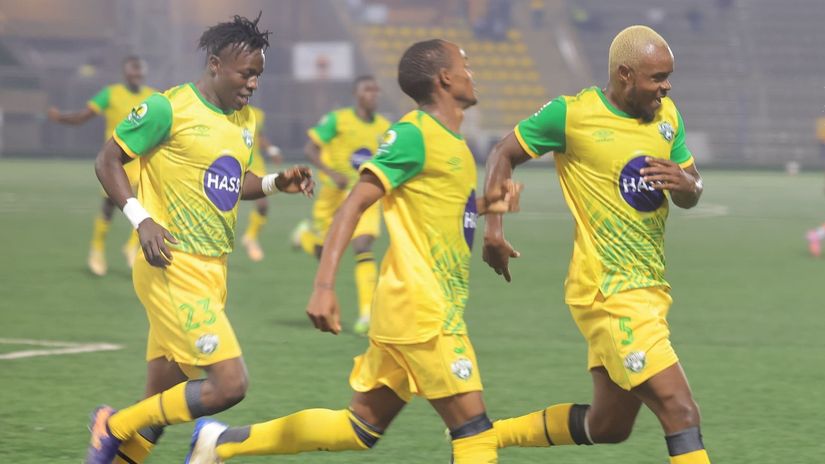
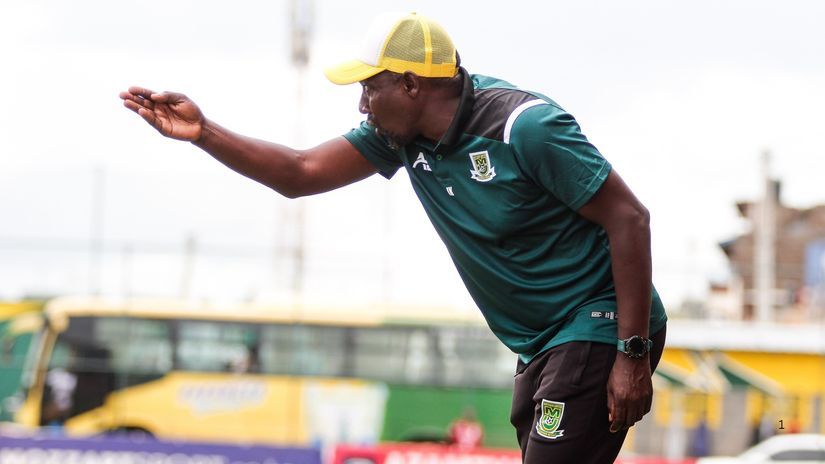
Ulinzi Stars, under interim coach Stephen Ocholla, mirrored Gor’s structure with a flexible 4-1-2-3.
Timothy Odhiambo manned the goal, flanked by fullbacks Brian Birgen and Telena Ochieng, while Bildad Abonga and Felix Otieno formed the central defense.
Emmilio Okello played the deep-lying playmaker role at the base of midfield, supporting Joseph Ochieng and Boniface Muchiri - the latter operating higher up as a roaming number 10. Leonlevitt Osiago and Peter Mwanyika provided width, with Enosh Ochieng leading the line.
From kickoff, Gor Mahia took control of possession, seeking verticality through long diagonal switches and direct lay-offs from the centre-backs.
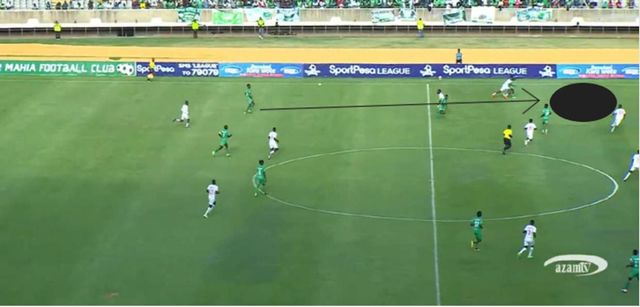
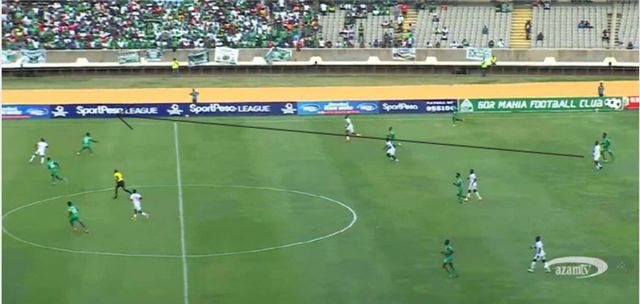
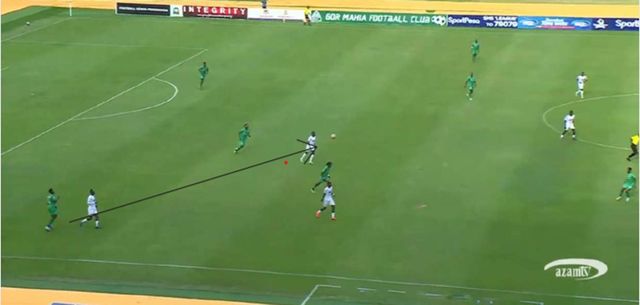
As illustrated, Gor Mahia were looking to use diagonal switches of play and lay-offs
Their early progression patterns aimed to bypass Ulinzi’s mid-block using targeted passes into the half-spaces and quick third-man combinations.
Morrison’s long throws into the box were particularly disruptive, creating chaos in Ulinzi’s defensive organisation.
Onyona’s early crosses from deep on the left wing also caught Ulinzi’s backline retreating, forcing them to defend facing their own goal.
The early pressure paid off in the sixth minute.
A well-delivered corner kick from Morrison to the near post found Oluoch, whose glancing flick gave Gor Mahia the lead. It was a goal born of intent and execution: a rehearsed set-piece routine exploiting Ulinzi’s zonal lapse.
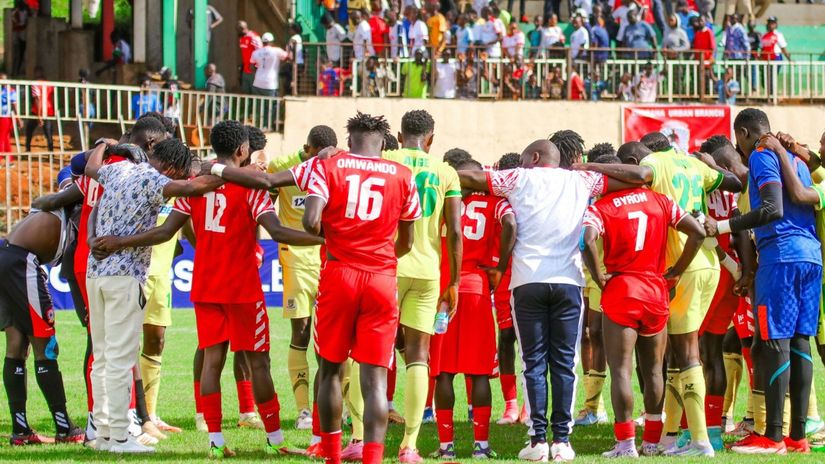
Ulinzi Stars responded by settling into possession, attempting to neutralise Gor’s intensity through compact shape and occasional long throws from Telena.
Muchiri became their creative focal point, drifting between lines to attract Gor’s press and open vertical channels. Out of possession, Ulinzi adopted a 4-4-2 defensive block, pressing selectively while keeping their lines compact.
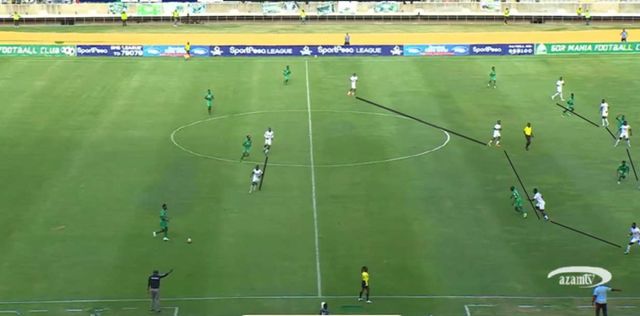 Ulinzi in their 4-4-2
For Gor, Alpha Onyango dropped between the centre-backs in the buildup, forming a 1-2-1 diamond structure with Morrison as the pivot.
This allowed the fullbacks to advance, creating width and numerical superiority in the middle third.
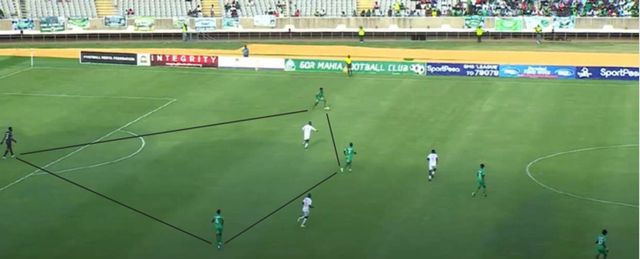
Ben Stanley frequently dropped deeper to link play, allowing Gor to transition smoothly into the attacking third.
However, in the 34th minute, a rare error cost them. Ben Stanley lost possession in an advanced midfield position under pressure, allowing Okello to intercept and combine quickly with Telena, who fed Muchiri.
The winger advanced and unleashed a precise low shot from outside the box, finding the bottom left corner past Byrne Omondi.
That goal marked a momentum shift. Ulinzi began using longer restarts and focused their play down the left flank, attempting to exploit numerical superiority and isolate Gor’s fullbacks.
The shift allowed Muchiri to operate closer to the central zones, linking effectively with Ochieng and Mwanyika.
Gor, meanwhile, remained disciplined defensively, holding a high defensive line to catch Ulinzi’s attackers offside while transitioning into a 4-4-2 out-of-possession shape, with Stanley and Oluoch pressing from the front.
The fullbacks inverted into midfield at intervals, balancing control and compactness.
The second half began with an early adjustment from Gor Mahia - Austin Odhiambo replaced Ben Stanley, adding sharper ball circulation and creativity between the lines.
Gor Mahia continued with their direct layoff approach, playing vertical passes from the centre-backs directly into the attacking third.
Ulinzi Stars adjusted by holding a higher defensive line and employing their goalkeeper as a sweeper, minimising the space for Gor’s direct balls to exploit.
Their compact mid-block allowed for quicker transition moments after regaining possession, with efficient counter-pressing aimed at pinning Gor’s midfield deeper.
In defending set-pieces, Ulinzi adopted split zonal marking - two zonal defenders close to the near post supported by five man-markers - a structure that helped them limit Gor’s aerial threats.
In contrast, Gor Mahia defended corners with all ten outfield players inside the box in a zonal marking system, prioritising solidity but sacrificing outlets for counter-attacks.
Their rest defense left both fullbacks slightly advanced, anticipating second-ball recoveries.
By the 60th minute, Alpha Onyango was withdrawn for Fidel Origa, prompting Gor to morph into a 4-2-3-1 system.
Oluoch shifted to the right wing, Patrick Essombe moved central as the striker, and the Morrison–Origa double pivot offered a more defensive midfield balance.
This change was aimed at strengthening Gor’s control in transition while giving them an outlet for quick vertical breaks.
With this adjustment, Gor Mahia began favouring rapid transition play - direct passes into the wide channels followed by quick rotations upfront. The intent was to exploit Ulinzi’s high line and disorganise their compact shape after turnovers.
Ulinzi responded by introducing Paul Okoth Odhiambo, who injected pace and directness in attack.
His well-timed runs behind Gor’s defense became a recurring threat, especially when fed by long balls from the backline. These vertical outlets tested Gor’s high defensive line repeatedly.

The closing stages saw both sides engage in measured risk-taking.
Gor maintained territorial advantage through controlled possession, while Ulinzi relied on vertical counter-punches.
Despite Gor’s superior buildup patterns and territorial dominance, they lacked final-third sharpness - a recurring theme in recent matches.
Ulinzi, meanwhile, showcased tactical maturity in managing transitions and protecting their defensive structure.