



TACTICAL ANALYSIS: How Harambee Stars midfielder Duke Abuya's Yanga fell to AS Far in pure control vs resistance match up
.jpg)
.jpg)







Reading Time: 5min | Sun. 08.02.26. | 12:45
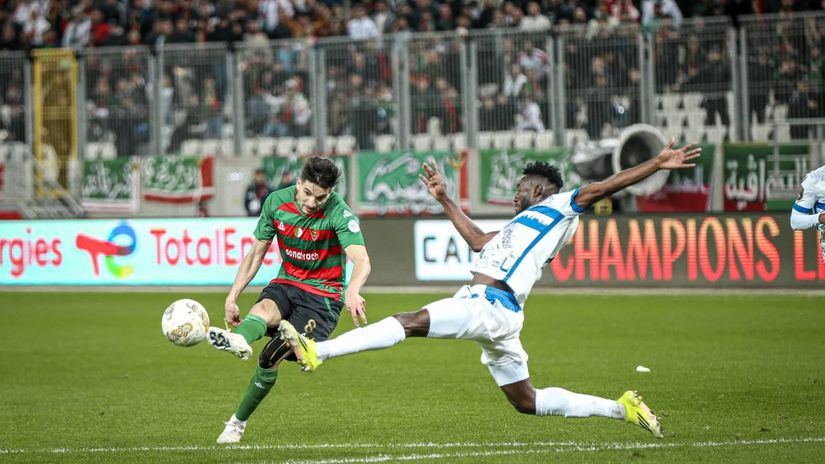
Duke Abuya and Damaro Mohamed formed a disciplined double pivot, shielding central spaces, while Maxi Nzengeli operated as the advanced midfielder tasked with supporting transitions
AS FAR Rabat and Young Africans SC played out a tactical chess match, marked by compact shapes, patient possession, and a constant battle for positional control.
The 1-0 scoreline tells only part of the story in a game defined by defensive discipline and decided by one late, telling moment against a resilient Yanga side.
Follow our WhatsApp channel for more news
AS FAR Rabat set up in a 1-3-4-3 that clearly prioritized control of territory and width.
Ahmed Tagnaouti anchored the build-up from goal, protected by a back three of Marouane Louadni, Yunis Abdelhamid, and Fallou Mendy.
The structure allowed wing-backs Anas Bach on the right and To Carneiro on the left to operate aggressively high, effectively transforming the shape into a front five during sustained possession.
In midfield, Mohamed Hrimat sat deepest to provide rest defence and balance, while Zine Derrag played slightly higher, tasked with progressing play and linking lines.
Ahead of them, Hamza Kabba led the line as the reference striker, flanked by Youssef El Fahli and Hadraf Abdelfettah, who frequently swapped sides to disrupt defensive reference points.
Young Africans, by contrast, opted for a 1-4-3-3 that morphed fluidly out of possession.
Djigui Diarra guarded the goal behind a flat back four, Dickson Job and Mohamed Hussein as the two full-backs, with Ibrahim Bacca and Bakari Mwamnyeto holding the centre. Duke Abuya and Damaro Mohamed formed a disciplined double pivot, shielding central spaces, while Maxi Nzengeli operated as the advanced midfielder tasked with supporting transitions.
Okello Allan and Pacome Zouzoua provided width, and Depu Aurelio led the line with a role that went beyond pure finishing - dropping into pockets and dragging centre-backs out of shape.
Early patterns were quickly established. Yanga looked to attack primarily through the wide areas, using Depu’s movement to combine in the half-spaces and release runners.
AS FAR, meanwhile, pushed both wing-backs high, committing numbers forward and attempting to overload the flanks. However, despite territorial dominance, AS FAR initially struggled to find clean access into central zones.
Yanga’s 4-4-2 mid-block out of possession was compact and disciplined, congesting midfield lanes and forcing play wide.
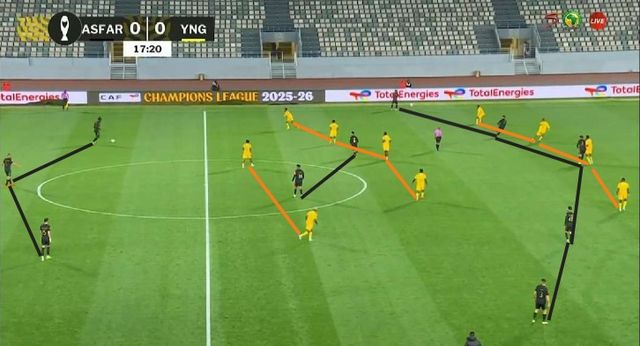
Inside the first 15 minutes, AS FAR increasingly resorted to long diagonal switches - particularly toward Anas Bach on the right - as a means of stretching Yanga horizontally. Yet Yanga defended these situations well, shifting as a unit and denying space for early deliveries.

When AS FAR lost possession, they dropped swiftly into a back five, ensuring numerical superiority against transitions and limiting Yanga’s counter-attacking potential.
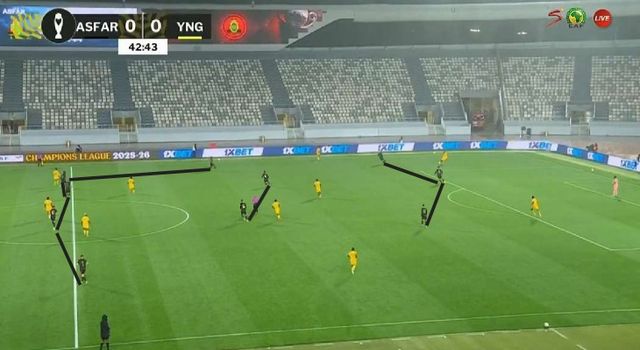
Yanga’s pressing strategy was selective rather than constant. They triggered pressure when the ball travelled laterally or when AS FAR’s wing-backs received facing their own goal. Interceptions in wide zones became key moments for Yanga to initiate counters.
Conversely, AS FAR’s attacking intent increasingly focused on wide combinations, especially on the right, where Bach and Hadraf worked to create overloads through overlapping and underlapping runs.
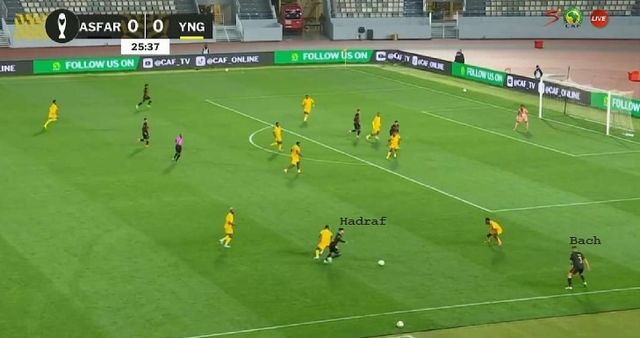
Crosses arrived early and often, though Kabba found himself crowded by Yanga’s centre-backs.
In possession, Yanga showed composure and intent. They often built low to draw AS FAR forward before bypassing pressure with long diagonal passes, frequently from the right centre-back channel.

This method allowed them to progress without engaging in risky central build-up. As the half progressed, Yanga also began to hold a higher defensive line, successfully catching AS FAR attackers offside and compressing space between the lines.
Around the 35-minute mark, Yanga became more direct. Long diagonals targeted Depu, who alternated between dropping to link play and acting as a focal point for knockdowns.
His movement created moments of instability in AS FAR’s back line, though final execution was lacking.
AS FAR, meanwhile, grew more comfortable circulating possession late in the half, showing improved patience and timing in their wide rotations. Still, clear chances remained scarce as Yanga’s compact defending held firm.
The second half brought subtle but important shifts. Yanga introduced Israh Mwenda for Damaro Mohamed early on, aiming to refresh midfield energy.
AS FAR responded by adopting a more patient low build-up, with Derrag and Hrimat dropping alongside the centre-backs to form a stable base. This adjustment improved circulation and reduced the risk of turnovers in early phases.
Yanga continued to favour long restarts, targeting Depu to bring others into play, but AS FAR’s defensive structure remained intact.

By the 55th minute, pressure began to mount. AS FAR increased the frequency of crosses and second-phase attacks, pinning Yanga deeper. The introduction of Mudathir Yahya for Okello Allan further signalled Yanga’s shift toward defensive preservation.
To Carneiro’s overlaps on the left became increasingly influential, combining with El Fahli to create two-versus-one scenarios. AS FAR now mixed early crosses with cutbacks, forcing Yanga to retreat into a low 5-4-1 block.
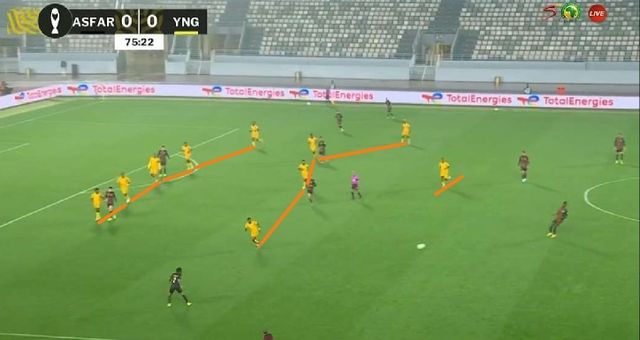
Substitutions followed on both sides around the 66th minute, with AS FAR freshening legs and Yanga introducing Prince Dube as an outlet for counters.
Despite dominating possession and territory, AS FAR found the final breakthrough elusive. Yanga’s box defending was excellent - clear lines, aggressive clearances, and strong duel-winning.
Yet constant pressure inevitably told. In the 85th minute, a recycled cross from the left caused chaos in the area.
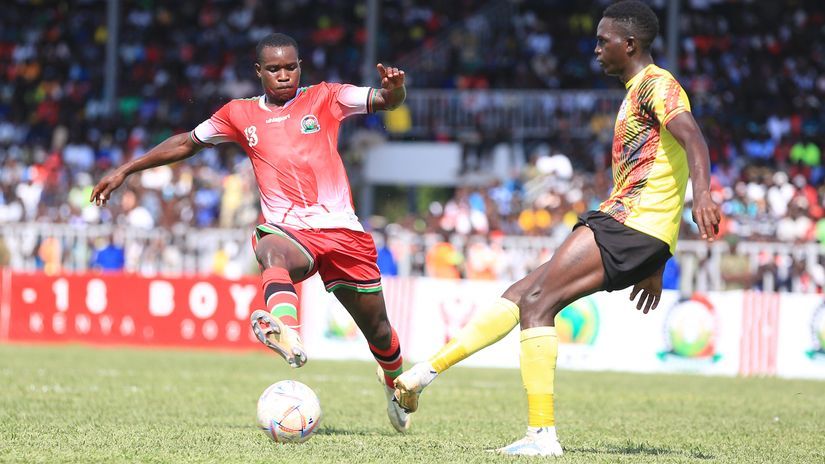
A partial clearance fell kindly, and Anas Bach, arriving from his wing-back position, struck low through traffic to finally beat Diarra.
It was a goal that encapsulated AS FAR’s approach: width, persistence, and late arrivals.
In the closing stages, Yanga committed numbers forward in search of an equaliser, but this only exposed them to turnovers. AS FAR managed the final minutes intelligently, controlling tempo and protecting their narrow lead.
AS FAR Rabat imposed control through width, disciplined rest defence, and relentless pressure, while Young Africans showcased impressive organisation and resilience.
The difference came from sustained dominance and one decisive moment - proof that in tightly contested tactical battles, persistence often wins the day.