


 B. Odhiambo
Life and times of Engin Firat: The outspoken coach who left his mark on Harambee Stars
.jpg)
.jpg)




Reading Time: 6min | Tue. 10.03.26. | 19:05
Five years later, following his passing, that moment now stands as the beginning of one of the most discussed chapters in the modern history of Harambee Stars
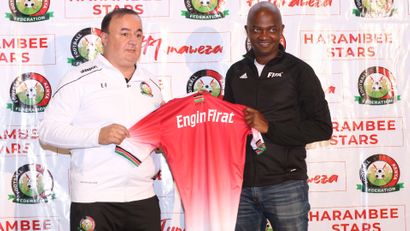
On Sunday, 19 September 2021, the then Football Kenya Federation (FKF) President, Nick Mwendwa, addressed journalists in Nairobi to unveil the man tasked with steadying the fortunes of the Harambee Stars.
Follow Our WhatsApp Channel For More News
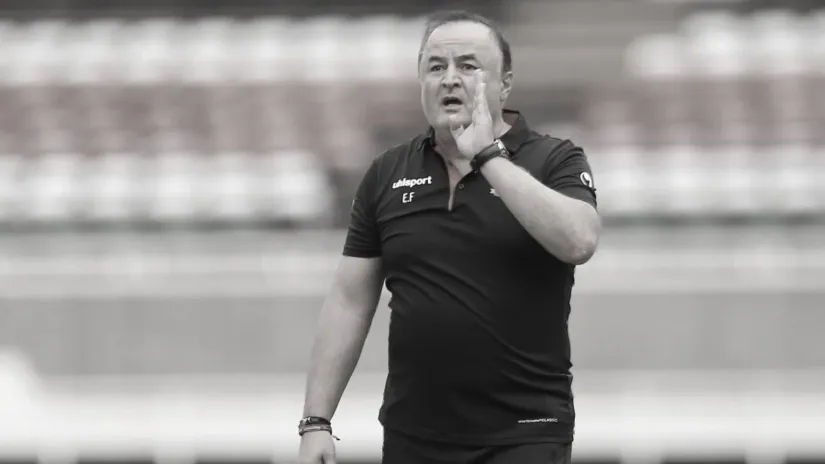
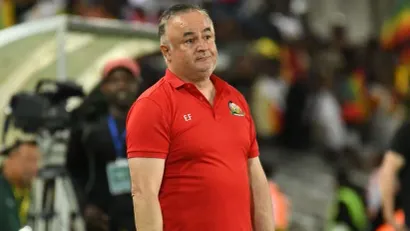
Standing beside him was Turkish-Cypriot tactician Engin Firat, a coach whose career had taken him across Europe and the Middle East and whose reputation suggested he would bring both intensity and unfiltered honesty to the job.
Five years later, following his passing, that moment now stands as the beginning of one of the most discussed chapters in the modern history of Harambee Stars.
Firat had been entrusted with replacing Jacob Mulee, popularly known as 'Ghost', who had parted ways with Stars by mutual consent after a slow start to the 2022 FIFA World Cup qualification campaign.

At the time of the unveiling, expectations were cautious rather than grand as Mwendwa explained that the Turkish coach had initially been handed a short-term mandate.
A contract that was supposed to last for just two months, primarily to guide Kenya through the remaining World Cup qualifiers before the federation could determine a long-term direction.
Few imagined that the man introduced that afternoon would go on to preside over one of the most debated managerial eras in the national team’s recent history.
A coach with a curious résumé
When Firat arrived in Kenya, his record prompted as much curiosity as optimism.
Before taking over Harambee Stars, he had most recently managed the Moldova national football team between 2019 and 2020, a difficult spell in which his side failed to register a single victory in eleven matches, drawing two and losing nine.
.jpg.webp)
Earlier in his career, he had worked extensively in Iranian football, including spells with Saipa, Sepahan SC, and Gostaresh Foulad.
Those experiences produced mixed results but gave Firat a reputation as a tactically detailed coach who thrived in demanding environments.
Beyond head coaching roles, he had also served as an assistant to Iranian legend Ali Daei with the Iran national football team.
Building a team amid uncertainty
Firat inherited a national side navigating a turbulent period marked by administrative uncertainty and inconsistent performances.
A few months into his job, Kenya was suspended from all international football competitions because of government interference.
But when everything settled later, Firat emphasised the importance of widening the player pool and scouting talent beyond Kenya’s borders.
Under his watch, Harambee Stars increasingly looked toward the diaspora, a shift that brought several foreign-based players into the national setup.
Among the notable additions were defender Daniel Anyembe, forwards Alfred Scriven and Adam Wilson, both of whom received their first call-ups in 2023 as the coach intensified efforts to strengthen the squad with players competing in European leagues.
Vincent Harper, Hanif Wesonga, Vincent Mahiga, and Nabi Kibunguchy are some of the players who earned maiden call-ups under the gaffer's watch.
Winning the 2024 Four Nations Cup
One of the few trophies during Fırat’s tenure came in March 2024, when Kenya won the Four Nations Cup in Malawi.
Harambee Stars players celebrate with the Four Nations Cup trophy after defeating Zimbabwe 3–1 in the final of the 2024 tournament in Malawi under coach Engin Fırat.PHOTO/@Harambee__Stars/X
Harambee Stars began the campaign with a convincing 4–0 victory over hosts Malawi before defeating Zimbabwe 3–1 in the final. The tournament win provided a morale boost for the squad and showed glimpses of the progress Fırat hoped to build with the team.
Alongside them, Firat continued to rely on established internationals such as captain Michael Olunga, centre-back Joseph Okumu, left-back Eric Ouma, and midfielder Kenneth Muguna, players who formed the core of the team during much of his tenure.
At the same time, he expanded opportunities for emerging talents, including Timothy Ouma, Rooney Onyango, and Dennis Ng'ang'a.
The coach also revisited experienced names, recalling defenders Joash Onyango, Abud Omar, and Brian Mandela in his early squads to help stabilise the backline during the rebuilding phase.
The outspoken architect
Firat’s tenure quickly became known for more than just tactical and call-up decisions.
The Turkish coach possessed a direct communication style that often placed him at the centre of controversy.
His press conferences were rarely routine affairs; instead, they frequently evolved into broader discussions about the state of Kenyan football.
One remark that generated widespread debate emerged from an interview he gave in Turkey, in which he suggested that many Kenyan observers misunderstood the tactical nuances of the sport (Kenyans don't know football).
The comment, later reported by Mozzart Sport Kenya, sparked intense reaction among fans and media alike.
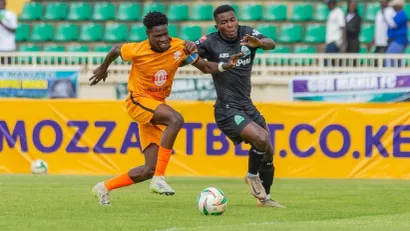
Relations with sections of the press sometimes became strained, particularly with journalists from Mozzart Sport, whose coverage the coach occasionally questioned during press conferences.
It was not unusual for Firat to ask whether certain reporters were present before responding to questions, an unusual dynamic that became one of the more colourful subplots of his tenure.
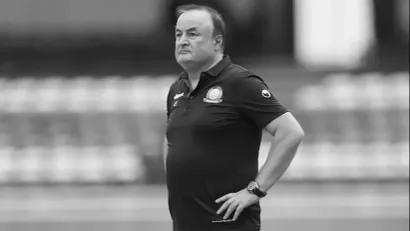
One of Fırat’s most memorable remarks came ahead of Kenya’s friendly against the Qatar national football team in 2023.
Describing the experience of playing in a modern World Cup stadium, he said it would feel like “flying to Mars” for Kenyan players.
The comment reflected the stark contrast between Kenya’s modest football infrastructure and Qatar’s state-of-the-art facilities built for the 2022 FIFA World Cup.
The quote quickly went viral among fans and became one of the most widely remembered soundbites from his tenure
The long road to AFCON
One of Firat’s central missions was guiding Kenya back to the Africa Cup of Nations (AFCON), the continent’s premier football competition.
Kenya’s most recent appearance had come at the 2019 AFCON in Egypt, and expectations were high that the team could return to the tournament.
The campaign for the 2025 AFCON, hosted in Morocco, therefore became a defining chapter of Firat’s reign. Kenya showed moments of promise during the qualifiers but ultimately fell short of securing qualification.
In the aftermath of the disappointment, the Turkish coach delivered a familiar message: Kenyan football, he argued, needed to confront structural realities if it hoped to compete consistently with the continent’s best.
When Harambee Stars failed to qualify for the AFCON finals in 2025, he instead urged the fans to stop dreaming because the national team is facing so many problems, he believes.
“But for us, maybe we have to realise what we have and stop dreaming. We know about the many times I have had a problem with our football. It’s even getting worse. We need to look at reality and instead of all we want, ask with what.
Things on the outside can always change, but our record in this tournament explains everything,” he said.
Part of the coach’s job is to find solutions to the problems, but Firat is known for whining every time his team is exposed.
“It’s clear that we have a goal-scoring problem that we need to find a solution to if we are to move up to a higher level. I wish we could have solved the problem better earlier, but we couldn’t change it,” he added.
Off the pitch, Fırat’s tenure also included a major financial dispute with the Football Kenya Federation.
After claims of going months without pay, with arrears estimated at Ksh75 million, he resigned in December 2024 and escalated the matter to FIFA by filing a complaint through its Dispute Resolution Chamber.
Fırat claimed the federation had failed to honour his contract and pay several months of salary and bonuses owed to him.
The case drew international attention and exposed ongoing financial challenges within Kenyan football administration.