

Kenya's stadiums not fit to host 2027 AFCON - CAF report reveals

.jpg)
.jpg)
.jpg)



Reading Time: 4min | Thu. 26.03.26. | 21:38
The nation has now been tasked with achieving a number of key milestones by the next inspection visit in August
A Confederation of African Football (CAF) report has revealed that none of Kenya’s proposed AFCON stadiums fully meet CAF Category 4 requirements, revealing significant gaps ahead of the country’s co-hosting of the 2027 Africa Cup of Nations next year.
Download our Mozzart Sport app for more news
As per a recent CAF inspection report seen by Mozzart Sport, Kenya’s AFCON 2027 infrastructure programme is currently in a “mixed phase of construction, upgrading and operational adjustments,” and the country has been tasked to meet key milestones ahead of the next CAF visit scheduled for August.
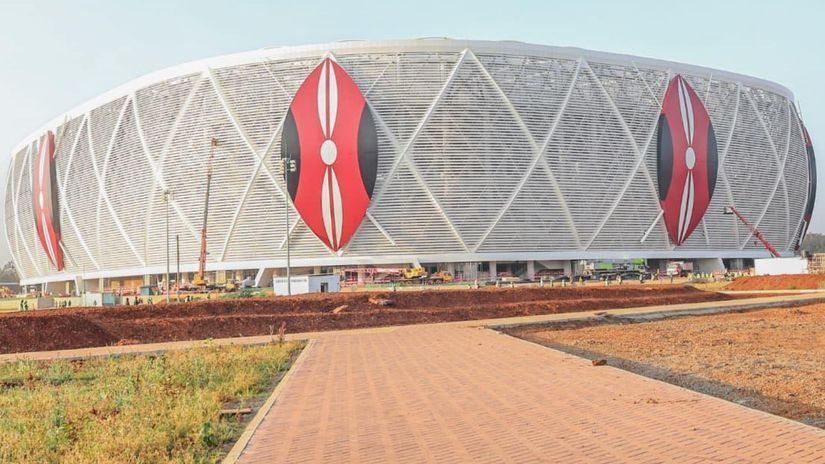
Kenya, during a CAF inspection visit in February, presented three main stadium projects, namely: the Moi International Sports Centre - Kasarani, Talanta Sports Complex, and the Nyayo National Stadium, all within Nairobi.
.jpg)
Upon completion of the inspection mission, which was limited to sporting infrastructure and Safety and Security, CAF has categorised the three stadia into different categories.
For Kasarani, the report states that it is an existing stadium undergoing major upgrading works, Talanta is a new stadium currently under construction, and Nyayo is an existing stadium with limited feasibility as a competition venue.
In a telling statement, CAF noted: “While Kenya benefits from a strong metropolitan environment in Nairobi, the delivery programme remains exposed due to the scale of structural upgrades required, dependency on new construction and uneven readiness of training infrastructure.”
Kasarani Stadium
To comply with AFCON Category 4 requirements, CAF has recommended “extensive intervention” into the upgrade works that have already commenced at Kasarani Stadium.
Among the upgrades required at the facility are:
- Upgrading of media facilities, including the press conference room and media centre
- Development of hospitality areas (VVIP, VIP and skyboxes)
- Relocation and restructuring of the Venue Operations Centre (VOC)
- Reconstruction of the competition pitch, including drainage and irrigation systems
- Installation of a new lighting system compliant with 3000 lux broadcast standards
- Improvement of safety and security systems, including CCTV, access control and fire detection
“While several upgrade works have already commenced, the overall scope of intervention remains extensive, requiring sustained progress to maintain alignment with the AFCON delivery timeline,” said CAF.
Talanta Stadium
CAF noted that Talanta Sports Complex, as a new competition stadium currently under construction, represented a key component of Kenya’s AFCON hosting strategy.
However, the report additionally stated that the stadium remained exposed to risks typically associated with large new-build projects, including:
- Coordination of critical systems installation, including lighting, power redundancy and safety systems
- Final validation of spectator circulation and segregation plans
- Confirmation of the Venue Operations Centre (VOC) location
- Integration of operational zoning for teams, officials and media
“Early validation of the stadium’s operational design will be essential to avoid late structural modifications during construction,” CAF warned.
Raila Odinga International Stadium - Talanta Sports Complex pic.twitter.com/dahdNAMomG
— H.E Salim_Mvurya, EGH. (@Waziri_Mvurya) March 26, 2026
Nyayo Stadium
On Nyayo, CAF noted that it was an existing facility with ageing infrastructure, and also one for which no detailed renovation master plan had been formally submitted.
In addition, CAF resorted to “realistically consider” the stadium as a training venue, given its limited remaining delivery timeframe, and the feasibility of its upgrading to a competition venue.
“At this stage, the stadium may more realistically be considered as a training facility, subject to confirmation of rehabilitation works,” said the report.

Uneven readiness at training facilities
In regard to training grounds, the CAF inspection team noted that Kenya had identified a “relatively large number of training sites, primarily within the Nairobi area,” but which were also presented with a number of challenges.
The sites presented by Kenya were: two Kasarani Annexes, Ulinzi Stadium, Police Sacco, Kenya Academy of Sports 1 and 2, and Talanta Annexes 1–3.
The key challenges noted in all of them included:
- Completion of dressing rooms and supporting utilities.
- Pitch rehabilitation and agronomic stabilisation
- Lighting installation and certification (≥500 lux)
- Drainage performance verification
“Several new training sites are also under development, requiring close monitoring of construction progress and pitch establishment,” CAF added.

Supporting Infrastructure
On supporting infrastructure, the inspection team noted that Kenya was a beneficiary of a well-developed urban ecosystem in Nairobi, including international airport connectivity, established hotel capacity, developed road infrastructure, and access to medical facilities.
However, several operational elements were noted to still require validation to support tournament operations, including:
- Access management and traffic circulation around stadium sites
- Operational zoning and perimeter security planning
- Coordination of emergency response routes
- Confirmation of accommodation allocation for teams and officials.
“These elements will form part of the broader operational readiness framework for the Nairobi cluster,” CAF said.
While noting those gaps, CAF tasked Kenya to achieve a number of key milestones by the next inspection visit in August, noting that March to August 2026 represented the “decisive implementation phase.”
Among the key expectations will be confirmed government funding for infrastructure and operations, substantial completion of stadium construction and refurbishment works, with a minimum of 80% completion where applicable, and the installation, integration and commissioning of critical stadium systems, including floodlighting, safety and security infrastructure, communication systems, and emergency management systems.
According to CAF’s delivery timeline, full operational readiness must be achieved by January 2027.