


FALSE 10: Spanish football hegemony
_w.jpg)



Reading Time: 4min | Sat. 25.07.26. | 13:20
For a long time—perhaps never in the history of this beautiful game—has one nation displayed such dominance at every level
There are generations that win a major trophy. There are national teams that define an era. And then there is what Spain accomplished this summer – something no football nation had ever achieved before.
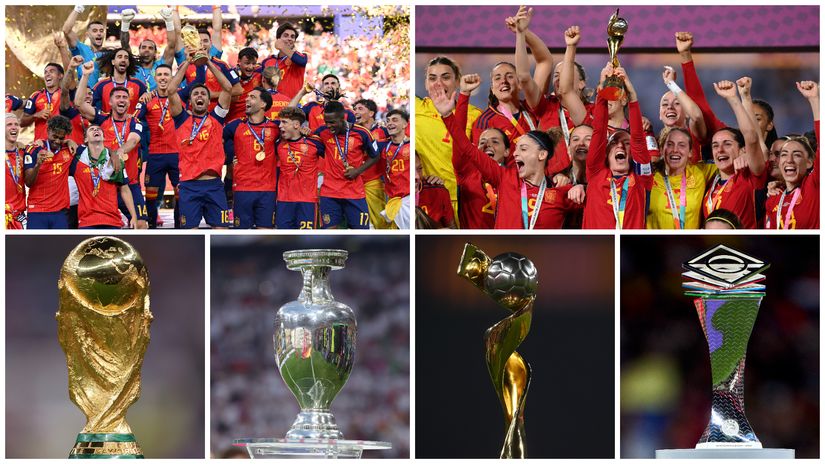
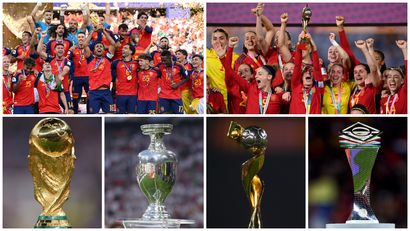
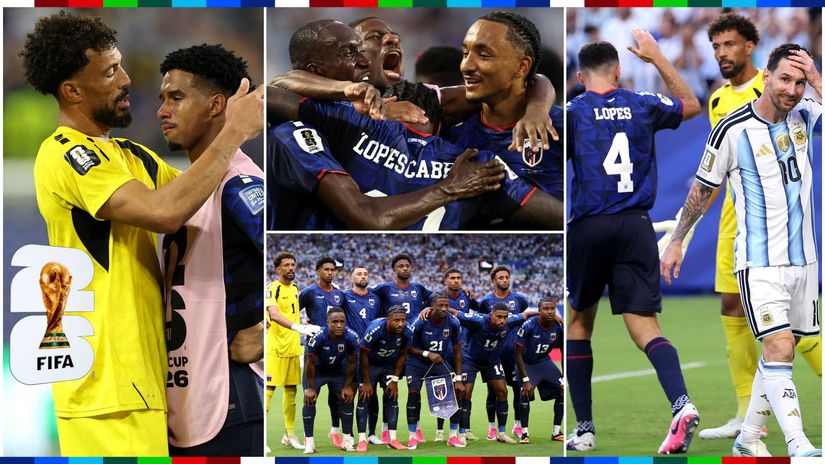
For the first time in history, one country simultaneously holds the men's and women's FIFA World Cup titles. What Aitana Bonmati, Alexia Putellas, Olga Carmona and the rest of La Roja accomplished in Australia and New Zealand in 2023 has now been matched by Rodri, Lamine Yamal, Mikel Oyarzabal and company, who lifted the 2026 World Cup trophy. History has been made.
🚨 𝗢𝗙𝗙𝗜𝗖𝗜𝗔𝗟: Spain are the first nation ever to hold both the women’s and men’s world titles simultaneously.
— Carlos Lago (@carloslagowork) July 20, 2026
Women’s champions: 2023.
Men’s champions: 2026.
Spain rule the world. 🇪🇸🏆 pic.twitter.com/vCep9PKE5j
But this story is not about one final against Argentina. It is not even about one trophy. It is about a system.
While most national teams build their success around one golden generation, Spain has built a factory of footballing excellence. When the era of Xavi, Andres Iniesta and Sergio Busquets came to an end, many expected years of decline. Instead came Gavi, Pedri, Rodri, Yamal, Pau Cubarsi, Nico Williams and a new wave of extraordinary talent.
Different faces. The same identity.
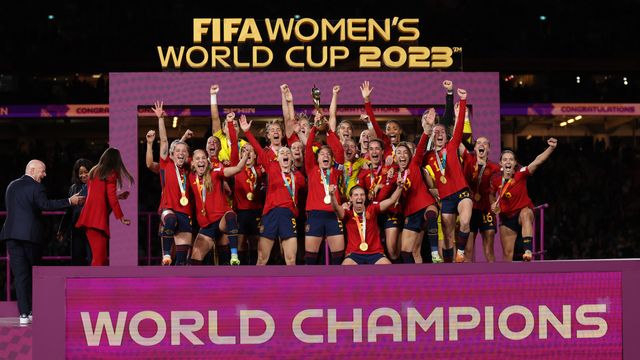 The Spain women's national team with the 2023 World Cup title (©Getty Images)
For years, people claimed that tiki-taka was dead. And perhaps it was – at least the version built on endless sideways passes. But its essence survived. Ball control, technical superiority, intelligent positioning and the courage to keep playing football under the greatest pressure remain the hallmarks of the Spanish school. Today's Spain plays with greater pace, more verticality and far more directness than the side that dominated world football fifteen years ago, yet the philosophy has never changed.
Even more remarkable is that the very same philosophy can be seen in the women's game.
Few countries have men's and women's national teams that look as though they have been developed under the same footballing blueprint. Spain does. The way both teams build attacks, dominate possession, press high and trust their technical ability reflects a shared football culture that has become the envy of the world.
Spain the favourites for the 2030 World Cup already? 🇪🇸👀
— 433 (@433) July 23, 2026
Most of the players leading Spain today will still be there by the time the next World Cup arrives. If this talented generation keeps developing, they could be the team everyone wants to avoid in 2030 😅
Could this… pic.twitter.com/ZZuREPqziI
That is no coincidence. It is the product of decades of planning.
La Masia may be the most famous symbol of Spain's player development, but it is far from the only one. Academies across the country produce footballers who grow up learning the same principles. Coaches go through demanding educational pathways, the federation insists on continuity throughout the youth ranks, and the transition from youth national teams to the senior squad often feels seamless.
Luis de la Fuente perfectly embodies that philosophy. He spent years guiding Spain's youth teams to European titles before taking charge of the senior side and continuing the winning tradition without disrupting its identity.
The results speak for themselves.
European champions. Olympic champions. Add the UEFA Women's Nations League crown and the women's World Cup title to the equation, and it becomes impossible to deny that Spain is living through the greatest era in its football history.
Perhaps Spain's greatest achievement is that its success no longer depends on one exceptional generation.
Once it was Xavi, Iniesta, David Villa and Iker Casillas. Today it is Rodri, Yamal, Cubarsi and Oyarzabal. Tomorrow it will be another group of youngsters currently developing on training pitches in Barcelona, Bilbao, Valencia or Seville.
Trophies come and go. Generations rise and fall. But when you build a system that is bigger than any individual, success stops being an exception and becomes an expectation.
That is why this is not simply the story of Spain's second World Cup star. It is the story of footballing hegemony.
And the question facing the rest of the world today is no longer how to beat Spain in a single match.
It is how to catch up with a nation that has become the benchmark of world football – simultaneously in both the men's and women's game.
By: MIHAJLO ZLAJIC