


How big hearted Mwamba RFC player Samuel Mbeche uses free time to champion for eye care off the pitch
.jpg)
.jpg)
.jpg)

Reading Time: 6min | Mon. 17.06.24. | 21:03
Data from Christian Blind Mission (CBM) also shows that of the 7.5 million people in Kenya who have problems related to vision loss and impairment, only 1.6 million have access to effective eye care services
Seeing is a gift and protecting vision has become Samuel Mbeche’s top priority as he strives to raise awareness of the importance of eye care.
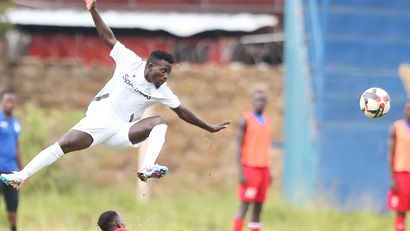
Mbeche is already a household name in Kenya Rugby, having played for former Kenya Cup side Masinde Muliro University of Science and Technology (MMUST) Rugby.
He has been serving Mwamba since graduating from MMUST.
Beyond his prowess on the pitch, Mbeche has been dedicating time and energy to an equally impactful mission; spreading awareness on eye care.
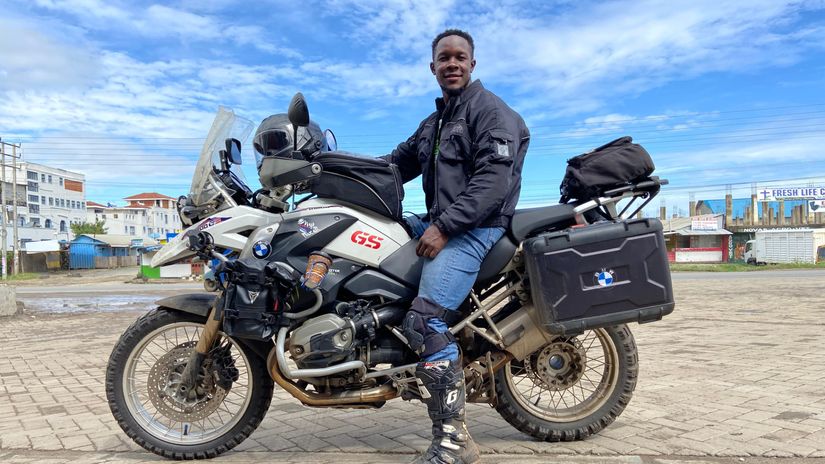
On May 10, 2024, he embarked on an extraordinary mission named ‘Eyes for Africa on Two Wheels’ where he covered over 13,000 kilometers from Nairobi to South Africa in 22 days.
He traversed 10 countries. Interestingly, the journey was not by flight or car, but by motorcycle. Yes, you read that right.
Mbeche’s interest in eyecare was ignited by observations of the widespread neglect of eye health in many regions.
He noticed that many people, especially in rural areas suffered from preventable and treatable eye conditions simply due to a lack of awareness and access to proper eye care.
Determined to make a difference, he decided to combine his love for riding with his mission to educate and inform.
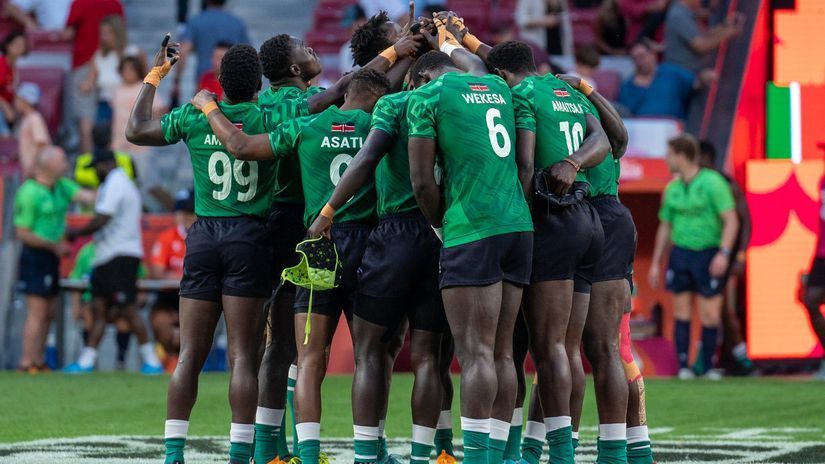
According to research by the World Health Organization (WHO), visual impairment is a significant health problem in the African region.
Approximately 26.3 million people in the African Region have a form of visual impairment.
Of these, 20.4 million have low vision, and 5.9 million are estimated to be blind. It is estimated that 15.3% of the world's blind population reside in Africa.
With today’s knowledge and technology, up to 80% of blindness is preventable and treatable.
Cost-effective interventions are available for the major causes of avoidable blindness.
However, millions of people in the region remain at risk of visual loss due to the lack of eye-care services.
“Eye care is often overlooked in our society, yet it is crucial for our overall well-being, I saw the need and the gap, looking at Africa and in Kenya, the process of eye care is very limited, where you go to hospitals, you’ll just find general practitioners. I wanted to do something bold to draw attention to this cause for people to learn, and what better way than a challenging ride across 13 countries,” Mbeche told Mozzart Sport.
Data from Christian Blind Mission (CBM) also shows that of the 7.5 million people in Kenya who have problems related to vision loss and impairment, only 1.6 million have access to effective eye care services.
Yet, 75% of these eye diseases can be treated to prevent sight loss.
-2.jpg)
Unfortunately, the affected do not have support and live with the impact of their conditions.
“Kenya is one of the countries with preventable blindness issues, preventable means something could have been done but it wasn’t done, many people don’t know this and that was my key motivation to raise eye care awareness” Mbeche explained.
The journey was far from easy. From harsh weather conditions to navigating treacherous terrains, and paperwork at border crossings, Mbeche conquered it all.
“Fatigue was my main challenge, at some point, I ran out of cash when I was in Zambia due to many taxes I had to pay like Carbon tax, road permits, and Interpol clearance which I never knew, and of course some harsh weather. In Zimbabwe, I even got lost and found myself in the middle of nowhere, no roads, luckily, I had the right bike and kept going, I took it as part of the adventure,” he recalled.
“I had to be patient and persistent, especially when officials were not familiar with the nature of my journey. At some stage, I got arrested and released a few times but all in all I can term my journey a success,” Mbeche revealed.
Despite the challenges, there were good Samaritans along the way who were willing to offer him the much-needed help.
“I made contact with different people in different countries who were telling me what to avoid, what to expect, roads to use, and the hospitality I received was kind from strangers,” he said.
This particular memory lingers in his mind:
“One memorable thing is when I got to Lusaka, Zambia I met someone who was a high state official in terms of security, he contacted all the police stops between Lusaka and Livingston, they knew I was coming and kept stopping and just checking up on me, at some point I thought I was being arrested only to get greetings and well wishes, He went ahead and offered me 200 kwacha just for breakfast in addition I was given a police escort to the hotel where he reserved for my accommodation. It was heartwarming to see the solidarity and support for my cause,” he smiled as he explained.
Beyond spreading eye care awareness, Mbeche reveals that the journey reminded him of the beauty of the African continent.
For instance, the stunning Namib Desert was a beauty to behold.
“It reminded me of the beauty of our continent and why we need to preserve and protect it,” he said.
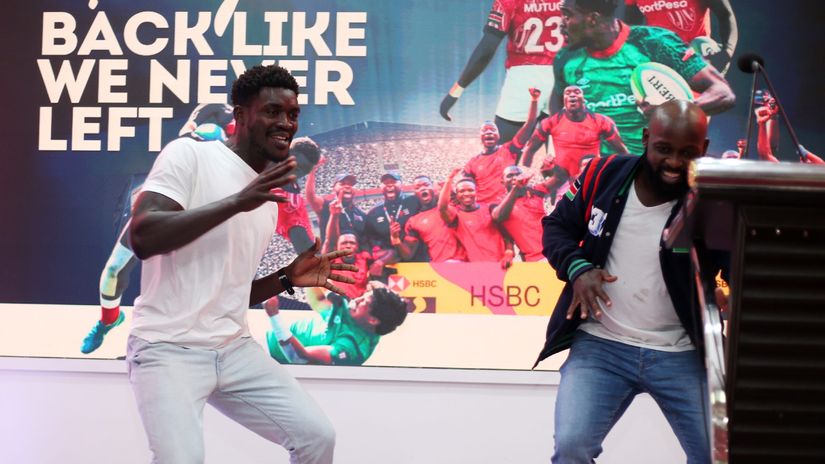
This being his first major ride, the optometrist hopes to make more impact through such rides in the future.
He is determined to protect the gift of sight in every human being.
“This is just the beginning. I plan to undertake more such initiatives to keep the conversation about eye care going and do better things, it’s been a learning process, I strongly believe everyone deserves to see the world clearly, and if my journey can help even a few people, it’s all worth it,” he concluded.
_(1).jpg)
Mombasa-based optician Brian Ongaya argues that many people, especially in rural areas, are unaware of how critical regular eye examinations and early detection of eye conditions are in preventing serious vision problems.
This gap in knowledge, according to Dr. Ongaya, can lead to the progression of preventable eye diseases, resulting in decreased quality of life and even blindness.
“Very few people understand the importance of eye care. Maybe people who are working in urban areas or exposed to eye victims are aware. The people in Mashinani are hardly aware,” he offered.
The optician went on to note that myopia, conjunctivitis, and diabetic retinopathy are the main types of eye illnesses.
“Myopia progresses as you grow and you may end up blind if you do not get early intervention. All these are preventable and treatable if people get awareness at a tender age,” he said.
He highlighted several early signs of eye illnesses that people should be aware of to ensure timely intervention and treatment and recommended reduced screen time, proper diet, and healthy lifestyles to maintain proper eyesight.
“Eye redness, frequent headaches, and difficulty focusing on objects. Other symptoms to watch for are blurry vision, increased sensitivity to light, and the presence of floaters or spots in one's field of vision.
When a baby is still in their formative days, it is advisable to spend more time outside than indoors to help strengthen eyesight. I recommend two hours of screen time at most in a day. Eat a healthy diet like carrots, fruits, and vegetables to strengthen your eyesight.
You need to have your eyes checked at least yearly. You never know you have some of these problems until your vision starts being blurry, but mostly it's too late. Let’s normalize eye checkups every year,” Dr. Ongaya concluded.