


Why Kenyan clubs are investing in video analysis









Reading Time: 6min | Fri. 24.07.26. | 06:56
Much of their work happens behind closed doors, away from cameras and long after training has ended
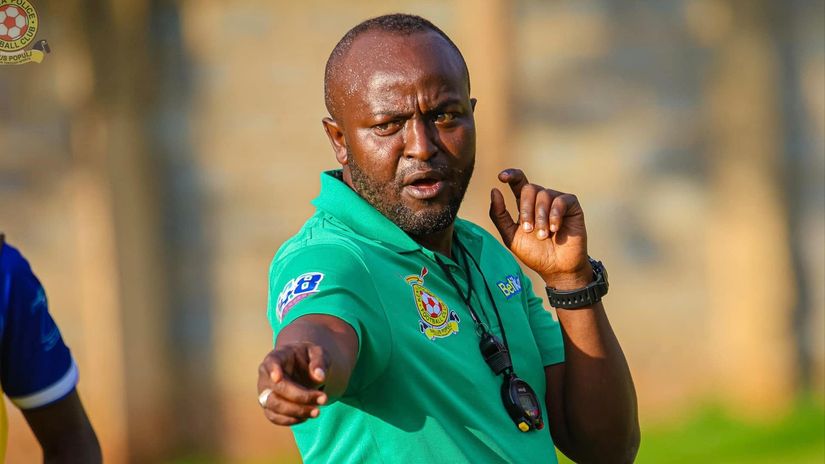
When Patrick Gitagia walked into Bandari as the club's newest performance analyst, it barely registered as one of the headline moves of the transfer window.
There were no cheering crowds, no unveiling fanfare, and no transfer fee to debate.
Yet his appointment could prove to be one of the most significant signings the club has made this season.
Download our Mozzart Sport App for more news
Gitagia, who previously worked with Kenya Police FC, Nairobi City Stars, and Mathare United FC, joins Bandari's new technical bench led by head coach Charles Okere and assistant coach Elvis Ayany.
Although he already holds a CAF C coaching license, a qualification that would ordinarily place him on the training pitch, he has chosen to specialize in an area that is quietly redefining football around the world: performance and video analysis.
For decades, Kenyan football revolved around what coaches saw from the touchline and what players remembered after the final whistle.
Tactical meetings often relied on handwritten notes, instinct, and experience. Today, however, football has become a game of information.
Every pass, every defensive movement, every pressing trigger, and every set-piece routine can be recorded, reviewed, and dissected long before the referee blows the first whistle.
Gitagia belongs to a growing breed of football professionals who are helping Kenyan clubs embrace that reality. The analyst's office is rarely the dugout.

It is more likely to be a laptop, a bank of video clips and hours spent studying opponents that most supporters will never see.
To many supporters, a video analyst is simply the person recording matches. In reality, the role is far more sophisticated.
Modern analysts break down opponents' attacking patterns, identify weaknesses in defensive structures, prepare clips for coaches and players, study individual performances, and provide evidence that shapes training sessions throughout the week.

They monitor transitions, pressing patterns, set-piece tendencies, and player positioning, turning hours of footage into concise information that coaches can apply on the training ground.
Increasingly, analysts also play an important role during matches, relaying tactical observations to the bench and helping coaches identify problems that are difficult to spot from pitch level.
It is work that rarely attracts headlines, but its influence is often evident in the outcomes of matches.
A role he first had at Mathare United more than half a decade ago, and having in between gotten his papers and even served at former champions Kenya Police FC, he now travels with that expertise to Bandari.

His appointment reflects more than an individual career move; it reflects a broader shift in Kenyan football, where clubs are beginning to appreciate that success is no longer built solely on physical preparation and technical ability.
Increasingly, it is also built on information.
For years, video analysis was considered a luxury reserved for Europe's elite clubs. Today, it is steadily becoming part of the football culture in Kenya.
Across the FKF Premier League, several clubs have invested in dedicated analysts whose responsibilities extend well beyond filming matches.
At AFC Leopards, Josh Angatia has become an integral member of the club's technical setup, helping translate hours of footage into tactical insights.

Tusker FC has also embraced the trend through analyst Kirimi Gitau alias Gits Junior, whose work supports one of the country's most consistently competitive sides.
Perhaps the strongest endorsement of the profession, however, comes from the national team.
Nicholas Kimanthi has established himself as one of Kenya's foremost performance analysts through his work with Harambee Stars, earning respect within coaching circles for his meticulous preparation and detailed opponent reports.
His role illustrates just how essential analysis has become at the international level.
International football offers little room for guesswork. National teams have limited time together before major fixtures, making preparation even more critical.
Analysts therefore shoulder the responsibility of condensing hours of footage into digestible information that allows coaches and players to understand an opponent within a matter of days.
The growing prominence of specialists such as Kimanthi, Gitagia, Angatia, and Gits Junior demonstrates that performance analysis is no longer an experiment in Kenyan football. It is becoming standard practice.
The transformation is hardly unique to Kenya.
Across world football, video analysis has evolved from a support function into one of the game's most influential disciplines.
Former Liverpool manager Jürgen Klopp often spoke about the importance of detailed preparation, observing that football is increasingly won through organization and understanding as much as through talent.
Behind every Liverpool performance during their Premier League and UEFA Champions League-winning years was an extensive analysis department that dissected opponents, reviewed pressing structures, and prepared players with individualized video clips.
At Manchester City, Pep Guardiola's meticulous tactical preparation is well documented.
Every opponent is studied extensively, with analysts producing detailed reports that inform everything from training drills to substitutions on match day.
Morocco's remarkable run to the quarter-finals of the 2026 FIFA World Cup was built not only on technical excellence and discipline but also on exhaustive preparation.
Every opponent was studied in detail, allowing the Atlas Lions to execute highly organized tactical plans against some of the world's biggest footballing nations.
The message is clear. Modern football rewards preparation as much as inspiration. One of the greatest strengths of video analysis is its objectivity.
Football has always been a game of opinions. A coach may believe a full-back defended well.
A player may feel he made the correct decision. But video often tells a different story.
Rather than relying on memory or emotion, analysts provide evidence.
Players can watch themselves losing defensive shape, arriving late to a press or failing to track runners.
Conversely, they can also reinforce positive habits by reviewing successful moments. Learning becomes visual.
That process accelerates player development, particularly among younger footballers who respond better to seeing their own performances than merely hearing verbal instructions.
Analysis also benefits recruitment. Instead of relying solely on scouting reports or recommendations, clubs can study prospective signings through multiple matches, evaluating not only technical quality but also movement, decision-making and tactical discipline.
Even in-game coaching has changed. Analysts frequently communicate observations to the technical bench during matches, helping coaches adjust formations, identify emerging weaknesses or recognize patterns deweaknesses,n the field.

In an era where many matches are decided by the smallest margins, such insights can prove decisive.
Kenyan football has often been criticized for lagging behind the continent's leading leagues in professionalism and tactical sophistication.
Video analysis presents an opportunity to narrow that gap.
North African clubs have invested heavily in analysis departments for years. South African teams increasingly integrate technology into daily training and performance review.
Even clubs operating on modest budgets understand that information is one of football's most valuable resources. We are beginning to follow that path.
While many clubs still face financial limitations, advances in technology have significantly lowered the barriers to entry. High-definition cameras are more affordable than ever.
Analysis software has become increasingly accessible. More importantly, young Kenyan coaches are showing greater interest in developing analytical skills alongside traditional coaching qualifications.

The emergence of specialists such as Gitagia and company reflects that changing mindset.
Rather than viewing analysis as an optional extra, clubs are beginning to see it as an investment in competitive advantage.
Gitagia's move to Bandari may not dominate transfer headlines. Performance analysts rarely score goals, celebrate in front of supporters or conduct post-match television interviews.
Much osupporters,rk happens behind closed doors, away from cameras and long after training has ended.
The gradual change reflects a broader movement taking shape across the FKF Premier League, where analysts like Kimanthi, Angatia, Gits Junior, and Gitagia are quietly reshaping how the game is understood.
Their names may never receive the same acclaim as star strikers or celebrated coaches.
But as Kenyan football embraces technology, data, and tactical intelligence, they may well become some of its most influential figures. Because in the modern game, matches are often won long before the players walk onto the pitch.
They are won in meeting rooms, in analysis suites, and behind computer screens, one video clip at a time.