


EPL arrivals day: Garnacho on rehabilitation at Aston Villa







.jpeg)
Reading Time: 3min | Thu. 23.07.26. | 19:11
We had already reported on the Argentine's potential move to the Birmingham club, and now it has officially been confirmed
A major rebuild is underway at Aston Villa. The Birmingham club has been one of the busiest sides since the summer transfer window opened, generating significant income while also investing heavily in the squad. Their latest signing, however, comes through a creative deal that delays the transfer fee until next summer.
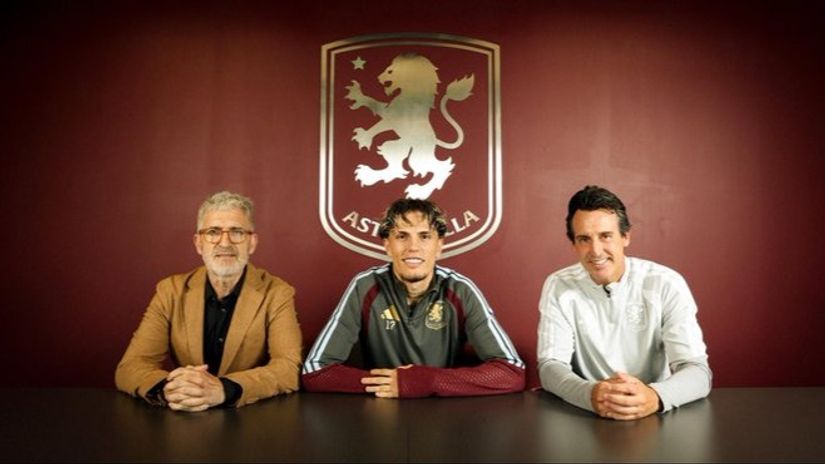
Villa have officially welcomed Alejandro Garnacho, who joins from Chelsea on a season-long loan. The agreement includes an obligation to buy if certain conditions are met, while a four-year contract is already waiting for the Argentine once the move becomes permanent.
Alejandro. Announced. pic.twitter.com/2rsRli9q8Q
— Aston Villa (@AVFCOfficial) July 23, 2026
Chelsea are expected to receive €50 million for Garnacho—but the structure of the deal suggests they may already be confident that payment is guaranteed. Both clubs appear to have found a solution that perfectly suits their financial situations.
Just two days earlier, Chelsea completed the signing of Morgan Rogers from Aston Villa for €138 million, making him the most expensive English player in history. Villa had the funds to sign Garnacho outright, but doing so immediately would have created a financial headache under UEFA regulations. Instead, the clubs opted to postpone the payment through an initial loan.
UEFA rules state that if two clubs exchange players within a period of fewer than 45 days—as is the case here—the financial impact is assessed based on the net difference between the transfer fees. That would have been a significant problem for Villa, who are currently operating under a UEFA Settlement Agreement and needed to record the full profit from Rogers' sale in this financial year.
Had Garnacho been signed immediately for €50 million, the transfer could have been treated as part of a player exchange, dramatically reducing the profit Villa could register from selling Rogers.
Chelsea face similar Financial Sustainability concerns and also need to maximize profits from player sales during the 2026/27 accounting period. The loan-with-an-obligation structure allows Villa to book the entire Rogers profit this year, while Chelsea can postpone recording the income from Garnacho's sale until the next financial cycle, when it better suits their books.
Only the two clubs currently know the exact conditions that would trigger the mandatory purchase. However, UEFA has the authority to intervene if it believes the clauses are effectively guaranteed—for example, if the obligation depends on something almost certain to happen, such as Garnacho making a single appearance or Villa simply avoiding relegation. In that case, UEFA could immediately classify the deal as a permanent transfer.
Aware of that possibility, Chelsea and Villa are believed to have designed the agreement so that the conditions remain realistic but cannot be considered virtually automatic.
There is little doubt UEFA will examine the paperwork closely, but if both Premier League clubs have structured the deal carefully enough, they could remain fully compliant with the regulations.
When 19-year-old Alejandro Garnacho inspired Man Utd's comeback from 2-0 down against Aston Villa ⚽️ pic.twitter.com/n9K5v0l4kx
— Premier League (@premierleague) July 23, 2026
From a football perspective, Unai Emery has finally secured a player he wanted to sign last summer, while Garnacho gets the opportunity to revive his career under a manager renowned for developing talented players. The Argentine finished last season with eight goals and four assists in 43 appearances for Chelsea.
"We're delighted to welcome Alejandro. He's an exceptionally talented young player and showed us a real desire to be part of our project," Emery said after the transfer was confirmed.
Before completing the Garnacho deal, Aston Villa had already strengthened their squad with Johan Manzambi from Freiburg for €60 million, Joao Gomes from Wolves for €40 million plus €5 million in add-ons, and Modou Keba Cissé from LASK for €5.5 million.