


U20 World Champions - how did it happen?
.jpg)
.jpg)
.jpg)
Reading Time: 5min | Mon. 20.10.25. | 21:22
Morocco's success in all football levels is not a surprise given the strategy implemented
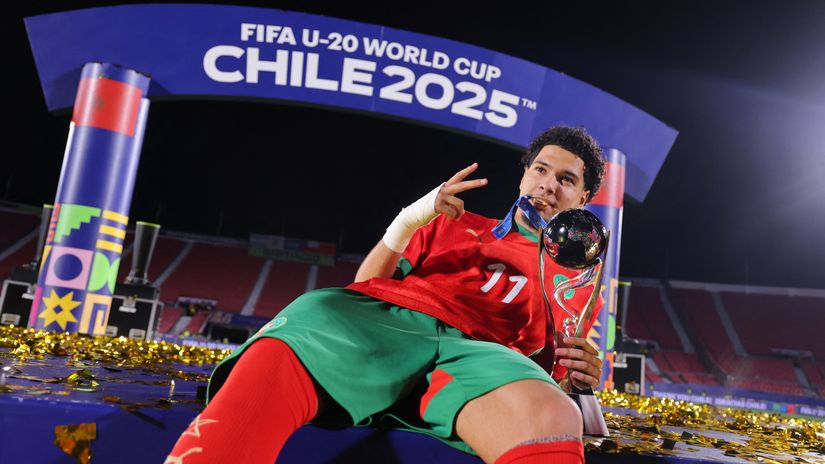
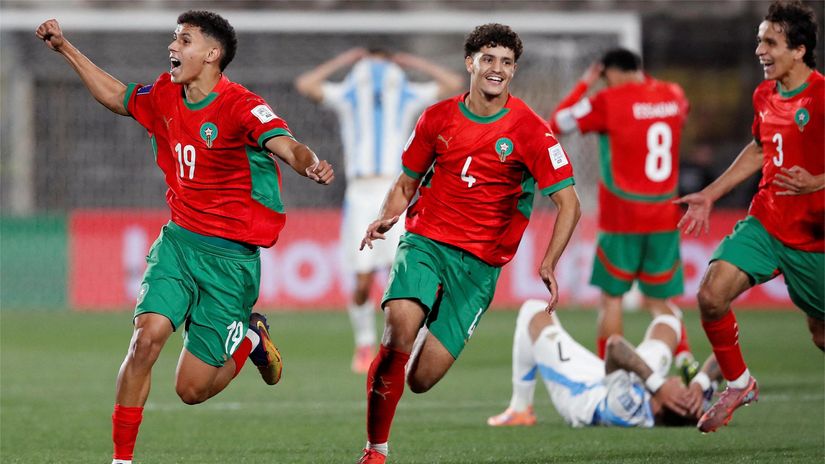
Morocco is on fire with joy! Morocco is the world football champion in the U-20 category! The Atlas Lions have tonight become only the second African team ever to win the world title at the youth level, succeeding Uruguay on the throne. In the grand final held in Santiago, Chile, the Moroccans defeated heavily favored Argentina 2–0, confirming their incredible football rise in recent years. When journalists asked whether this means Morocco could aim for the senior world title in 2030, when they’ll be one of the World Cup hosts, coach Mohamed Ouahbi replied:
“And why wait until 2030?! Morocco will try to do that already next year.”
Of course, that was said in the heat of the moment, with adrenaline still high from the celebration. Yet, the fact remains — Morocco currently has a truly remarkable pool of players. After all, they reached the semifinals in Qatar, so it’s natural to believe they could take another step or two forward. Especially when you have stars like Achraf Hakimi, Youssef En-Nesyri, Amine Adli, Sofyan Amrabat, Yassine Bounou, Nayef Aguerd, Brahim Díaz, Noussair Mazraoui, and rising talents such as Bilal El Khannouss, Eliesse Ben Seghir, Ismael Saibari, and Adam Aznou.
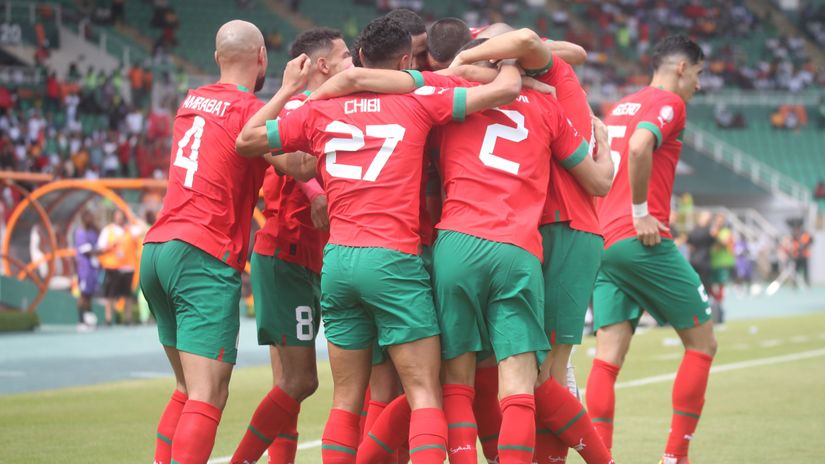
As for the young men who triumphed in Chile — we’ll surely hear more about them soon. One thing is certain: Othman Mama (20), Watford’s right winger and one of the best players of the tournament, will likely soon earn a call-up to the senior team. Although the championship was somewhat weakened — since major clubs refused to release their best young players (it wasn’t held in an official FIFA window) — that doesn’t diminish Morocco’s achievement. On their way to the title, they beat nearly all the world’s elite teams: Spain and Brazil in the group stage, France in the semifinals, and finally Argentina, whose squad was six times more valuable according to Transfermarkt. A remarkable detail: whenever Argentina reached the final in this age category — and they’d done so five times before — they hadn’t lost in 42 years! Argentina dominated possession (75% to 25%) and had more overall attempts (20 to 8), but Morocco created the better chances. Their two goals didn’t come by accident. The hero of the final was Yassine Zabiri (20), a Famalicao player, who scored both goals in the 12th and 29th minutes. The second goal came from an assist by the aforementioned Othman Mama.
.jpg)
Morocco is thus living through the most fruitful years in its football history. Clearly, none of this success is a coincidence. Besides the 2022 World Cup semifinal and this youth world title, Morocco also won a bronze medal at the Paris Olympics. And if they achieve a good result at the upcoming Africa Cup of Nations in January — where they’ll be hosts — we can truly speak of lasting success. Moreover, winning the continental title would be the perfect prelude to the 2026 World Cup in the U.S., Mexico, and Canada. It’s also worth noting that Walid Regragui’s team recently broke Spain’s record for consecutive wins after defeating Congo in Rabat. They were flawless in World Cup qualifying — 8 wins in 8 matches, with a 22:2 goal difference — becoming the first African nation to secure qualification. In short: Morocco has been doing things right in recent years.
The #U20WC Final: Argentina 🆚 Morocco pic.twitter.com/W052yo7god
— FIFA World Cup (@FIFAWorldCup) October 20, 2025
How it all began…After missing four consecutive World Cups at the start of this century (2002, 2006, 2010, and 2014) and suffering early exits in the Africa Cup of Nations (2006 and 2008), King Mohammed VI, a great football enthusiast, decided to take matters into his own hands. He gathered the nation’s top sports experts as advisors and, together, they developed a national football development strategy. The plan culminated with the King’s decision to fund the construction of a state-of-the-art football center. Special teams were sent across the country to find the perfect location. The choice fell on Sale, a city near the capital Rabat. The project came to life soon after. The Mohammed VI Football Academy, as expected, bears his name and cost around 15 million euros. It was personally inaugurated by the King in 2009.
“The purpose of this facility is to reshape the number-one sport in our country. We want to help develop football in Morocco and make it easier for young players to adapt to professional competition“ he said at the opening.
The initiative was inspired by the lack of quality sports facilities and the decline in local talent. Specialized training programs were developed by domestic and international experts, under the King’s financial patronage and the supervision of his personal secretary, Mounir Majidi. The academy quickly established a rigorous talent-identification system. Satisfied with early results, the King allocated more funds to create smaller regional training centers — in Agadir, Tangier, and Saidia — all following the same model and curriculum.
🇲🇦🏆 MOROCCO ARE #U20WC CHAMPIONS!#LegendsInTheMaking pic.twitter.com/kGw3slIssc
— FIFA World Cup (@FIFAWorldCup) October 20, 2025
Summed up in three main goals: Discover talent nationwide, implement academic and sports education programs, prepare young players mentally and professionally for senior football. In short: the academy accepts about 50 students aged 13–18, all on royal scholarships. Education there extends beyond football — it covers general schooling as well. The facility spans 2.5 square kilometers, featuring both outdoor training areas and a residential “village.” It’s designed according to modern standards, infused with Moroccan cultural elements. The central courtyard is surrounded by five main buildings — dormitories, classrooms, medical centers, and recreation areas.
The results exceeded expectations. In its first 15 years, the academy produced five full internationals: Abdel Abqar (Getafe), Nayef Aguerd (Marseille), Youssef En-Nesyri (Fenerbahce), Hamza Mendyl (Aris), and Azzedine Ounahi (Girona) — and this looks like just the beginning. Interestingly, since 2014, the Royal Moroccan Football Federation has been led by Fouzi Lekjaa, Morocco’s Minister of Finance. He was among those who pushed to dismiss Vahid Halilhodzic even after the Bosnian coach qualified the team for the World Cup in Qatar.
“It’s as if the coach was trying to adapt our game to our opponents. He changes formations and styles too often. We don’t want that. We have quality players, and we want others to adapt to us. We want to build our own style” Lekjaa said before dismissing him. Many called it chaos in Moroccan football — but just a month later, Morocco achieved the greatest success in its history: a World Cup semifinal, eliminating Spain and Portugal along the way. It seems they have no intention of stopping there...