


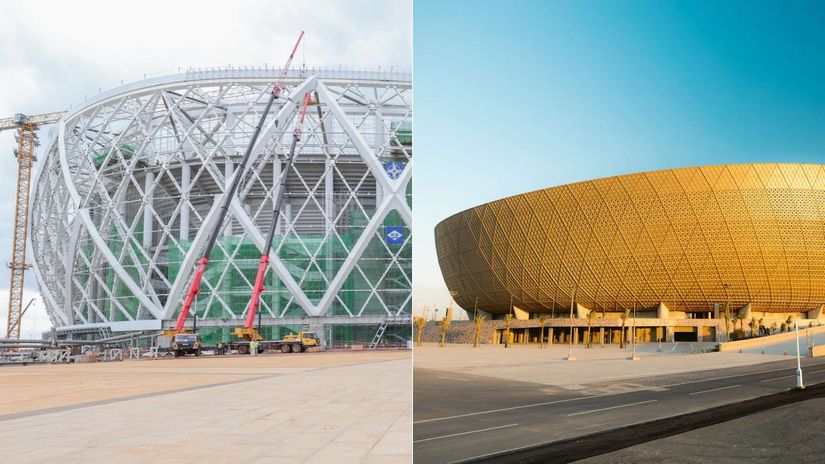
Talanta Stadium projected to cost more than 2022 FIFA World Cup Lusail Stadium









Reading Time: 4min | Tue. 25.11.25. | 19:43
This means that the total amount for Talanta Sports City, considering the principal and interest, will be approximately Ksh103 billion
It has now emerged that the Talanta Sports City Stadium is set to cost more than the Lusail Stadium - the largest stadium in Qatar, and one that hosted the 2022 FIFA World Cup final, this is according to Kiharu MP Ndindi Nyoro.
Follow our WhatsApp channel for more news
The Talanta Stadium is a brand new, ultramodern, 60,000-seater arena being constructed by the Government of Kenya (GoK) along Ngong Road, Nairobi.
Kenya embarked on the construction of the stadium after a successful joint bid alongside Tanzania and Uganda, dubbed PAMOJA (Swahili word for together), to co-host both the 2024 African Nations Championship (CHAN) and the 2027 Africa Cup of Nations (AFCON).
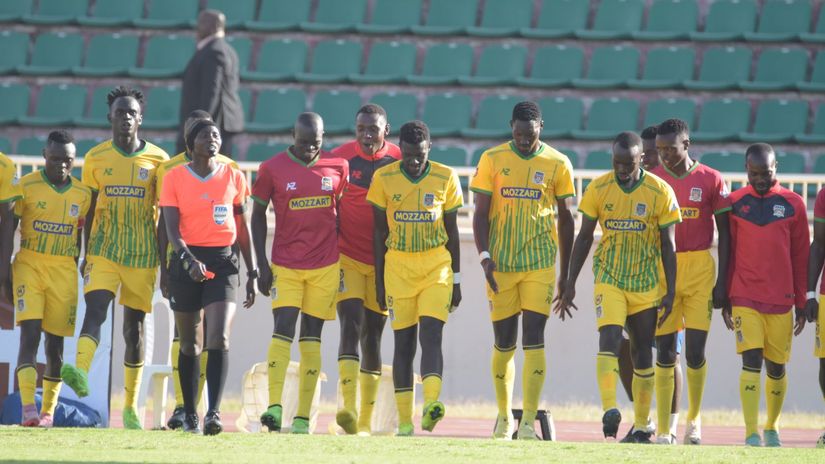
While Nyayo National Stadium and the Moi International Sports Centre, Kasarani, were earmarked and used for CHAN, Talanta is expected to not only add to the list for AFCON stadia but also serve as Kenya’s main facility in the biennial tournament.
According to initial reports to the Kenyan National Assembly (parliament) by both the Ministry of Sports and the Ministry of Defense, which are supervising the project, the facility was set to cost $344.5 million (approximately Ksh44.7 billion).
However, to raise money for the project, the issuer, Linzi Finco 003 Trust, a subsidiary of the Pan-African Liaison Group, reportedly listed a Ksh44.79 billion Infrastructure Asset-Backed Security (IABS) on the Nairobi Securities Exchange (NSE).
The bond was one of the most sophisticated structured financings in East Africa, as it was backed by future revenue from the facility and domestic capital mobilisation.
The minimum subscription for the bond was Ksh1 million with a 25-year maturity due in July 2040, with investors earning a tax-free interest of over 15 years that will total to Ksh57.6 billion.
This means that the total amount for Talanta Sports City, considering the principal and interest, will be approximately Ksh103 billion.

This amount is higher than the $767 million (approximately Ksh 99.2 billion) that Lusail Stadium cost.
Lusail is an 88,000-seater stadium inspired by the play of light and shadow, with exterior features such as the intricate golden bowl-shaped geometry inspired by local craftsmanship.
The stadium also has a state-of-the-art cooling system that keeps both the pitch and the spectator areas cool in hot weather.
Additionally, the stadium also features a retractable roof that provides a shed and regulates internal temperatures, features that Talanta Stadium lacks despite the reported high cost.
Apart from Lusail, Talanta will also be more costly than the Stade Hassan II of Morocco, which is under construction and is expected to be the biggest in Africa, hosting 115,000 spectators.
Stade Hassan II will cost $500 million (approximately Ksh64.5 billion), Ksh38.5 billion less than Talanta Stadium and only Ksh6 billion less than the cost of the principal amount of constructing another stadium similar to Talanta.

Nevertheless, construction of the flagship sporting infrastructure project continues at speed, with the latest videos and photos showing an almost complete roofing structure.
According to the latest photos of the stadium, the roofing works are advancing at a high speed, with the steel structures of the roof almost complete.
Inside the facility, partitioning for various rooms is ongoing, with wiring and plastering works complete in some of the rooms, which now await finishing and fittings.
Some of the salient features at Talanta will include 52 ultramodern VIP sky boxes meant to attract top captains of industries and investors in sports, six players’ changing rooms, and a doping room.
An aerial view of the facility shows little roofing works remaining, which should be complete by the end of November, if the progress trend is anything to go by.
The steel structures are held by the computerised hydraulic tension cable - a modern engineering technology that involves the use of tension as opposed to compression to stabilise the roof.
The tension cable is made from a combination of powerful hydraulic jacks, which are then combined with a network of high-strength cables that have the capacity to stabilise the roof.
Major wiring, especially for the stadium’s floodlights, were also installed together with the cable as it was lifted in phases.
Talanta is the first stadium in Africa and only the fifth in the world to use the modern technology, adding to its prestigious status across East and Central Africa upon completion.
The remaining works in the stadium leading to the operationalisation of the facility are expected to be complete by February 2026, at least according to Sports Cabinet Secretary (CS) Salim Mvurya.