


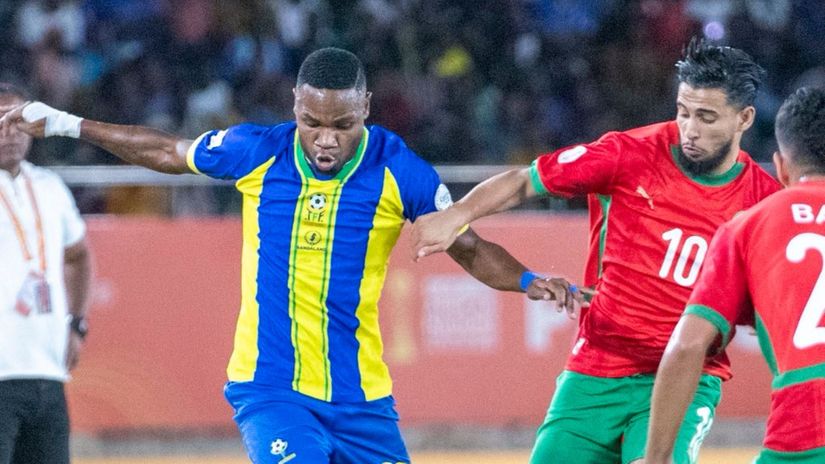
TACTICAL ANALYSIS: Morocco's game plan that ousted co-hosts Tanzania

.jpg)







Reading Time: 6min | Sat. 23.08.25. | 21:15
Tanzania can walk away with pride, having executed a coherent game plan that allowed them to compete toe-to-toe with one of Africa’s elite.
In front of a packed Benjamin Mkapa Stadium, Morocco and Tanzania faced off in a tense and tactical CHAN 2024 quarterfinal that ultimately saw the Atlas Lions advance to the semifinals with a narrow 1-0 victory.
Follow our WhatsApp channel for more news
The match was a rich tactical showcase, pitting Morocco’s direct transitions and structured buildup against Tanzania’s patient, width-focused play. While both sides had their moments, it was Morocco’s adaptability, organisation, and set-piece sharpness that proved decisive.
Tanzania set up
Tanzania began the match in a structured 4-3-3 setup, emphasising balance across all phases. Yakuob Suleiman was in goal, with Shomari Kapombe and Hussein Mohammed operating as full-backs, flanking centre-backs Dickson Job and Ibrahim Hamad.
In midfield, Yahya Abasi sat deepest, anchoring the trio alongside Salum Feisal and Yusuph Kagoma, who floated between box-to-box and attacking duties.
Up front, the trio of Iddy Nado, Suleiman, and Clement Mzize aimed to stretch Morocco wide and use speed to capitalise on spaces left in transition.
Morocco set up
Morocco, meanwhile, deployed a fluid 4-4-2 formation that often transformed into a 3-1-2-4 in possession. Al Harrar was between the posts, behind a defensive line of Boulacsout (right-back), Belammari (left-back), and central defenders Anas and Mchakhcheck.
In midfield, Khairi and Hrimat provided the engine, with Hrimat often dropping between the centre-backs to initiate buildup. On the flanks, Mehri and Baba provided width, while Sabir floated behind central striker Lamlioui.
This shape gave Morocco structural stability, with offensive flexibility through rapid transitions and positional rotations.
Morocco's build-up
From the first whistle, Morocco imposed a clear tactical identity: rapid transitions and direct attacks through the flanks.
Their diamond-shaped buildup involved Al Harrar acting as a +1 to evade Tanzania’s first line of pressure, while Hrimat dropped to receive and spread play, then Anas Bach and Mchackhchekh, the centre-backs, helped stretch wide.
Boulacsout and Belammari pushed high up the pitch, pinning Tanzania’s wingers and offering crossing outlets. Morocco’s strategy was to quickly advance the ball into wide areas and deliver early balls into the box toward Lamlioui, who thrived on runs behind the defense, off low crosses and near-post runs.
Tanzania build-up
Tanzania, in contrast, relied on methodical build-up and positional discipline. They attempted to stretch Morocco’s midfield horizontally by circulating possession across the back four and gradually pushing Salum and Kagoma higher into attacking positions.
Kapombe’s overlapping runs on the right and Nado’s speed on the left offered the clearest outlets. Mzize acted as the focal point in wide and central areas, supported by diagonal runs from the wide forwards.
Early on, this created moments of promise, particularly down the right, where Kapombe linked with Kagoma to isolate Morocco’s left-back.
First half
The first half saw Morocco edge control through more consistent final-third entries, mostly via the right side with Mehri, but Tanzania remained compact and disciplined out of possession.
Their mid-block allowed few central penetrations, forcing Morocco to settle for long shots or crosses from deep positions. When Morocco did threaten, it came from their ability to overload the flanks or from set-pieces.
Their corners and free-kicks consistently tested Suleiman, who was forced into early interventions.
Tanzania’s best moments came late in the half, when they briefly tilted the field in their favour. Their positional rotations in midfield allowed Salum and Kagoma to join the attack more freely, and by the 40th minute, their 4-3-3 began resembling a 4-2-4 in possession.
This added pressure to Morocco’s full-backs, especially on the right, where Nado began exploiting spaces behind the advancing Boulacsout.
In the 45th minute, Tanzania’s most intricate buildup saw quick central passes slice through Morocco’s midfield, releasing Mzize, whose low shot was comfortably saved by Al Harrar but showed the potential of Tanzania’s central progression.

Despite these moments, the half ended goalless. Morocco had slightly more possession and territorial advantage, thanks to their pressing triggers and willingness to attack quickly upon turnovers. Tanzania, however, had found rhythm in wide areas, giving them hope for the second half.
Second half
After the break, Morocco emerged with a clear sense of urgency. In the 50th minute, a precise through ball pierced Tanzania’s high defensive line, setting Lamlioui through on goal.
Suleiman’s aggressive and timely charge outside the box denied a clear opportunity, but the move typified Morocco’s attacking principle-quick vertical balls targeting the striker's movement between the defense.
The Atlas Lions continually funnelled play down the right, with Mehri cutting inside and Sabir dropping deep to receive and redistribute. Their fluid 3-1-2-4 structure kept Tanzania’s midfield guessing and forced full-backs Kapombe and Hussein into more conservative positions.
Morocco goal
The breakthrough finally came in the 65th minute. A quick free-kick, played short and taken before Tanzania could reset, found Belammari charging forward on the left.
His low delivery into the six-yard box was met by Lamlioui, who beat his marker to slot home at the near post. The goal encapsulated Morocco’s offensive philosophy - speed of execution, overloads in wide zones, and precise timing in the final ball.
In response, Tanzania made changes to wrestle back control. Sadun came in for Kagoma, offering more legs in midfield. Morocco responded by bringing on Moufid to shore up the right-back position and neutralise Nado’s increasing threat.
The game turned into a battle of flanks-Tanzania’s left versus Morocco’s right-with both sides attempting to exploit tired full-backs in the closing stages.
As the clock ticked down, Morocco shifted their focus to game management. Khairi was replaced by Amine Souane, adding composure and fresh legs in midfield.
Morocco’s shape became more conservative, often reverting to a flat 4-4-2 out of possession. They focused on controlling tempo, recycling possession through the backline, and drawing Tanzania out to create space behind.
The ball retention was effective, and by the 81st minute, Morocco had controlled most of the possession in the second half and led the shot count 6-2.
Tanzania, aware of the dwindling time, began pushing full-backs higher and committing midfielders into the box. But Morocco’s defensive setup, especially in central areas, was difficult to penetrate.
![Harambee Stars captain calls out Murang'a Seal striker for celebrating Kenya's CHAN defeat [VIDEO]](https://cdn3.mozzartsport.co.ke/upload/825x464/News/Image/2025_08/1755942015298_Untitled_design_-_2025-08-23T123745.144.jpg)
Anas and Mchakhchekh were dominant in the air, while the flanks were supported by wingers tracking back diligently. Every cross was contested, every switch covered, and Tanzania’s late surge was ultimately smothered by Morocco’s discipline.
Conclusion
The match ended 1-0 in favour of Morocco. Though the scoreline was narrow, the result was a tactical validation of Morocco’s match plan.
Their transitions, set-pieces, and in-game adaptability proved critical, especially in seizing the moment for the goal and then expertly managing the game thereafter.
Lamlioui’s movement and clinical finish made the difference, while Sabir Bougrine’s influence in linking play and drawing fouls helped Morocco maintain their tempo.
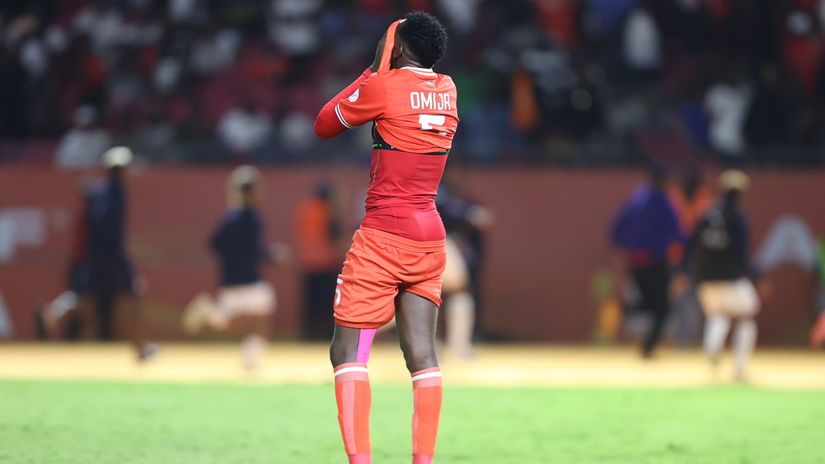
Tanzania can walk away with pride, having executed a coherent game plan that allowed them to compete toe-to-toe with one of Africa’s elite.
Their patient buildup, width-focused attacks, and midfield rotations created genuine threats, but they lacked a clinical edge in front of goal.

Players like Nado and Mzize showed flashes of danger, and the tactical evolution from conservative possession to late high pressing was commendable, even if it ultimately fell short.
In conclusion, Morocco’s victory was a blend of tactical sharpness, individual execution, and mature game management.
Their ability to adjust mid-game, press in waves, and control wide areas gave them the edge in a contest where the margins were incredibly fine. For Tanzania, it’s a story of growth-where structure and discipline took them far.