


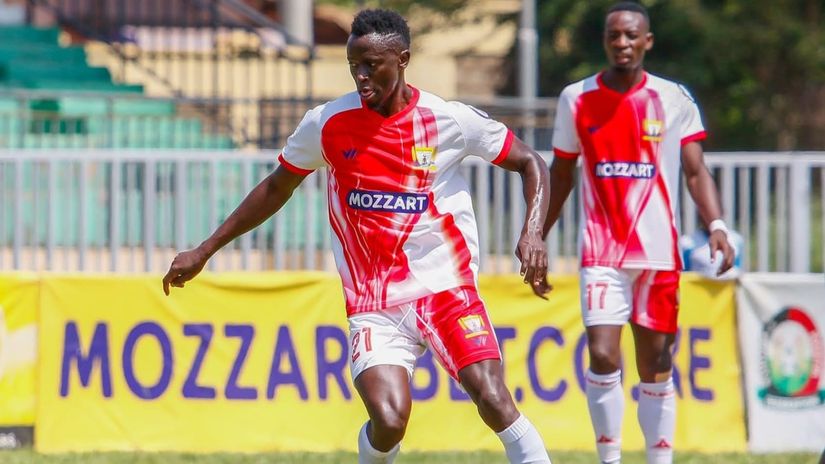
TACTICAL ANALYSIS: How Bandari frustrated Kakamega Homeboyz to a stalemate

.jpg)
.jpg)
Reading Time: 6min | Mon. 23.03.26. | 18:07
While Bandari struck first through a well-worked aerial sequence, Kakamega Homeboyz responded by exploiting central spaces after a defensive lapse
Bandari and Kakamega Homeboyz shared a 1-1 draw in an FKF Premier League match shaped by aggressive pressing, positional rotations, and contrasting build-up strategies.
Follow our WhatsApp Channel For More News
While Bandari struck first through a well-worked aerial sequence, Kakamega Homeboyz responded by exploiting central spaces after a defensive lapse.
The game evolved into a tactical contest, with both teams attempting to manipulate space through distinct approaches.
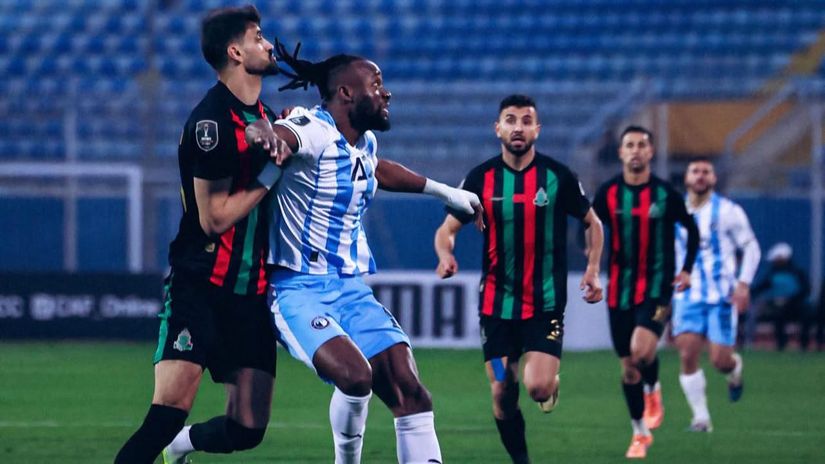
Ultimately, it became a dynamic chess match influenced by key moments, substitutions, and structural adjustments across both halves.
Kakamega Homeboyz set up in a 4-3-3, aiming to dominate through structured possession and width. Ibrahim Wanzala operated in goal behind a back four of Peter Ng'ang'a, Potiphar Odhiambo, Boniface Onyango, and Shafik Batambuze.
Eston Esiye anchored the midfield as a single pivot, supported by Glen Masava and Rodgers Ouma, who alternated between progression and forward runs.
The front three consisted of Moses Mudavadi on the right, Henry Omollo on the left, and Oliver Machaka as the central striker.
Their early approach focused on stretching Bandari horizontally through switches of play, particularly from Mudavadi to Omollo, while creating isolation scenarios on the flanks.
Machaka frequently dropped into midfield, facilitating third-man runs from Masava and helping connect phases of play.
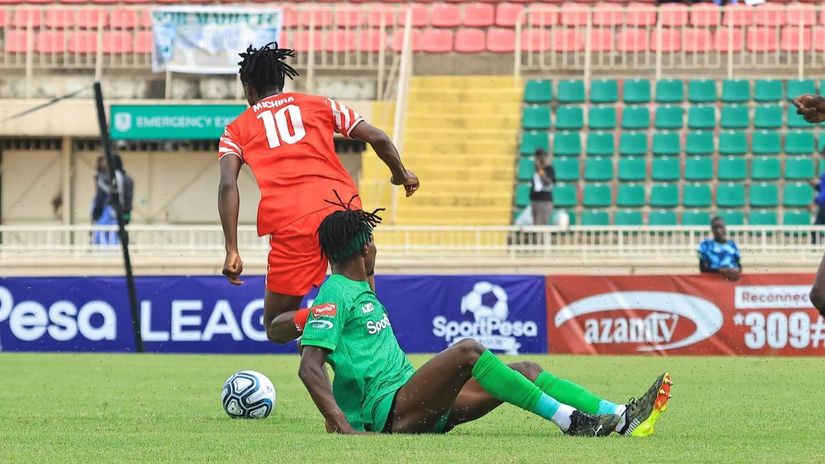
Bandari adopted a more flexible and pragmatic structure. Allaine Ngeleka started in goal behind a defensive unit of Joseph Onyango, Erickson Mulu, Brian Odera, and Shariff Majabe.
In midfield, Said Tsuma provided defensive stability, while Clifford Otieno supported progression. Geoffrey Ojunga operated as an advanced midfielder, exploiting spaces between the lines.
Amza Ngamchiya dropped from the striker role to link play, allowing wide players Hassan Abdallah and Rajab Omar, along with midfield runners, to attack higher zones.
Bandari alternated between controlled low build-up and direct distribution, with Ngeleka’s long passing serving as a key outlet to bypass pressure and initiate vertical attacks.
The game’s early rhythm was disrupted in the 15th minute when Moses Mudavadi suffered a head collision after a challenge from Said Tsuma, forcing Kakamega into an early reshuffle.
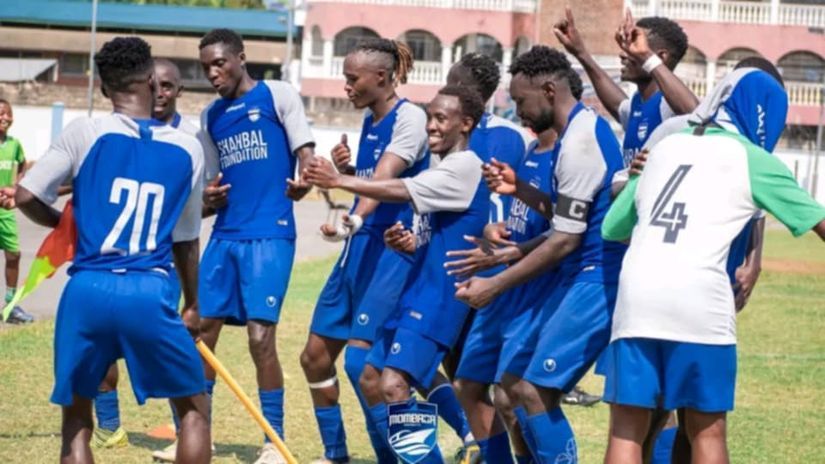
John Omondi was introduced at right-back, while Peter Ng'ang'a pushed forward into the right wing role.
This change shifted the attacking emphasis on that flank. Ng'ang'a offered more directness, making aggressive runs and delivering early crosses, while Omondi provided overlapping support from deeper positions.
As a result, Kakamega’s right side became more transitional and less focused on controlled possession.
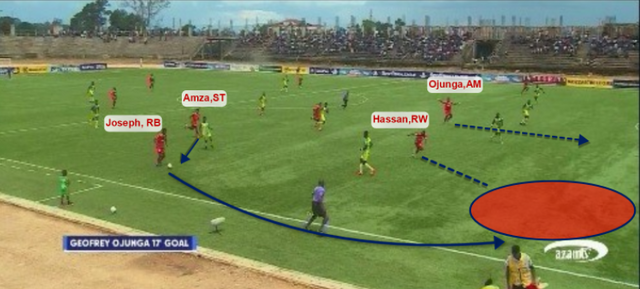
Bandari capitalised just a few minutes later. In the 17th minute, Ngamchiya dropped deep into midfield, drawing Kakamega’s central defenders out of position and creating space between the lines.
Ojunga exploited this gap with a well-timed run into the box, meeting a precise cross from Abdallah with a composed header to give Bandari a 1-0 lead.
The goal illustrated key tactical principles: the effectiveness of a striker dropping to manipulate defensive structure, the importance of wide delivery, and the vulnerability created when defensive lines step forward without sufficient cover.
Following the goal, Bandari intensified their pressing, seeking quick ball recoveries to sustain pressure.
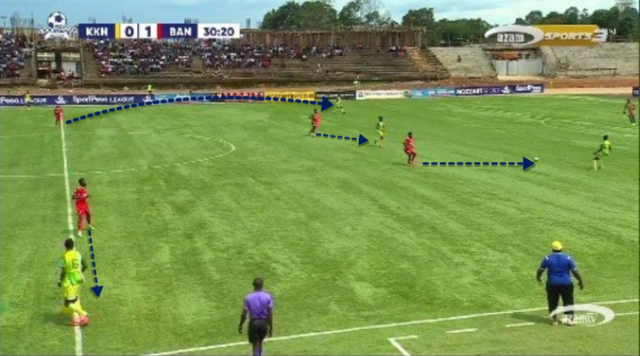
This nearly resulted in a second goal when Abdallah struck the crossbar after a quick throw-in near Kakamega’s penalty area, highlighting Bandari’s threat in transitional and set-piece-like situations.
As the first half progressed, the contrast between the teams became clearer. Bandari mixed build-up play with direct long balls, frequently using Ngeleka’s goal kicks to initiate aerial duels and bypass Kakamega’s press.
Their aggressive pressing and positional fluidity, particularly Abdallah drifting into half-spaces, allowed them to overload central areas.
Kakamega, in contrast, remained committed to a structured and patient approach. They attempted to draw Bandari’s press forward and exploit spaces behind the defensive line.
Width remained central, with Ng'ang'a and Omollo stretching the pitch. Their attacking patterns relied on third-man combinations, with Machaka dropping deep and Masava making forward runs.
A recurring pattern involved switching play to isolate Omollo on the left while using Ng'ang'a’s crossing ability on the right, creating a dual-sided threat that forced Bandari to continuously adjust defensively.
Kakamega’s growing control became evident toward the end of the half. In the 36th minute, Machaka nearly scored from a corner but was denied by an excellent save from Ngeleka.
The pressure eventually paid off in first-half stoppage time. A defensive lapse allowed Rodgers Ouma to recover possession in a dangerous area and quickly set up Machaka, who finished calmly from near the penalty spot to level the score at 1-1.
The equaliser reflected Kakamega’s persistence in targeting central zones and capitalising on second balls, while also exposing Bandari’s vulnerability under sustained pressure.
At halftime, the scoreline reflected a balanced contest, with both teams imposing their strengths in different phases.
The second half began with a significant tactical shift from Bandari. William Wadri and Frank Ouya were introduced, replacing Rajab Omar and Clifford Otieno, transforming the structure into a more direct 4-4-2.
Ouya became the primary aerial target, while Wadri operated just behind him. Ngamchiya moved to the left wing, adding pace and width. This adjustment emphasised physicality and verticality, with long balls increasingly directed toward Ouya.
Kakamega also made changes, introducing Eric Okutu for Glen Masava and later Samuel Odaro for Henry Omollo. These substitutions added fresh energy and improved fluidity in attack.
John Omondi began pushing forward more aggressively, providing overlapping runs that enhanced width and crossing opportunities.
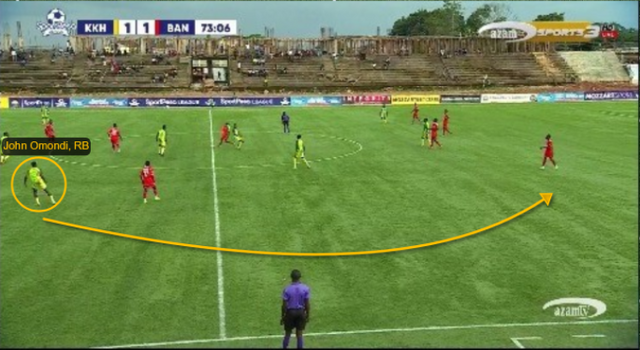
Between the 60th and 75th minutes, Kakamega’s attacking play became more fluid. Machaka dropped deeper, effectively operating as a false nine, while Okutu played just behind him to facilitate link-up play.
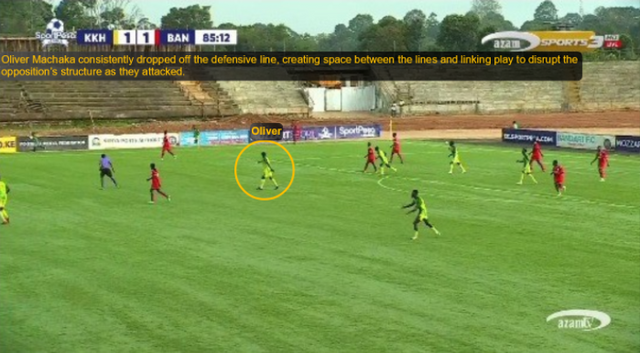
Rodgers Ouma positioned himself intelligently between the lines, creating passing lanes and connecting with wide players, particularly Ng'ang'a and Odaro.
This structure produced fluid attacking triangles that allowed Kakamega to combine effectively in tight spaces and destabilise Bandari’s defensive shape. However, Bandari remained dangerous in transition, targeting the spaces left behind as Kakamega pushed forward.
In the 70th minute, Batambuze’s free kick forced another excellent save from Ngeleka, whose performance was becoming increasingly decisive. Bandari also adapted by pushing Erickson Mulu higher on the left flank to deliver crosses, adding another attacking outlet.
In the final phase, Bandari introduced further positional rotations to increase unpredictability. Ouya drifted wide, Abdallah switched flanks, and Ngamchiya occasionally moved centrally, creating a fluid and dynamic front line.
This movement aimed to disrupt Kakamega’s defensive marking and open new channels.
Kakamega intensified their offensive efforts, with fullbacks delivering more crosses and the team emphasising combinations around the flanks and interior channels. Machaka remained central to their play, dropping deep to link attacks.
The closing stages featured key moments. In the 76th minute, Ngeleka produced a crucial one-on-one save to deny Ng'ang'a after a run behind the defense.
Shortly after, Shariff Majabe made a vital intervention to stop a clear scoring opportunity following a Kakamega counterattack.

In the final minutes, Bandari relied heavily on long balls in behind Kakamega’s defense, targeting forward runs in search of a late winner, but without success.
Ultimately, the match was defined by a delicate tactical balance. Kakamega Homeboyz’s structured, combination-based approach contrasted with Bandari’s direct, transition-focused style, creating a compelling tactical duel.
The role of the strikers was particularly significant, with Machaka’s deep link-up play differing from the vertical threat posed by Ngamchiya and Ouya.
Both teams relied heavily on wide play, using crosses, switches, and isolation strategies to create chances. Goalkeeping proved decisive, with Ngeleka’s multiple saves preserving the draw.
Tactical adjustments, particularly Bandari’s shift to a direct 4-4-2, added further complexity.
In the end, the 1-1 scoreline fairly reflected a match in which Kakamega controlled phases through structured buildup, while Bandari consistently threatened through directness and transitions, resulting in a balanced and tactically rich encounter where neither side could fully impose dominance.