


Recent annual reports reveal massive United debt
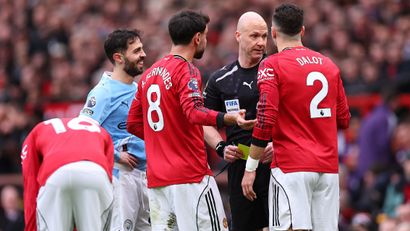
.jpg)







Reading Time: 5min | Fri. 19.09.25. | 14:33
The only good news is that Manchester again had a record-high revenue
The opening matches of the new Champions League season are behind us—plenty of exciting clashes, spectacular goals, heroes, and villains. Yet, the morning after the curtain fell on the first round of Europe’s elite competition, the European media devoted equal or even greater attention to a club coming off one of the worst years in its history. That fact alone says much about the size and significance of the fallen giant. However, all this coverage—in this case financial reports—doesn’t suggest that the situation at this colossus is improving. Of course, we are talking about Manchester United.
💣🚨🚨BREAKING: Manchester United reportedly borrowed an additional £105M to help fund their transfer spending this summer.
— mufcytp (@mufcytp) September 19, 2025
[@mjcritchley | @CWeatherspoon_]
So that pushes our total debt to £713.2M? 😳 pic.twitter.com/HVg8J9uO1U
Two days ago, Old Trafford released certain data reflecting the state of affairs as of June 30, 2025, and by last night the complete financial report became available, showing that the club owes a staggering 447 million pounds just in transfer-related payments to other clubs. Debts of this sort exist in nearly every club—this isn’t unusual (in recent years it has become common practice for transfer fees to be paid in installments, spreading expenses across multiple fiscal years to avoid UEFA sanctions). What’s alarming here, however, is the size of the figure. According to the British media, no one in Premier League history—and very likely in the world—has ever been this indebted in this category.
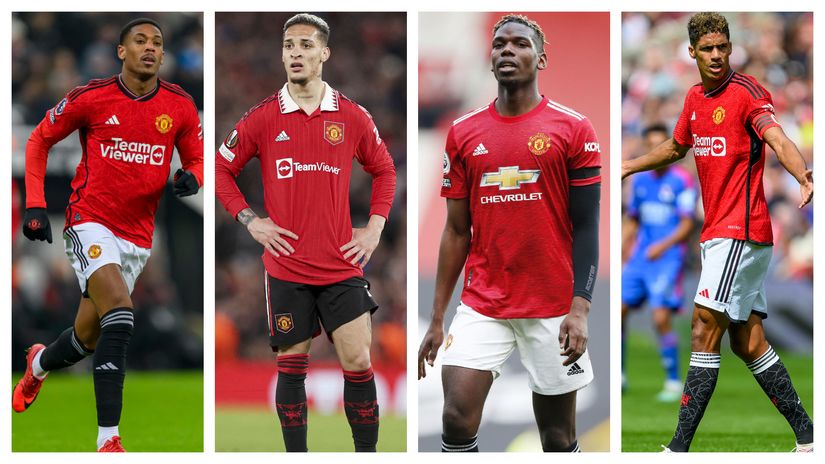
What does this mean in concrete terms? Compared to the previous year, it represents an increase of 116 million pounds, or 34.9 percent. Of that amount, the portion due within a year—in the current season—has risen to 242 million!
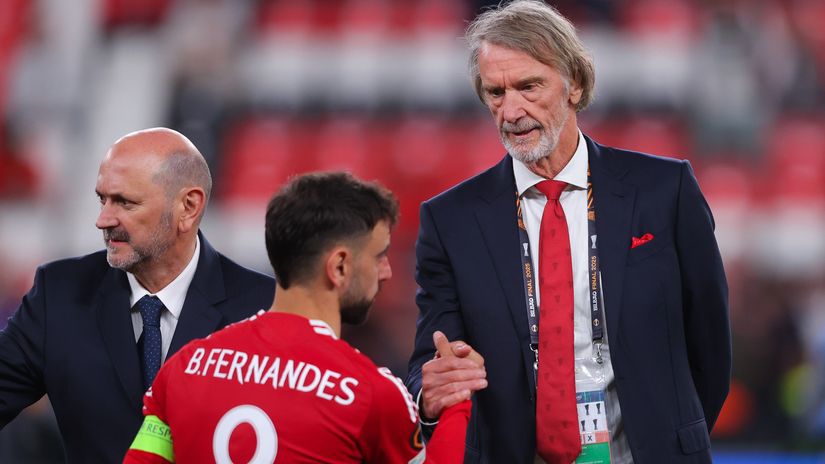
“It’s simple: Manchester United has been spending more than it earns in recent years, which is why it ended up in this situation. Because of all this, it could soon happen that we run out of operational cash. Just look at what’s coming this June. We’re still paying Ajax for Antony, Real Madrid for Casemiro, Inter for Onana… another installment for Højlund is due. Even Sancho hasn’t been fully paid off. These are all things from the past that we inherited and must sort out. Just for Jadon Sancho, who is on loan at Chelsea this season, we still owe Borussia 17 million” said new co-owner Jim Ratcliffe in late March, who paid over one billion for just under 30 percent of the shares.
That all sounded reasonable—but then new spending came. On top of the 447 million, United spent another 168 million on transfers in the recently closed window, while selling players for only 55 million pounds. This suggests that the projected gross debt for the next reporting period will rise further. As of June 30, 2025, it stood at 637 million, up 91 million from the same time in 2024. On top of that, the club took out another loan of 105 million over the last transfer window just to complete certain signings. According to reliable sources at The Athletic, United’s debt currently stands at an incredible 713.2 million—a historic peak.

It’s worth noting that since arriving at Old Trafford, Ratcliffe has pumped around 300 million of his own money into the club, and more than 400 staff members have been laid off. Without that, the figure might well have approached one billion. The situation is somewhat under control—if such a deficit can be called that—thanks to revenue of 666.5 million. Considering the results, 15th place in the league table, and no Champions League football, that alone is a real achievement. Yet it was only enough to reduce the annual loss compared to the previous report: from 113.2 million to £37 million. This marks the sixth consecutive fiscal year that Manchester United has finished in the red. For comparison, Bayern Munich at its last annual meeting recorded a net profit of 43 million and marked two decades without ever “going into the red.”
“Achieving record revenues in such a challenging season as the last one speaks to the resilience that defines our club. We are working hard to continue improving in all areas” said Manchester United CEO Omar Berrada.
But how did United’s debt reach such levels? That’s probably the most common question in recent years. The 20th anniversary of the Glazer family’s takeover of the club is the right moment to reflect. Before the Americans arrived, United’s total debt was just under 50 million pounds. They bought the club for 790 million using loans from hedge funds, immediately saddling it with 604 million in debt. From the very next year, the stripping began. The Glazers were never interested in paying off debts or restoring the club to stability—but they certainly reaped the benefits.
Just in interest payments on the borrowed money they used to buy Manchester United, they’ve pulled 815 million from the club. Through dividends, they took another 166 million. As fees for administrative services, they funneled around 10 million pounds into their family companies. For the repayment of “external debt”—whatever that meant—they withdrew 197 million from club accounts. Altogether, nearly 1.2 billion pounds has been extracted from the club over these 20 years. The conclusion? Maybe Manchester United fans should feel lucky that, after all this, they even still have a club to support—that Old Trafford hasn’t been reduced to rubble.
ENGLISH PREMIER LEAGUE MATCHDAY 5
Saturday
14.30: (1.48) Liverpool (4.40) Everton (6.75)
17.00: (2.30) Brighton (3.60) Tottenham (3.15)
17.00: (3.40) Burnley (3.50) Nott.Forest (2.25)
17.00: (2.95) West Ham (3.30) Crystal Palace (2.45)
17.00: (2.70) Wolverhampton (3.20) Leeds (2.90)
19.30: (2.80) Man.Utd. (3.75) Chelsea (2.45)
22.00: (2.05) Fulham (3.50) Brentford (3.90)
Sunday
16.00: (2.45) Bournemouth (3.35) Newcastle (2.90)
16.00: (3.60) Sunderland (3.55) Aston Villa (2.15)
18.30: (1.95) Arsenal (3.85) Man.City (3.90)
*** odds are subject to change