


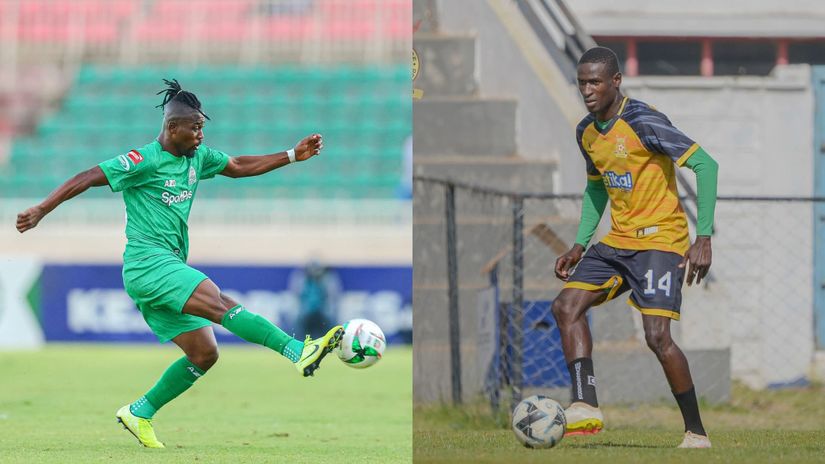
PLAYER ANALYSIS: Kenya Police FC's Yves Koutiama vs Gor Mahia's Ebenezer Kofi Assifuah, the Modern Striker Battle

.jpg)
.jpg)
.jpg)

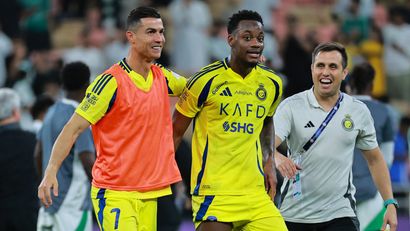
Reading Time: 6min | Sat. 07.02.26. | 12:45
Looking beyond raw output reveals two strikers interpreting the modern No.9 role in very different, but equally valuable, ways
Everyone counts goals. But in today’s game, the best strikers are far more than finishers - they press like midfielders, link like No.10s, stretch defences, hold up play and act as the first line of defence.
In the FKF Premier League, January signings Yves Koutiama of Kenya Police and Ebenezer Kofi Assifuah of Gor Mahia have both made immediate impressions, yet they do so through contrasting tactical identities.
Looking beyond raw output reveals two strikers interpreting the modern No.9 role in very different, but equally valuable, ways.
Follow our WhatsApp channel for more news
Koutiama, 27, arrived at Kenya Police and almost instantly became central to their attacking structure.
In just six appearances, he has logged 510 minutes, 6 appearances and scored four goals against Bidco, Bandari, Mara Sugar (twice), Nairobi United and KCB.
His integration has been seamless because his profile fits exactly what Police demand from their striker.
He operates primarily as a reference point at the top of the pitch, often as a lone No.9, in a system that prioritises verticality, early progression and direct access into the final third. His job is not decorative - it is functional and demanding. He pins centre-backs, attacks space aggressively and offers a direct outlet whenever midfield pressure is bypassed.
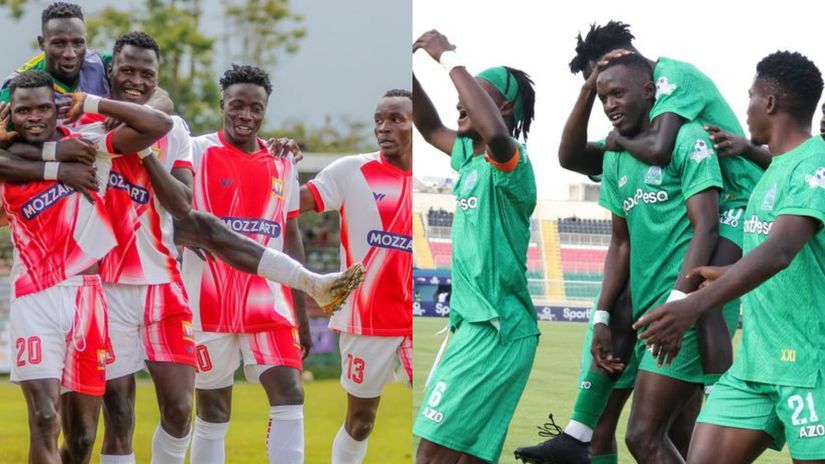
What stands out immediately in Koutiama’s game is how proactive his movement is.
He recognises pressing cues early, responding with sprinting and curved runs designed to destabilise defensive lines rather than simply react to passes played.
This constant threat forces defenders to make decisions earlier than they would like, often creating disorganisation behind the ball.
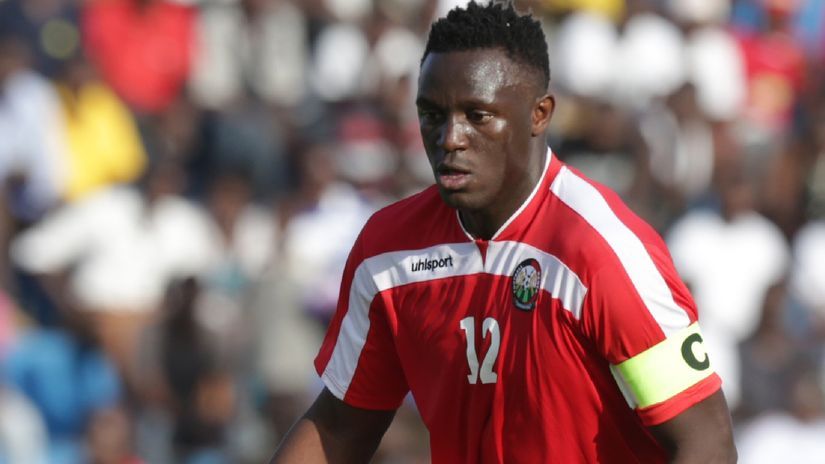
His goal against Mara Sugar encapsulated this perfectly: Koutiama dropped deep into midfield, deliberately luring two defenders out of the defensive line, released the ball wide to an advancing runner, then accelerated through the space he had just created to meet the cross and finish.
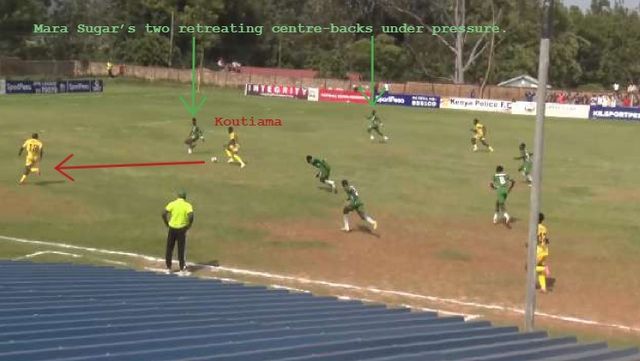
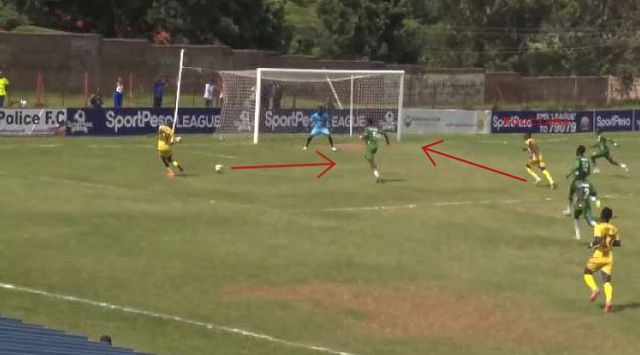
It was not just a goal - it was a sequence that showed high tactical intelligence, spatial awareness and trust in collective movement.
Without the ball, Koutiama is equally influential. He puts sustained pressure on opposition defenders, closing angles rather than sprinting blindly.
His pressing is efficient, often forcing play wide or into rushed clearances that Kenya Police can immediately contest.
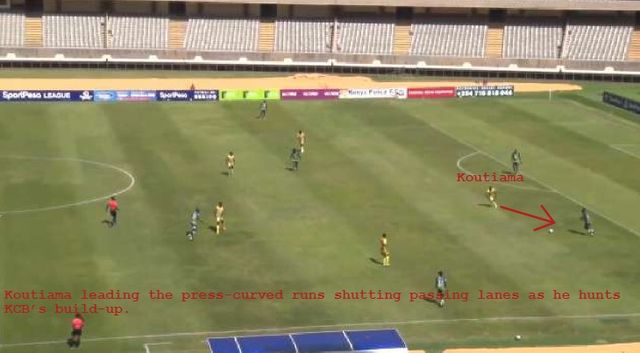
He also wins valuable fouls around the penalty area, turning defensive pressure into attacking opportunities.
When Police need to slow the game down or establish territory, Koutiama is comfortable dropping into midfield pockets, shielding the ball with close control and strong body positioning.
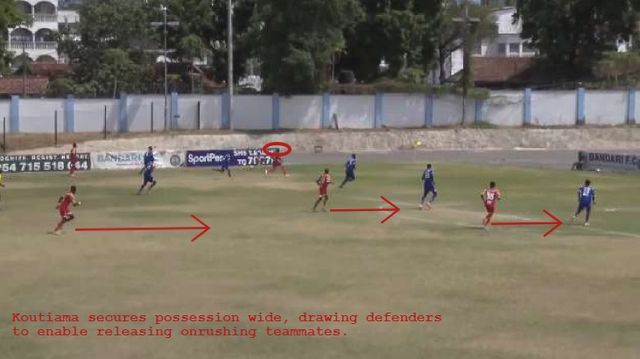
This back-to-goal play disrupts defensive organisation, luring defenders out of position and opening lanes for midfield runners to exploit.
Physically, Koutiama has the tools that modern systems value.
He accelerates well, has top-end speed to attack space in behind and times his runs sharply to maximise separation while avoiding offside.
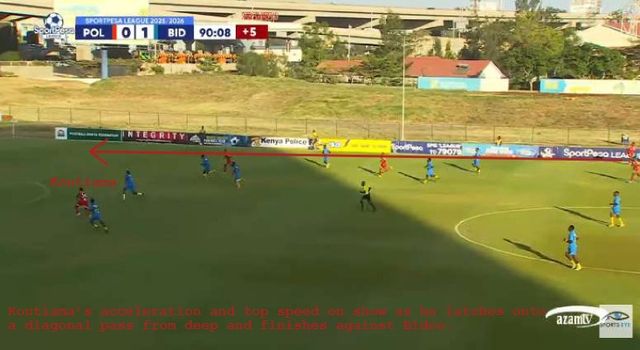
His ability to convert with both feet - demonstrated by a left-footed finish against Nairobi United - adds to his unpredictability. His reactions in the box are sharp, particularly when attacking loose balls or rebounds.
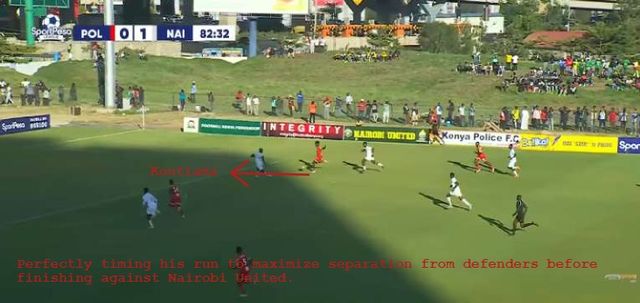
There are, however, areas that still require refinement. His aerial timing needs improvement; against KCB he struggled significantly, losing a large number of aerial duels(14).
Additionally, there are moments where composure deserts him in front of goal, with rushed decision-making leading to missed chances. These are correctable details, but they highlight that his development curve is still rising.
Ebenezer Kofi Assifuah, offers a different interpretation of the striker role.
At 32, and affectionately referred to by Gor Mahia fans as “Ebenezer Wa Magoli,” he brings experience, intelligence and efficiency rather than volume.
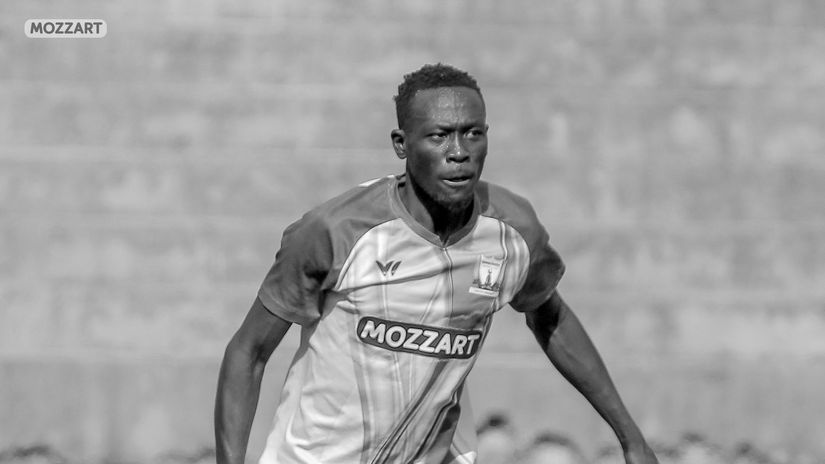
He has made four appearances so far, all as a substitute, contributing two goals and one assist against Murang’a Seal, Mara Sugar, Bidco and Sofapaka.
His impact is defined less by minutes played and more by moments created.
Assifuah’s influence becomes clear the moment he steps onto the pitch. Against Mara Sugar, despite playing just 17 minutes, his heatmap revealed a striker constantly stretching the defensive line
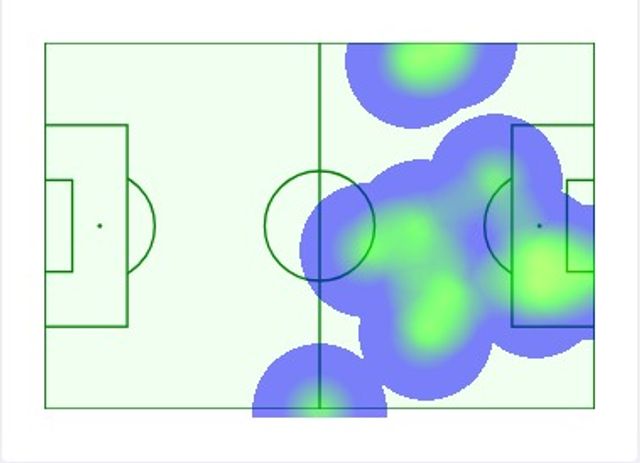
He forces opponents to defend deeper through a variety of movements: curved runs, diagonal springs across the backline and sudden vertical bursts into space.
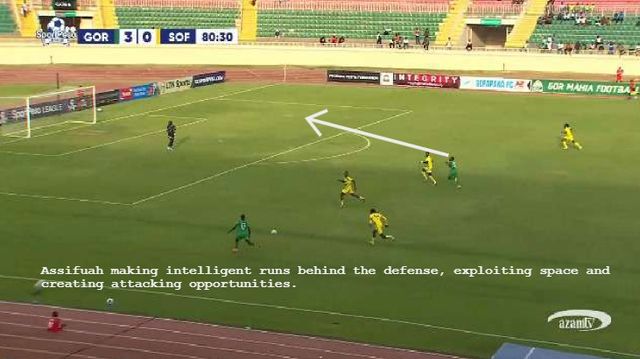
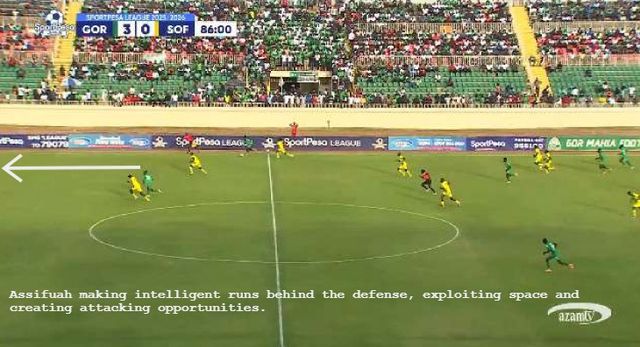
These runs are not always aimed at receiving the ball; often, they exist to manipulate the defensive structure, opening midfield pockets for teammates to exploit.
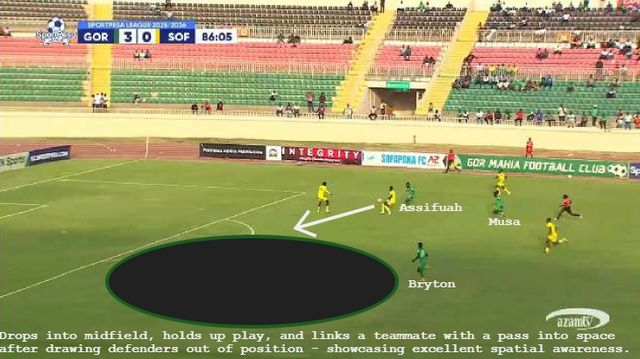
In this sense, Assifuah acts as a spatial interpreter, constantly reshaping the opposition’s defensive priorities.
Technically, Assifuah is composed and decisive in tight areas. His touches in the penalty box are slick, allowing him to adjust quickly to imperfect deliveries.
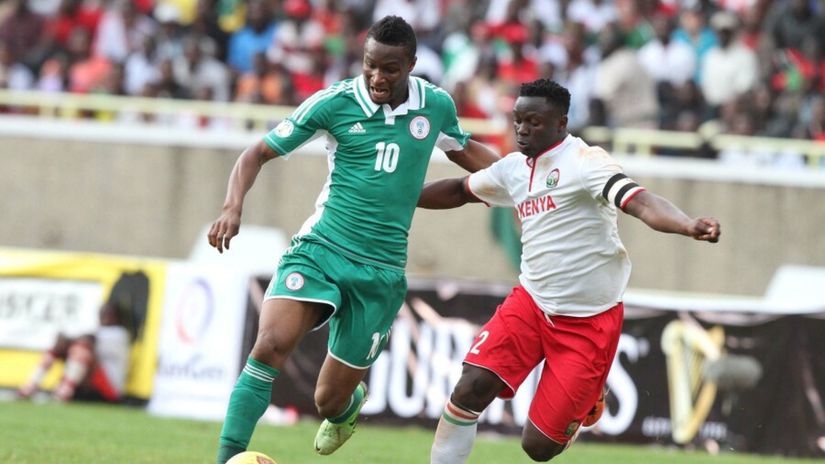
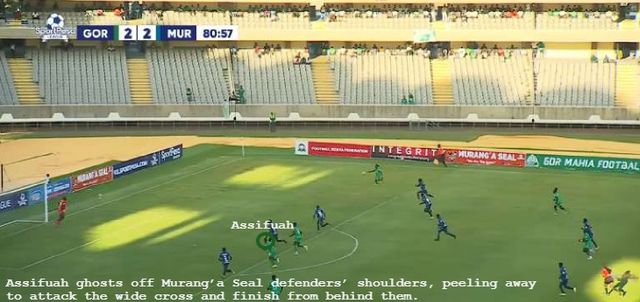
He peels off defenders’ shoulders with sudden accelerations, anticipating passes rather than reacting to them.
His body communication is notable - gesturing teammates into passing lanes and signalling where space will open next.
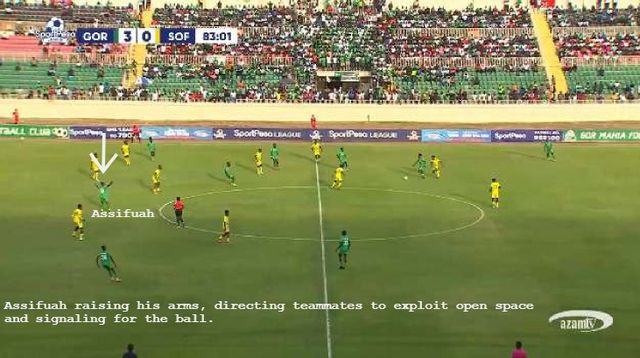
This level of spatial awareness is the product of experience and repetition at high levels of the game.
Assifuah’s intelligence shines brightest in build-up and combination play.
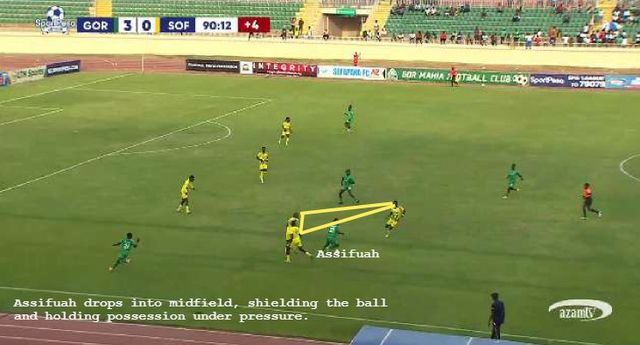
He is comfortable dropping into deeper midfield zones to link play, receiving under pressure and releasing the ball cleanly to maintain attacking rhythm.
His assist against Mara Sugar was a masterclass in anticipation: ghosting into space between defenders Nassor Shikokoti and Kevin Mwavali, reading the run ahead of them and releasing the pass at precisely the right moment for the scorer.
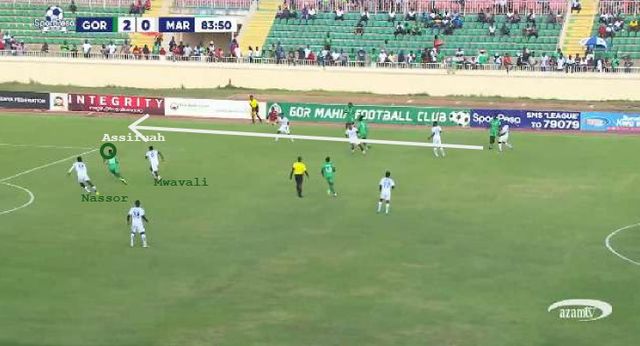
It was a sequence that reflected not just technical quality, but an advanced understanding of timing, angles and teammate movement.
As a finisher, Assifuah offers variety. He can finish from awkward angles, shows confidence with his left foot - technically his weaker side - and strikes the ball decisively without overthinking.
His equaliser against Bidco was a perfect example: a rapid 360-degree turn, instant change of direction and a clean left-footed strike executed almost instinctively.
That economy of thought - receive, turn, strike - is often what separates experienced forwards from developing ones. While he possesses power in his shooting, particularly from distance, accuracy from long range remains an area he can improve.
Physically, Assifuah does not dominate through raw force, but he protects the ball intelligently, using his body to shield possession and bring teammates into play.
His agility and quick turning allow him to escape pressure in tight spaces, and his anticipation of cutbacks - often positioning himself just outside the six-yard box - shows an advanced understanding of how chances develop rather than where they begin.
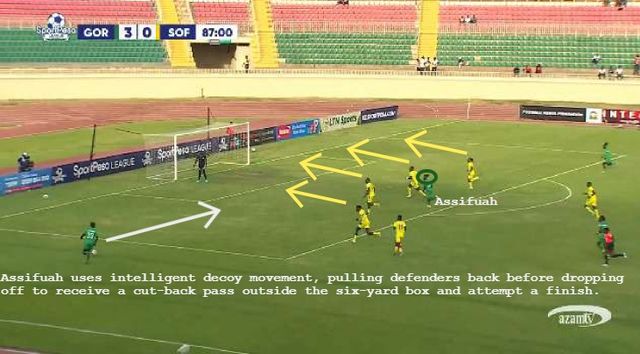
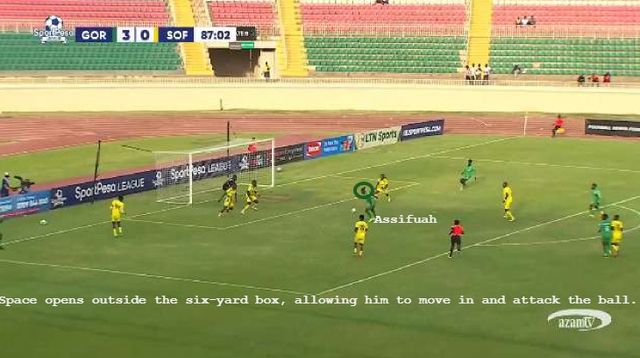
Pressing-wise, Assifuah is selective. He conserves energy, choosing moments to jump aggressively once Gor Mahia have locked opponents into predictable build-up patterns.
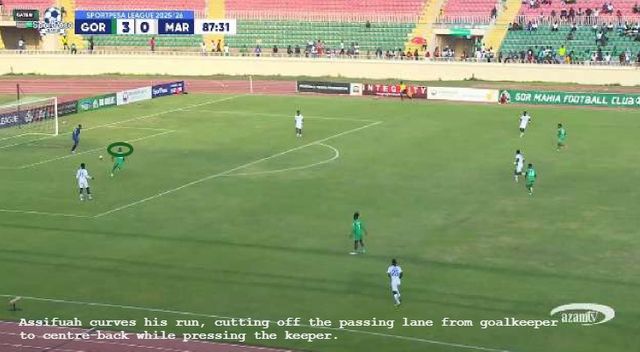
For a player entering games from the bench, his understanding of pressing shadows and cover angles is particularly impressive.
Tactically, the contrast between the two is clear. Koutiama is structurally essential to Kenya Police. His presence shapes how they progress the ball, how they press and how they occupy defensive lines.
He is a system pillar, offering reliability, physical presence and repeatable actions that coaches can build patterns around.

Assifuah, on the other hand, is contextually devastating. He raises tempo, improves decision speed and changes the geometry of the pitch once he enters. His influence per minute is high, making him an ideal late-game weapon, especially when matches become stretched.
In terms of pressing, Koutiama delivers constant pressure, forcing opponents into discomfort through volume and intensity.
Assifuah delivers selective disruption, choosing moments that maximise impact. In finishing, Koutiama thrives on high-probability chances created through movement and structure, while Assifuah excels in situational intelligence, improvisation and execution under pressure.
In build-up, Assifuah clearly enhances team play more consistently, while Koutiama contributes indirectly by occupying defenders and creating space for others.
The verdict reflects these differences. Koutiama’s edge lies in his structural reliability, penalty-box movement, pressing intensity and physical presence.
Assifuah’s edge lies in intelligence, link play, spatial manipulation and late-game influence.
Right now, Koutiama looks perfectly matched to Kenya Police’s tactical identity, anchoring their attacking framework.
Assifuah, meanwhile, offers Gor Mahia a higher ceiling of influence per minute played - a striker capable of tilting games with movement, anticipation and decisive execution. One is a system pillar; the other is a tactical weapon. In modern striker terms, both are succeeding - just in very different ways.