


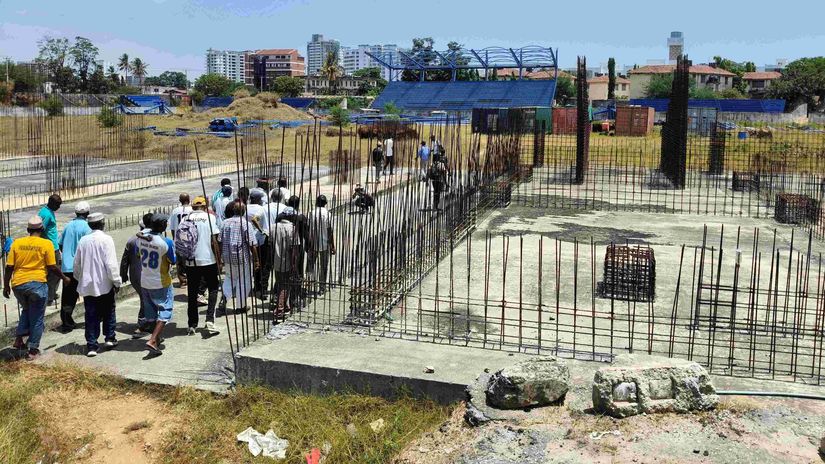
Mombasa football stakeholders link rising drug abuse and crime to prolonged stadium closure

.jpg)
.jpg)
.jpg)



Reading Time: 4min | Thu. 12.02.26. | 11:05
Led by Football Kenya Federation (FKF) Mombasa County chairman Alamin Abdallah, the stakeholders said the 11-year closure of the iconic facility has robbed thousands of young people of a safe sporting space, pushing some into drugs and crime
Football stakeholders in Mombasa have linked rising cases of drug abuse and youth crime to the prolonged closure of the Mombasa County Stadium, even as they welcomed the national government’s decision to take over its reconstruction.
Follow Our WhatsApp Channel For More News
Led by Football Kenya Federation (FKF) Mombasa County chairman Alamin Abdallah, the stakeholders said the 11-year closure of the iconic facility has robbed thousands of young people of a safe sporting space, pushing some into drugs and crime.
Abdallah described Mombasa as the bedrock of Kenyan football and lamented that the shutdown of the stadium in 2015, following stalled renovation attempts that began in 2013, marked the beginning of a decline for many young players.
“Some got into drugs, others got into crime, and most are now six feet under, having been lynched by mobs or gunned down by police. We have lost potential footballers because of the closure of this stadium,” said Abdallah, a former player.
He argued that when the stadium was operational, cases of drug and alcohol abuse and juvenile crime were minimal.
“Youth were not idle because football gave them a safe space to vent their frustrations. The county stadium was always available to them,” he said.
Abdallah added that Mombasa Stadium holds a special place in the country’s football history, describing it as the first stadium constructed in Kenya, though that claim has often sparked debate, with some pointing to Bukhungu Stadium in Kakamega, built in the 1950s.
.jpg)
Football stakeholders in Mombasa have linked rising cases of drug abuse and youth crime to the prolonged closure of the Mombasa County Stadium, even as they welcomed the national government’s decision to take over its reconstruction.
— Brian Odhiambo (@Odhiambo_Brian1) February 12, 2026
Led by Football Kenya Federation (FKF)… pic.twitter.com/gLLholUb5b
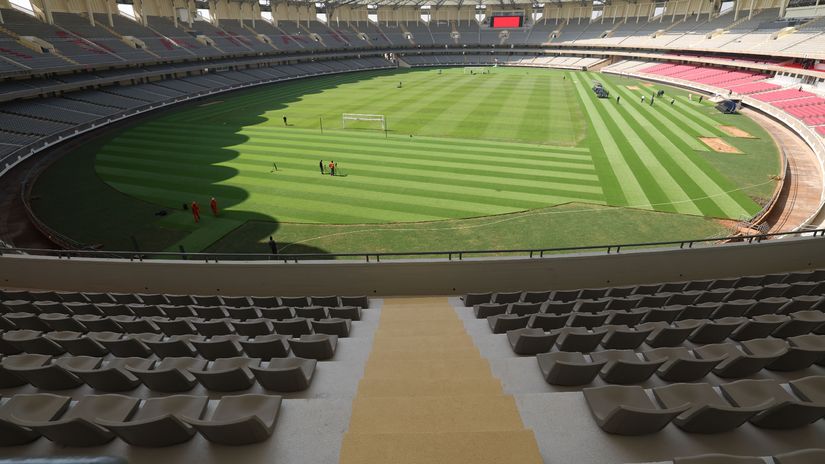
Still, Mombasa Stadium remains the country’s only low-altitude, coastal, international-standard facility.
The stadium was first closed for renovation in 2013, but repeated attempts to rehabilitate it stalled. In 2018, the then county administration announced a Sh1.2 billion reconstruction plan, which also failed to take off.
To date, more than Sh1.7 billion has reportedly been spent on renovation works with little visible progress. The project currently stands at approximately 35 percent completion.
Last Wednesday, Governor Abdulswamad Nassir hosted Sports Principal Secretary Elijah Mwangi and Defence PS Patrick Mariru for an inspection tour of the facility.
President William Ruto on Friday announced that the national government has allocated Sh1 billion for the reconstruction of the stadium, promising that a contractor will be on site within two weeks and that the facility will be ready by December.
On Monday, Abdallah led coaches, referees, and former players in welcoming the joint effort between the national and county governments.
“As Mombasa residents, leaders, and football players, we are happy with this move. Millions of people have stepped on this stadium, and to finally see light at the end of the tunnel is something we are proud of,” he said.
Former referee Awadh Barafa, who has officiated more than 100 matches at the stadium, said its closure dealt a heavy blow to the region.
“I have refereed many matches across the country. The closure of this stadium hurt us so much because many of our children got lost after that,” Barafa said.

He blamed the loss of talent on rising muguka consumption and drug abuse following the shutdown.
“After the President spoke about it on Friday, that is when we began to believe that truly this stadium will be revived,” he said.
Barafa noted that Mombasa once produced a significant number of Harambee Stars players and referees, but today only one or two players at a time hail from the region.
“We thank President Ruto and Governor Nassir. But we hope it is completed by December as promised so we can see our children leave the drug dens and return to the football pitch,” he added.
Youth leader Ali Kubo said the emotional response from former players and referees shows how deeply the stadium’s closure affected the community.
“They are happier than the youth because they are the ones who played here the most. They are nostalgic about its revival,” Kubo said.
He urged young people to seize the opportunity and return to sport.
“We had given up hope of ever seeing this stadium function again. Now we see light at the end of the tunnel,” he said.
Kubo noted that the planned construction of Bububu Stadium in Likoni by the national government, alongside the Ziwani Stadium in Mvita and the Mwahima Stadium in Likoni by the county government, will further strengthen grassroots football development.
The county has already advertised tenders for the Ziwani and Mwahima projects.
Former player, referee, and current youth coach Khamis Baghazal said stakeholders had waited years for the breakthrough.
“We cried every day for this stadium, which is not right. Our children should not see us cry, but they did. And when a grown man cries, it is dangerous for the youth,” Baghazal said.
He stressed that infrastructure is central to the growth of the game.
“In the 17 Laws of the Game, Law One is the playing field, not even the football,” he said.