


Government provides update on Talanta Stadium after expiry of March completion date [PHOTOS]








Reading Time: 4min | Thu. 09.04.26. | 18:30
The facility was initially set to be complete by 31 December 2025, but was later pushed to March 31 due to unforeseen delays
With the initial completion date of March 2026 having elapsed, the Government of Kenya (GoK) has provided an update on the construction of the iconic Talana Stadium, which is set to be branded as Raila Odinga International Stadium.
Download our Mozzart Sport app for more news
Talanta Stadium is a flagship project by the government to construct an ultramodern stadium that will improve the sporting infrastructure of the country.
Construction of the stadium began in March 2024 during the tenure of the then Sports Cabinet Secretary Ababu Namwamba in a groundbreaking ceremony presided over by President William Ruto.
.png)
The construction came after Kenya, alongside neighbours Uganda and Tanzania, won the rights to host the 2027 Africa Cup of Nations (AFCON) in a bid dubbed PAMOJA (Swahili word for Together).
The three nations equally won the rights to host the 2024 African Nations Championship (CHAN), and while renovating and upgrading the existing Kasarani and Nyayo Stadium was enough for CHAN, AFCON called for extra facilities, hence the construction of Talanta Stadium.
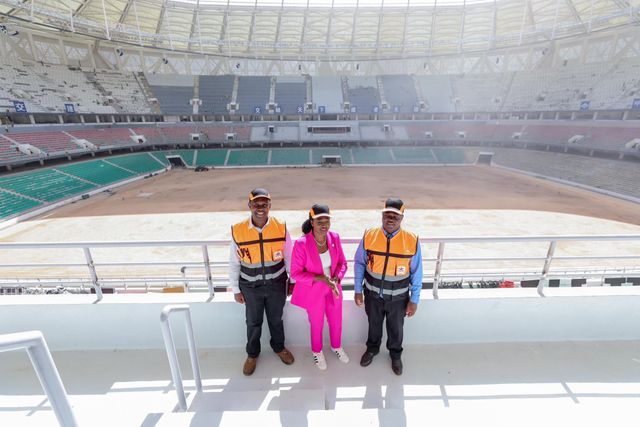
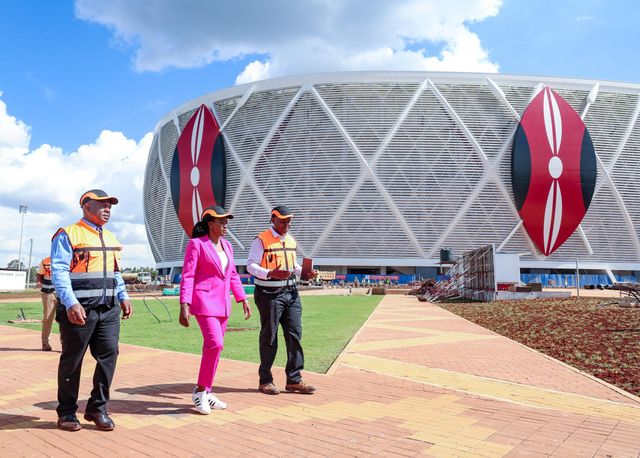
With the country behind schedule in delivering the multi-billion project, Cabinet Secretary for Defense Soipan Tuya paid a visit to the facility, during which she provided updates as well as shared photos on the progress of construction.
“The Stadium is at 88 per cent complete with the main structural works completed, and current efforts are focused on final works to make the stadium fully operational and compliant with international standards and in readiness for the 2027 AFCON,” reads part of the statement by Tuya.
The facility was initially set to be complete by 31 December 2025, but was later pushed to March 31 due to unforeseen delays. With almost 10 days gone since the lapse of the completion date, the new delivery date is not yet clear, with 12% of works remaining.
Nonetheless, the renowned China Road and Bridge Cooperation (CRBC), which is the main contractor of the stadium, is working around the clock to ensure that the facility is ready at the earliest possible time.
CRBC are known to have delivered some of the most sophisticated infrastructure in the country, including the Mombasa-Naivasha Standard Gauge Railway (SGR), the Nairobi Expressway, as well as the ongoing upgrade of the Bomas International Centre.
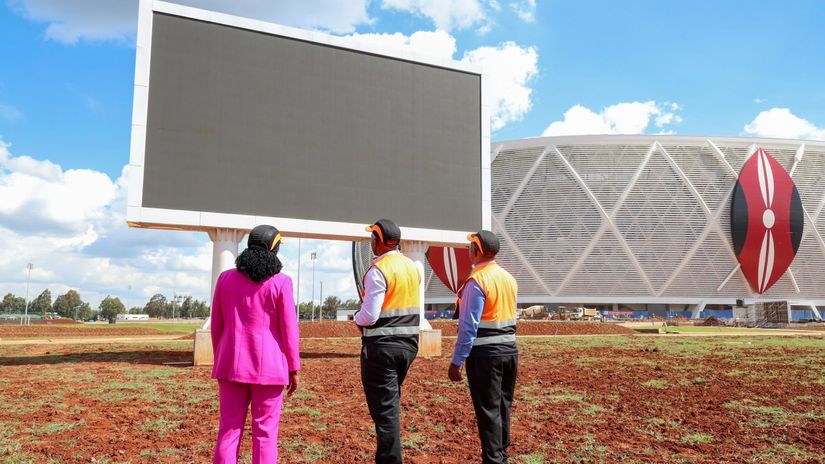
According to the photos shared by Tuya, the facade/walling of the stadium is complete, and so is the roofing. The Kenyan shields on the walling standout and add to the cultural outlook and beautification of the facility.
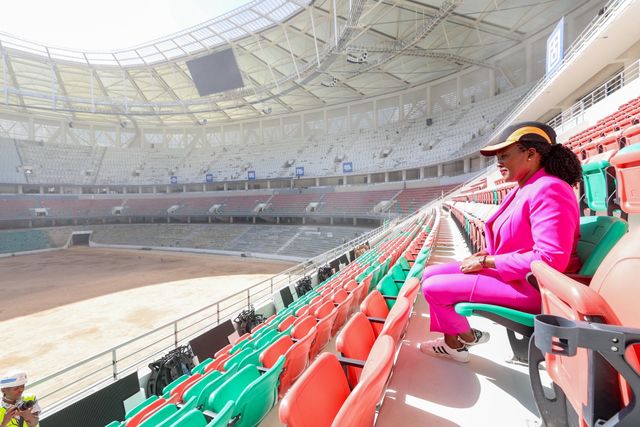
The installation of seats is at an advanced stage following the commencement of the VIP seats installation.
The regular/terrace area will have seats with back rests, but not foldable, a matter that has led to heavy criticism of the facility from the Kenyan populace, especially owing to the high cost of constructing the stadium.
However, the foldable seats with back rests, which the majority of netizens asked to be placed on the entire stadium, are being installed in the VIP section, just as is the case with the Moi International Sports Centre, Kasarani.
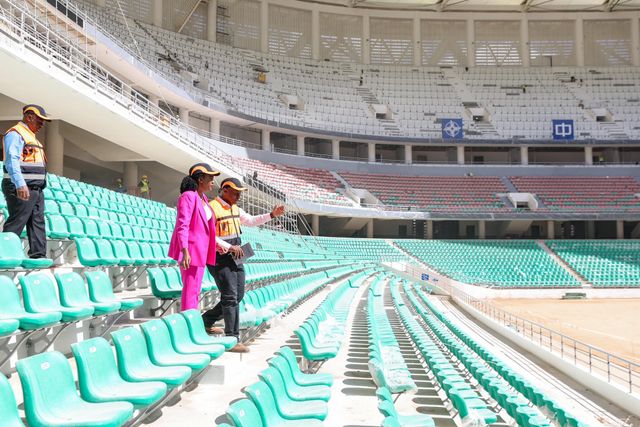
The installation of seats in the lower/first tier seems to be complete, with a large section of the upper/third tier also done as per the photos released by Tuya.
As expected, the seats in the middle section will be the last to be installed as the section will have a different variety of seats.
Apart from the regular and VIP seats, the middle section will also host the VVIP section, which will require conference VIP seats that have extra cushion, a cup holder and spaced enough to allow for easy movement of persons without pestering others.
The middle section will also house the Presidential suite with an entirely different arrangement, a section in which only the President, as well as top Confederation of African Football (CAF) officials and guests will have access to.
The photos shared by Tuya also reveal the installation of large panel LED screens behind what will be the goal post areas, as is required by CAF.
The LED screens are often used for making stadium announcements, replays, as well as give fans the experience of watching Video Assistant Refereeing (VAR) if necessary.
Work on the playing surface is also ongoing, even though the installation of the upper clay soil in readiness for grass installation has not yet begun.
Outside the stadium, landscaping has progressed to an advanced level with cabros already installed on major pathways as well as grass for the beautification and green agenda of the facility.
As revealed by Tuya, the inter-ministerial approach in making auxiliary facilities ready is continuing with the Ministries of Transport and Public Works, Energy, ICT, and Water already on site.
The Ministry of Transport is especially tasked with the upgrading of the roads leading to the stadium, including the ongoing Junction Mall Flyover, and the construction of a commuter railway line to the facility.
The Ministry of Energy is expected to ensure there is an adequate electricity supply in the facility, the Ministry of Water to ensure there is a constant supply of water and modern sanitation technology befitting the facility and AFCON, while ICT is there to provide telecommunication services.
The visit by Tuya comes a month before the scheduled visit by CAF President Patrice Motsepe to Nairobi, set for Monday, 11 to Tuesday, 12 May.