


Categorisation of sporting facilities as Kenya eyes major tournaments

.jpg)
.jpg)
.jpg)




Reading Time: 3min | Sun. 01.03.26. | 12:58
The framework aims to streamline planning, guide public and private investment, and ensure that sports growth remains inclusive, sustainable and aligned with both national and international standards
Kenya is set to adopt a structured and forward-looking approach to sports infrastructure development by categorizing facilities into three distinct tiers as the country intensifies preparations to host major regional and continental tournaments, including the Africa Cup of Nations (AFCON) 2027.
Follow Our WhatsApp Channel For More News
The framework aims to streamline planning, guide public and private investment, and ensure that sports growth remains inclusive, sustainable, and aligned with both national and international standards.
Tier 1: Elite international facilities
At the top of the hierarchy is Tier 1, comprising elite venues built to meet global standards.
These stadiums have a seating capacity of over 15,000 and are designed to host major continental and global competitions, as well as national finals.
They comply fully with regulations set by international governing bodies such as FIFA and World Athletics, featuring doping control units, VIP suites, fully equipped media centers, and advanced broadcast infrastructure.
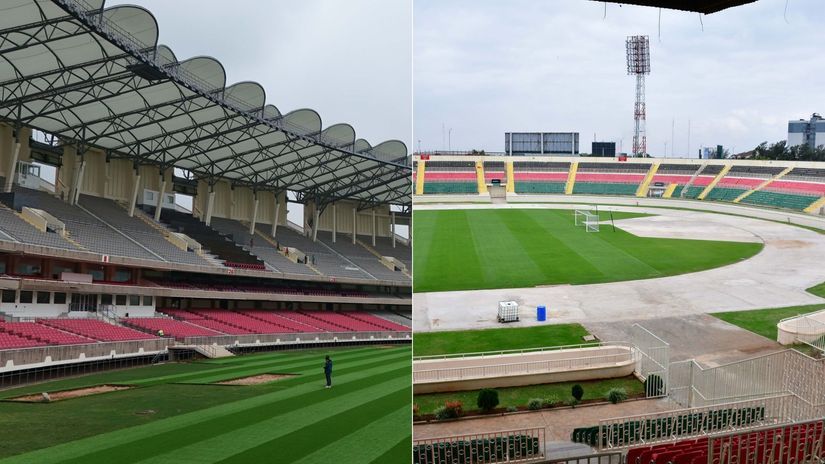
Key examples include the under-construction 60,000-seater Talanta Stadium, Nyayo National Stadium, and Moi International Sports Centre, Kasarani.

The three venues are earmarked for the 2027 AFCON tournament, which Kenya will co-host alongside Uganda and Tanzania under the Pamoja bid.
Tier 1 facilities are central to positioning Kenya as a viable destination for high-profile sporting events
Tier 2: Regional and national competition hubs
Tier 2 facilities form the backbone of regional and national sports development. With seating capacities ranging from 5,000 to 15,000, these venues are designed to host county competitions, national qualification matches, and mid-level tournaments.
They feature essential amenities such as floodlights, electronic scoreboards, and basic media and doping control areas.
Tier 2 stadiums play a pivotal role in talent identification and progression. They provide competitive platforms for athletes across countries, reduce congestion at top-tier venues, and ensure consistent competition schedules.
In doing so, they bridge the gap between grassroots participation and elite performance.
Tier 3: Grassroots and community foundations
At the base of the structure is Tier 3, which focuses on grassroots and community-based development. These facilities, with capacities of 5,000 seats or fewer, cater primarily to local training, school competitions, community tournaments, and entry-level events.
They prioritize accessibility and inclusivity, offering essential amenities such as changing rooms and basic support infrastructure.
Tier 3 venues are vital in nurturing young talent, promoting healthy lifestyles, and embedding sport into everyday community life.

By extending opportunities to schools and neighborhoods, they strengthen the athlete development pipeline and encourage widespread participation.
Together, the three-tier categorization establishes a balanced and sustainable sports ecosystem.
By aligning infrastructure development with capacity, purpose, and regulatory standards, Kenya lays the foundation for long-term sporting excellence.
The availability of improved and standardized facilities has already strengthened Kenya’s hosting credentials, evidenced by its role in staging the African Nations Championship (CHAN) 2024 alongside Uganda and Tanzania.