


 T. Nashipae
Should Kenyan athletes consider learning English?
.jpg)
Reading Time: 4min | Thu. 16.03.23. | 11:26
Lack of fluency in English is not unique to Kenyan athletes only
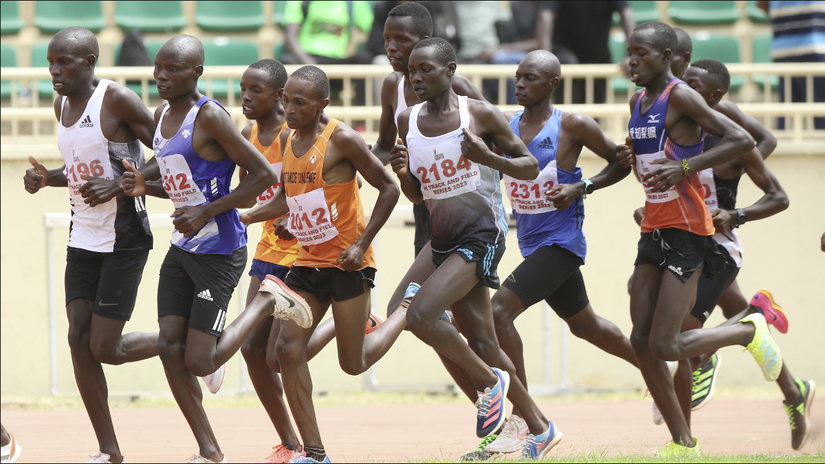
You are engrossed in your television. You spot your favorite Kenyan athlete, who once more broke a global record. With a sweaty face and breathless voice, the athlete is still uncoordinated from the kilometers they just covered.
You rise from your chair and exclaim, "We won!" while yelling the name of your favorite athlete. After the initial celebrations and victory scream, it is time for the interview.
Your favorite champion stammers and speaks in English you cannot understand. You are disappointed and your respect and admiration for him are diminished.
However, the inability to speak English fluently is not exclusive to Kenyan athletes. Throughout the years, many champions have encountered difficulties, with some of them refusing requests for media interviews and appearances on sports talk shows.
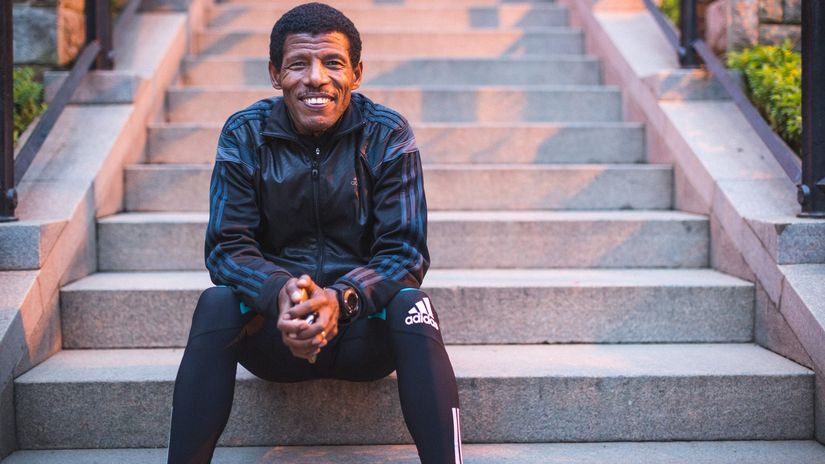
For instance, Kenyan athlete Dominic Samson Ndigiti made news in 2017 when he won the bronze medal in the 10,000-meter walk event at the World Under-18 Championships held at the Moi International Sports Centre in Kasarani.
The athlete encountered significant difficulties when responding to queries from a foreign journalist. His rambling English speech was what caught the attention of sports enthusiasts.
“I am here with bronze medallist Dominic Ndigiti.” The interviewer got going. And then she asked: “You made history by winning the first medal for Kenya today. How do you feel?”
Ndigiti: “Am very fine because I was training very hard, and that is my target is gold, but it is sorry for Kenyan people.”
The journalist then posed a second question “Kenyans will be proud of you all the same. How tough was it?”
Ndigiti answered: “The walk was very tough because I was only in Kenya the athletic who was participating in that event, and I was like a mono, and that is why my competitors from China was two people (in number) ... I hope that it is my mind.”
Interviewer: “What motivates you then?”
Ndigiti replied: “Motivating is the prepared to be Olympic Tokyo in Japan (2020). I proud to be participating in that event.”
The interview drew conflicting responses, with some sports fans making fun of the athlete while others chastised the journalist for failing to hire a Kiswahili translator after learning Ndigiti had trouble speaking English.
Other fans argued that it was Ndigiti that should instead have insisted on speaking in Kiswahili or his mother tongue.
In athletics where athletes are not shielded from the media and they actually have to speak publicly, most of them do not get away with not knowing English.
Ndigiti’s scene was still repeated when Evans Chebet won both the New York and Boston Marathons. He refused to back down and insisted on using Swahili to communicate. On both occasions, the race organizers had to look for English-Swahili translators in order for the international audience to comprehend Chebet.
Uganda’s Stephen Kiprotich also suffered the same fate after bagging the world marathon title during the 2013 Glasgow World Championships in Russia.
He was clearly struggling with English, and at that point, a Kenyan journalist covering the event asked him questions in Kalenjin, and he responded accurately while grinning widely.
There are no rules, but the disadvantages of not learning and speaking the English language in international competitions are quite obvious.
Nevertheless, there are a few Kenyan athletes that are fluent in both English and Kiswahili. Eliud Kipchoge, who holds the world record for running a marathon twice, credits reading for his fluency in English. Asbel Kiprop, the 1500-meter world champion, attributes his proficiency in English to extensive reading and practice.
In the opinion of Sports Expert Dr. Kipchumba Byron, the giant in the room is not a person’s language ability, rather, it is the Kenyan school system that inhibits sporting prowess at a young age.
Additionally, he argued that athletes' inability to effectively communicate made it harder for them to secure endorsement deals.
“Without good communication skills, an athlete can’t build their image and it becomes difficult to get endorsements,” he explained.
Dr. Kipchumba also mentioned that coaches had a part to play and should emphasize communication skills among their charges.
“We need a holistic approach to coaching. We need athletes who can articulate issues well because communication is a marketing tool for athletes.”
He added: “The media has not been asking the coaches and managers hard questions. Coaches and managers should be telling us why their athletes are not good communicators.”
However, as the world of athletics is increasingly becoming multicultural, it is clear that players do not always have to overcome the language barrier to enjoy success. After all, athletic talent will always overcome the language barrier.