


 S. Ochieng
Mark Otieno among latest Kenyan trio banned for doping offenses


.jpg)

.jpg)
.jpg)
Reading Time: 3min | Mon. 19.12.22. | 17:39
Johnstone Kibet and Alice Kimutai were the other two athletes banned on Monday.
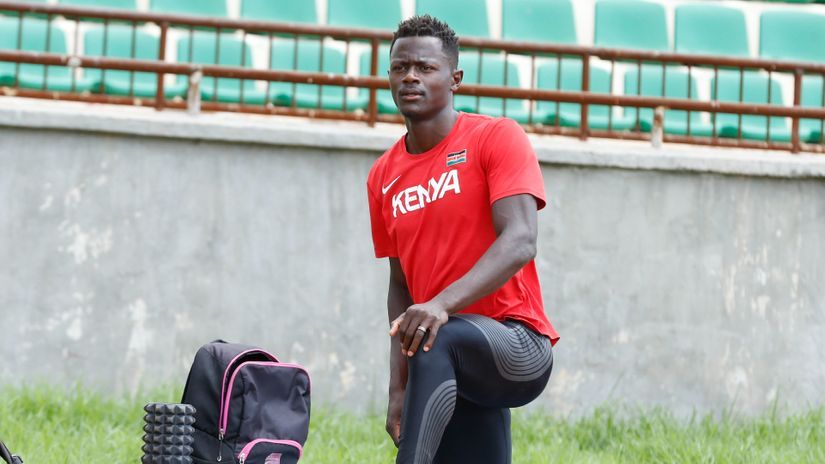
Kenya’s 100m sprinter Mark Otieno has joined the long list of athletes in the country who have been sanctioned by World Athletics for various doping offenses as he was on Monday afternoon listed among the three latest Kenyan athletes to be banned following deliberations made by the Athletics Integrity Unit (AIU).
In an official statement released by AIU, whose role is to protect the integrity of the sport of Athletics, including fulfilling World Athletics' obligations as a Signatory to the World Anti-Doping Code, Otieno was handed a two year ban for the presence/use of a Prohibited Substance (Methasterone) in a case that has dragged on since the delayed Tokyo 2020 Olympics.
The two other athletes, Johnstone Kibet and Alice Kimutai, were on the other hand each banned for 3 years after being found culpable of presence/use of a Prohibited Substance EPO and Testosterone respectively.
The AIU has banned three Kenyan athletes:
— Athletics Integrity Unit (@aiu_athletics) December 19, 2022
Maiyo Johnstone Kibet for 3 years, starting 20 July 2022, for the presence/use of a Prohibited Substance (EPO). DQ results since 29 May 2022.
Details here: https://t.co/cLkNxAE6UD pic.twitter.com/owemwYFgEr
In the ruling, Otieno, who was denied a chance of participating in the summer games after the World Anti-Doping Agency (WADA) accredited laboratory in Tokyo, Japan reported an Adverse Analytical Finding in his Second Sample, was found to have committed an Anti-Doping Rule Violation pursuant to Article 2.1 of the Anti-Doping Rules.
The sprinter, who admitted to using Amino Hardcore supplement, was found culpable of indirect intent on his part after not contesting the AAFs in either the First or the Second Sample taken.
Otieno had appealed the decision, but AIU slapped the two year reduced ban for the presence and use of Methasterone.
— Mark Otieno Odhiambo (@Markotieno14) December 19, 2022
Indirect intent is present where: “the Player i) knew that there was a significant risk that his conduct might constitute or result in an anti-doping rule violation; and ii) manifestly disregarded that risk.” Put more colorfully: “If – figuratively speaking – an athlete runs into a “minefield” ignoring all stop signs along his way, he may well have the primary intention of getting through the “minefield” unharmed. However, an athlete acting in such (reckless) manner somehow accepts that a certain result, i.e. AAF, may materialize and therefore acts with indirect intent.”
30 year old road runner Kimutai, who won Porto Marathon on November 6 this year and was the Kigali International Peace Marathon silver medallist, and 34 year Kibet on the other hand each received three year bans after admitting to the Anti-Doping Rule Violations and accepting the asserted period of Ineligibility.
They also waived any further rights they had to contest, challenge or dispute the Anti-Doping Rule Violations and/or applicable Consequences which led to their would be four year bans reduced to three.

Testosterone (when administered exogenously) is a Prohibited Substance under the WADA 2022 Prohibited List under the category S1.1 Anabolic Androgenic Steroids (AAS). It is a Non-Specified Substance prohibited at all times.
Otieno’s ban starts from July 31, 2021 and his results since June 24, 2021 have been disqualified.
Kimutai will serve her sentence from November 16 with her results from September 20 being disqualified.
Maiyo will serve the sentence from July 20 this year with his results since May 29 being discarded.