


.jpg)
Kabras RFC Chairman Esilaba delivers insights on team's remarkable performance


.jpg)
Reading Time: 4min | Fri. 10.05.24. | 14:57
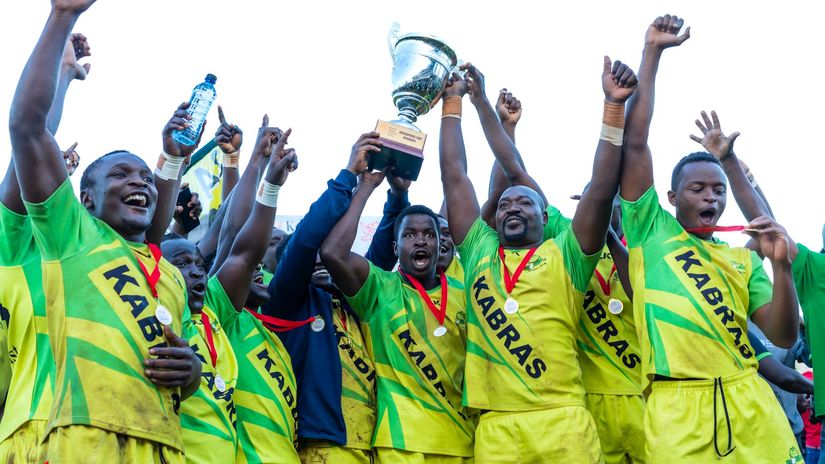
The Sugarmen won the Kenya Cup title for the third consecutive time
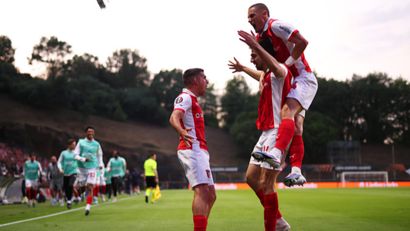
A thrilling and historic 2023–24 Kenya Cup season for Kabras RFC was summed up with a Kenya Cup victory, an undefeated regular season, and a double win against old rivals KCB Rugby.
The triumph marked the second time they defeated the Bankers in a Kenya Cup final.
Their maiden final victory against KCB was during the 2022–23 campaign, where they emerged 19–9 victorious.
This season also marked their 10th appearance in the Kenya Cup league, and they did it in fashion.
The Millers defeated KCB 29-5 in the final to send a message that they were no longer underdogs against the Bankers.
The win also saw them retain the title for a third consecutive time, joining elites Impala, Kenya Harlequin, Nondies, and KCB Rugby, who have won the three-peat since 1970.
Kabras have now beaten KCB four times in a row under coach Carlos Kyatwa. They are unbeaten in 26 matches under the tactician and have won 28 in a row.
These Brothers. This Team. These Family. These Community. ❤️🥳🤗🙏🏾#KabrasSugar #TangtangRugby #KenyasSweetest pic.twitter.com/97SRJR1MJR
— Kabras Sugar RFC (@RfcKabras) April 7, 2024
But what is the secret behind their recent exploits?
Mozzart Sport chatted with the club’s chairman, Edwin Esilaba, who revealed that a frenzy of activity has been going on behind the scenes to ensure the team’s excellent performance.
Esilaba, who joined the Sugarmen from Menengai Oilers seven years ago, noted that his first duty was to focus on the development of local talent.
When he joined Kabras were at the centre of criticism for the influx of foreign players. The club attracted dozens of foreigners from as far as Fiji.
They included Cava Racigi, fly-half Navuso Jone, and flanker Apenisa Natabua. Ugandan imports who played for Kabras included Jasper Ochieng, Uhuru Charles, James Odong, and Gerald Shevkambo.
Years later, the club boasts only two foreign players. In fact, during the 2023 Currie Cup campaign, Kabras fed 14 players to the Simbas, with most players being retained for the Victoria and Elgon Cups.
“We needed to focus on the local talent. In the past, we had like 17 foreigners, and we were always associated with not developing local talents.
We started identifying them in high schools, developing them by playing ESS, and they became better. Our first batch, which included Eugene Sifuna, Kevin Wekesa, and Barry Robinson, played their first game against KCB in 2019. We became successful when we started focusing on the local players,” Esilaba started.
The eloquent chairman went on to explain that the abundance of natural talent in the Western region served as a fertile ground for them to scout and nurture exceptional talent.
He insisted on the need to develop players who excelled not only on the pitch but also in academics.
“In Western, we have the advantage of quality. We have the required profile of a rugby player in terms of height and weight, and we just focus on skills. At the same time, we are trying to bring up a group of young gentlemen who are not just sports-oriented; our focus is also on school. At the moment, we have made it mandatory for them to clear school first, then compete,” he offered.
To make what seems like a far-fetched dream come true, he noted that they were partnering with some of the best schools around to serve as pathways for the players.
“We have also partnered with some of the best schools around. We identify talent and post it to national schools. When they finish school, we have campuses like MMUST and TVETS like Sigalagala that are also developing talents to develop all-round talents,” he disclosed.
.jpg)
He articulated the club's intention to assist players in securing positions within the company after their academic pursuits.
“We are also privileged that our sponsor has several groups of companies. Whatever course they take, we can plug them into any of the several factories that we have,” he told Mozzart Sport.
The club is home to Rayvon Ambale, who earned a fully paid scholarship to Bryanston School, which is one of the best schools in the United Kingdom. It has also channelled more players to international clubs.
They include David Bunduki, who will join South African Currie Cup side Griffons Rugby for a six-month exchange program.
We're glad to announce that our very own rifle, David Bunduki has joined @GriffonsRugby in South Africa on a 6 month rugby development program. Good luck Bundee 💪🏿🔥🔫#KabrasSugar#KenyasSweetest pic.twitter.com/f20ECKkP9f
— Kabras Sugar RFC (@RfcKabras) May 8, 2024
In South Africa, he will join his teammates James Olela and Jactone Osoo, who are part of Rhino’s high-performance training in South Africa.
George Nyambua, Joseph Odero, Ephraim Oduor, and Brian Juma also had a training program with Prime Rose in South Africa in a bid to further grow their skills.