


School Games: The unsung hero who transformed Kakamega School to national, regional sporting giant



Reading Time: 4min | Tue. 31.03.26. | 10:16
What unfolded between 2006 and 2018 was not merely a successful period; it was a systematic build of a high-performance culture, anchored in structure, discipline, and opportunity
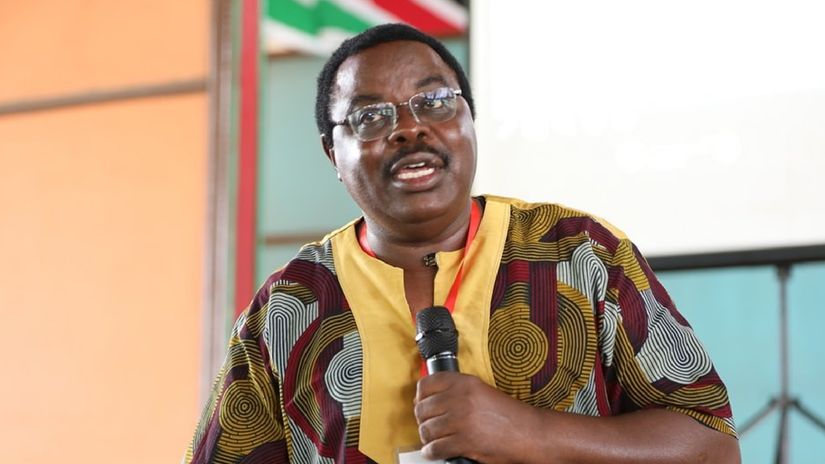
In the annals of Kenya’s secondary school sports, few administrators have left a footprint as deep and enduring as Oliver Minishi.
During his tenure as principal of Kakamega School, Minishi oversaw a transformation that elevated the institution into a national and East African powerhouse across football, rugby and the performing arts.
Download our Mozzart Sport App for more news
What unfolded between 2006 and 2018 was not merely a successful period; it was a systematic build of a high-performance culture, anchored in structure, discipline, and opportunity.
When Minishi became the Kakamega High principal in 2006, the foundations of competitive sport existed, but consistency at the elite level remained elusive.
Within a few years, that narrative changed.
The school’s football team, famously known as the Green Commandos, evolved into a dominant force.
Their success was not occasional; it was sustained and measurable.
Kakamega School claimed national football titles in 2008 and 2014, before adding an under-16 crown in 2017.
The program’s growth reached an unprecedented level in 2018 when the team qualified to compete in the National Super League, effectively stepping into the semi-professional space and redefining the ceiling for school teams in Kenya.
If football gave Kakamega School its national identity, rugby cemented its regional dominance.
Under Minishi, the school’s rugby program, popularly referred to as the Barbarians, grew into one of the most formidable outfits in East Africa.
The 7s team announced itself on the global stage as early as 2008, reaching the final of the International Rugby Board (IRB) Dubai Sevens, a feat that signaled the program’s ambition beyond local competition with a star-sided team comprising Felix Ayange, Joash Yongo, Duncan Lanya, Branton Shikami, Fabian Olando, Arnold Kipkorir, Kelvin Mukolwe, Michael Agevi, Kepha Abuogi, Augustine Lugonzo, Marlin Mukolwe and Upton Lubanga.
That momentum translated into domestic dominance, with Kakamega School securing four consecutive national 7s titles between 2010 and 2013.
The 15s side matched that excellence, lifting national titles in 2009, 2011, 2012, 2013, and again in 2017.
On the regional front, Kakamega School extended its authority into East Africa, winning the FEASSSA Games rugby 15s titles in 2008, 2012, and 2016.
Minishi’s approach was not limited to football and rugby.
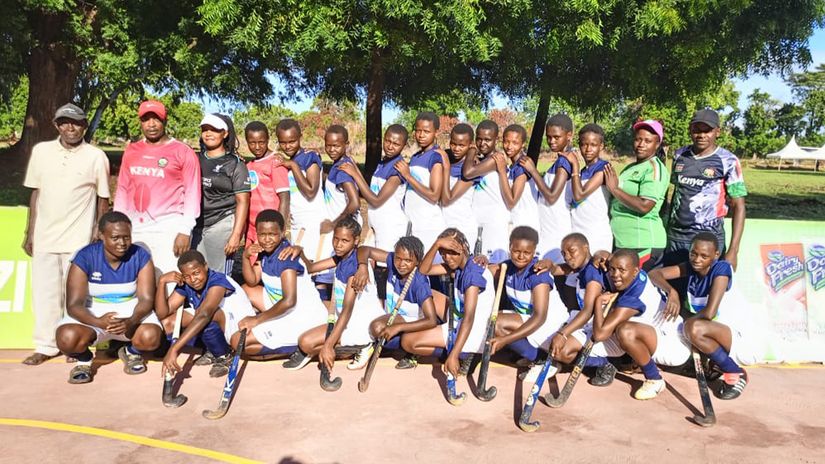
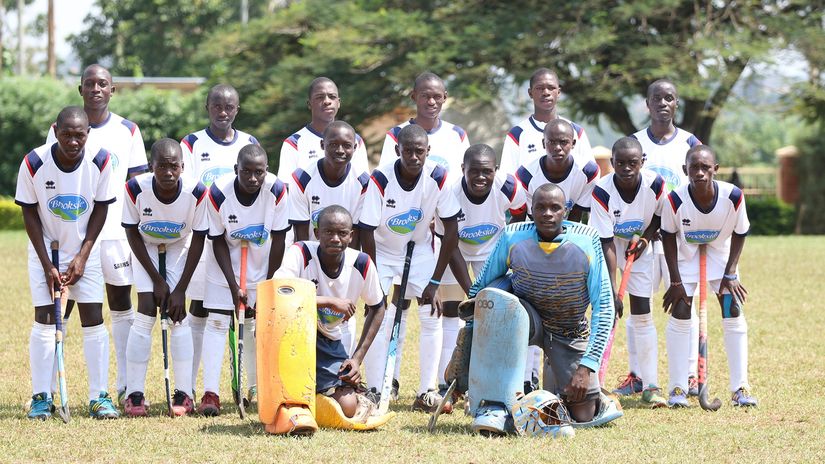
His tenure coincided with the emergence of Kakamega High as a multi-sport and talent development hub, producing athletes across disciplines including hockey, basketball, volleyball and handball.
More significantly, these were not just school-level standouts.
Many transitioned into national youth setups, senior national teams, and professional clubs both locally and abroad.
This consistent output pointed to a deliberate system, where talent identification, structured training, and competitive exposure were all aligned within a clear development pathway.
While his sporting achievements remain widely celebrated, Minishi also played a critical role in strengthening Kakamega School’s presence in drama and the performing arts.
This dual emphasis ensured that the institution did not narrowly define excellence through sport alone, but instead cultivated a broader co-curricular ecosystem.
Students who did not necessarily find their space on the pitch or field could still thrive on stage, reinforcing a culture where talent in all its forms was recognized and nurtured.
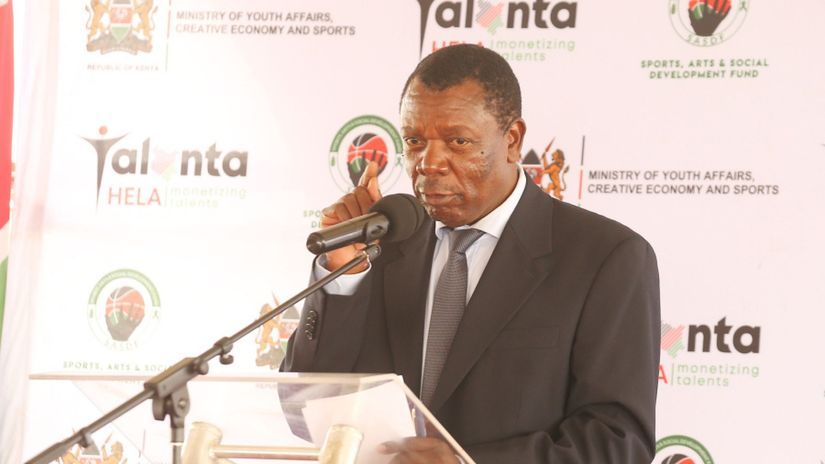
Minishi’s influence was rooted in a clear administrative philosophy. Sports at Kakamega High were not treated as an afterthought but as an integral part of the school’s identity.
Programs received institutional backing, talent was given visibility, and teams were built with continuity in mind rather than short-term success.
This clarity of structure allowed Kakamega School to maintain consistency across multiple disciplines, something rarely achieved at the secondary school level.
In 2018, Minishi left Kakamega High for Nanyuki High School, bringing an end to one of the most successful eras in the school’s history.
In the years that followed, Kakamega School has struggled to replicate the same level of dominance, a decline that has further highlighted the significance of Minishi’s leadership during his tenure.
Minishi’s legacy extends beyond the silverware. It is reflected in the generations of athletes he helped shape, the systems he institutionalized, and the belief he instilled that school sport can serve as a pathway to professional careers.
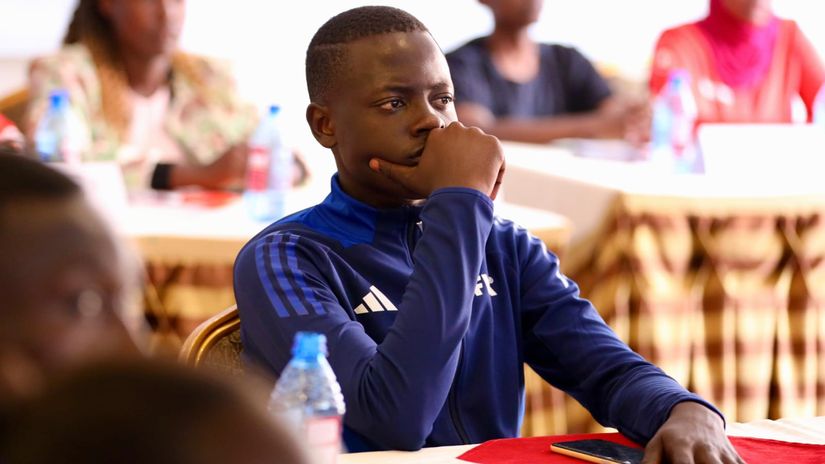
For many players, their defining moments and trajectories can be traced back to their time under his leadership, a testament to the long-term impact of his work.
In Kenyan school sports, where success is often cyclical and dependent on fleeting talent pools, Minishi engineered something far more enduring: sustained excellence through structure.
Kakamega School’s golden era remains a benchmark, and at the center of it stands a man who understood that sport, when properly managed, is not extracurricular, it is transformational.