


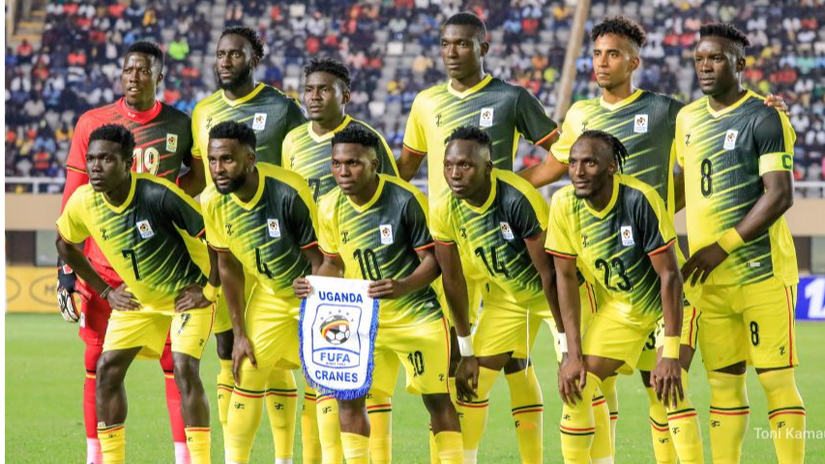
Tactical Analysis: Uganda's tactical blueprint in failed quest for historic CHAN semi final slot

.jpg)
.jpg)
.jpg)
Reading Time: 6min | Mon. 25.08.25. | 07:18
Cranes' journey ended at Mandela National Stadium - not with lack of effort, but with fine margins at the finish line
From the first whistle, Uganda stamped their intent by pressing high, forcing turnovers, and keeping Senegal on the back foot.
In the third minute, Libasse Guèye cut inside and unleashed a left-footed shot that demanded a near-post punch from goalkeeper Joel Mutakbwa - a save that not only denied an early goal but set a tone of urgency and control from Uganda at the outset.
Follow our WhatsApp channel for more news
The pattern was unmistakable: aggressive, front-foot football framed by disciplined organization.
Central to Uganda’s defensive strength was Torach, whose aerial command and timely headers repeatedly neutralized Senegalese aerial threats. His leap and dominance in duels provided a backbone that anchored Uganda’s high line, maintaining balance between risk and reward upfront.
Complementing those were long diagonal passes from Torach, shifting play wide toward Regan Mpande, a gifted dribbler strong in 1v1s, overloading the wing. In those early minutes, Uganda bypassed congested midfield restarts, opting instead for quick switches - torching Senegal’s transition gaps.
Uganda’s structure out of possession was a formidable 4‑2‑4, pressing in waves, with Sseemugbi dropping into half-spaces to link play between lines. Allan Okello, unchained in those moments, found space to dribble through 1v2s by the 13th minute.
Even though Senegal managed to regroup with a 5‑3‑2 defensive canvas, Uganda’s long balls - often dispatched by Torach - remained a consistent threat, particularly to Mpande’s wing.
By the 15th minute, Senegal had solidified into a 4‑4‑2 block, defending central progression staunchly, forcing Uganda wide. Yet Uganda’s transitions remained sharp: Okello orchestrated danger, and Torach’s diagonals continued to threaten.
Up to the 21st minute, Mpande’s forays down the left earned Uganda a string of chances - though their final delivery often lacked precision, as evidenced by a blocked shot leading to a corner that Senegal defended with a disciplined hybrid system combining zonal and man-marking.
Uganda’s patterns of quick transitions, midfield drops via Sseemugabi, and destabilizing diagonal passes coalesced around the half-hour. Sseemugabi occasionally drifted to the wings, combining with Okello - who hovered between midfield and attack - to create overloads.
It was Uganda’s persistence that shaped play: Watambala, piloting midfield progression, caused recurring disruptions between Senegal’s lines, while Okello and Mpande worked ceaselessly to unlock defensive thresholds on the wings.
Despite Senegal’s resilience, Uganda’s press and positional rotations forged a defining pattern.
In the 33rd minute, Watambala attempted a low long-range effort on target, only for the Senegalese keeper to gather it cleanly. Senegal’s set-pieces began probing Uganda’s shape - particularly a well-struck free-kick in the 35th minute - yet Mutakbwa handled the situation firmly. Uganda edged possession at halftime (54% to Senegal’s 46%), with fouls relatively balanced - six to Senegal’s five - reflecting the game’s intensity.
Sseemugabi’s link play grew more critical mid-first half; he was the conduit for second balls, often winning them aerially or from physical duels, only for either Okello or Mpande to capitalize. However, a misfortune struck in the 41st minute: Sseemugabi injured his knee during a leap and had to be substituted before halftime, forcing Uganda to reset mid-game.
The first half ended goalless, but Uganda's dominance was clear: Mpande and Sseemugabi had been primary outlets, Okello pivotal between lines, and Watambala instrumental in transitions.
Torach’s diagonal distribution threatened wide areas, while defensively he, with Odong, contained Senegal’s Gomis aerially. Still, Uganda lacked that killer pass or finish to penetrate the last line.
The second half saw Uganda assert more possession but remain direct in possession, Torach regularly delivered long balls out wide to Mpande, who whipped in crosses.
His passing range - especially to Mpande on the left wing - underpinned Uganda’s approach, combining width with vertical threats. Okello’s corners tested Senegal, but the visitors defended with a stingy line of four zonal markers and a couple man-markers to neutralize aerial danger.
.jpg)
Uganda’s crossing output was staggering - averaging around 20 crosses by the 55th minute - more than in any prior CHAN match. This willingness to bombard the box from wide regions forced Senegal into frequent defensive resets.
Ahimbisibiwe, introduced early on in Sseemugabi’s place, dropped into channels to receive midfield passes and link with Sseemugabi-like movements - threading runners and complementing wide overloads.
Senegal responded with a triple substitution, injecting V. Cissé, Koïta, and Kane for Fonseca, Gomis, and Badji. Almost immediately, their structure shifted to a more aggressive posture.
A crisp left-wing transition saw Gueye - having switched flank minutes before - deliver the ball to Ba, who beat Mutakbwa with a low drive in the 62nd minute: a moment that underscored Senegal’s ability to exploit high defensive lines when meaningfully recharged.
Uganda did not relent; they retaliated with long-range attempts (66th minute) earning a corner cleared by Odong after Okello’s pin-point delivery. Senegal responded by bypassing midfield - opting for purposeful direct play and recycling possession to deny Uganda tempo. A 5‑3‑2 defensive shape emerged to suffocate passing lanes and limit transitions.
By now, Senegal were disrupting Uganda’s rhythm, slowing play, and inducing fouls - Cissé particularly effective in interrupting play. Uganda made changes: Watambala out for Kakande; Mpande replaced by Sentamu around the 72nd minute.
The match became scrappy, and Uganda struggled to craft incisive final-third connections despite sustained possession. Okello remained a focal point, dropping between lines to link, but delivery misfired when it counted.
Late substitutions followed for Senegal: Bote and Ndiaye came on for Moussa Cissé and Gueye, consolidating defensive lines and adding fresh legs. In the 82nd minute, Uganda earned a corner once more. The keeper parried it to Ahimbisibiwe, but he skewed his chance high; Torach again failed to convert the rebound. These moments exposed Uganda’s recurring issue: pressure in the box lacked final precision.
At 89 minutes, a beautiful buildup saw Achayi deliver a cross from the left flank under pressure. Both Ahimbisibiwe and Usama missed in front of an open net - Senegal’s keeper having failed to claim the cross.
Thwarted by inches, Uganda’s frustration mounted. In added time, a final throw-in gave a shot opportunity, only for Senegal’s defense to block - sealing Uganda’s exit. Senegal’s defense, marshaled superbly by man of the match Mbaye Ndiaye absorbed wave after wave, staying resolute.
Uganda’s CHAN 2024 journey ended at Mandela National Stadium - not with lack of effort, but with fine margins at the finish line.
They pressed, they created, they rotated; their principles were clear: high intensity from kickoff, width via Mpande, fluid inside play from Okello, and distribution from Torach and Watambala. Yet in the final third, execution faltered. Senegal, hardened by disciplined defense and match management, seized a single moment to strike and with just enough steel to survive the late onslaught.
Uganda bow out with heads high, their tactical blueprint evident and courageous. But finishing - wide delivery, shot accuracy, timing in the box - remains an avenue for growth. A valiant performance ultimately undone not by lack of inventiveness, but by Senegal’s defensive nerve and one moment of precision that proved decisive.