


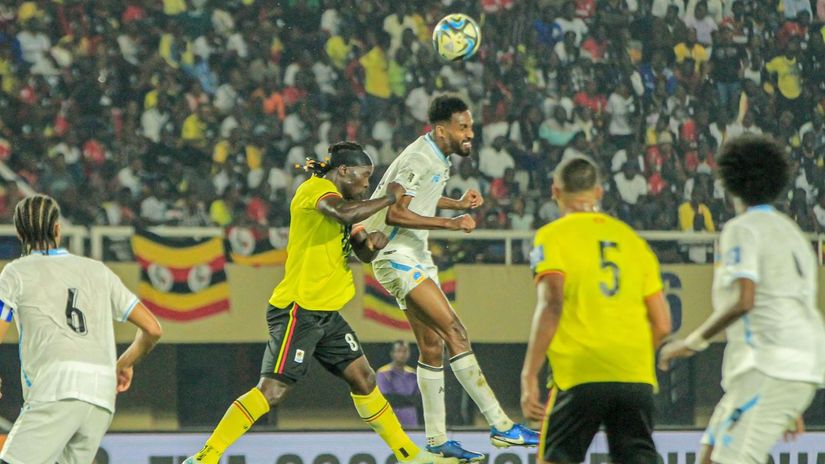
TACTICAL ANALYSIS: Uganda's four strategic strengths that overpowered Somalia






Reading Time: 6min | Tue. 09.09.25. | 14:09
Ultimately, the game highlighted Uganda’s upward trajectory as a team capable of both dominance and control - qualities vital for success in international football qualifiers
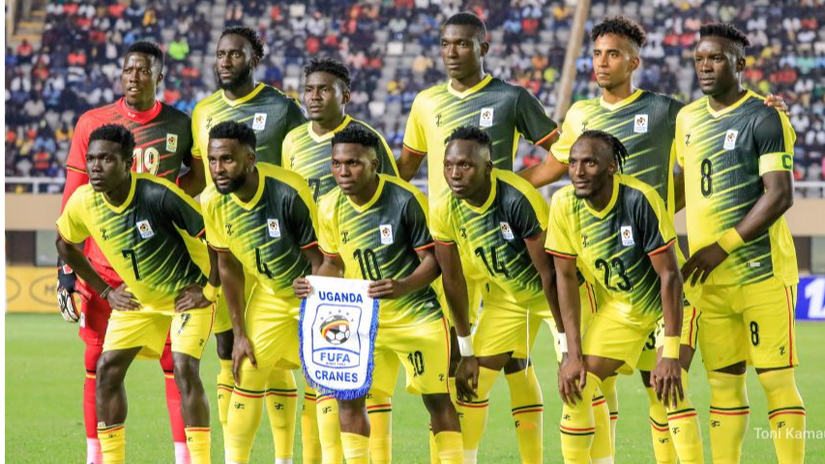
Uganda Cranes secured a comfortable 2-0 victory over Somalia in their 2026 FIFA World Cup qualifying clash, displaying tactical superiority, efficient use of wide areas, and disciplined game management.
The result underlines Uganda’s growing maturity in international competition and provides key insights into how their coach, Paul Put and his players are shaping a team capable of progressing through the qualifiers.
Somalia, though organised in spells and committed to building from the back, struggled to cope with Uganda’s structure, control, and attacking sharpness from the flanks.
Follow our WhatsApp channel for more news
First Half
Early Aggression and Wide-Area Focus
From the opening whistle, Uganda imposed themselves in the game. Just two minutes in, the Cranes were already channelling play into wide areas, looking for early crosses or cutbacks into the box.
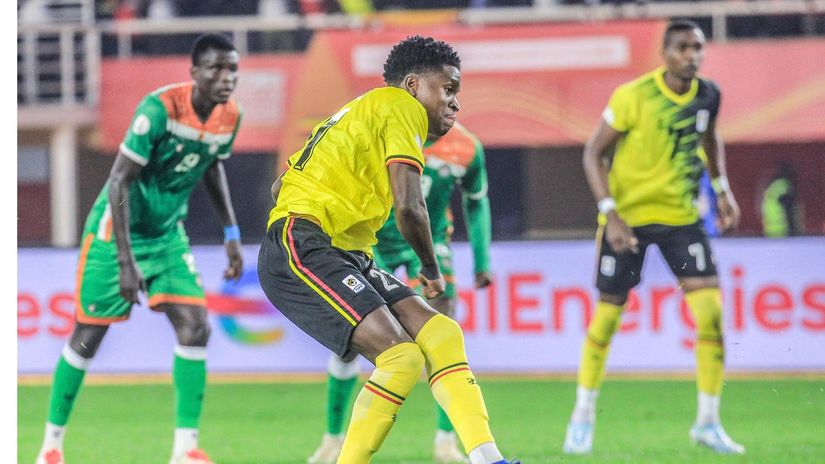
This intent was rewarded by the fifth minute, when marauding left-back Aziz Kayondo, pushed high up the pitch, won a penalty after being tripped inside Somalia’s 18-yard area.
Allan Okello calmly stepped up and converted, giving Uganda an early 1–0 lead.
Uganda’s early approach was clear: exploit the flanks, stretch Somalia’s compact defensive block, and force errors through aggressive territorial play.
Kayondo’s adventurous overlapping was crucial, while Khalid Aucho, alongside Kenneth Semakula, dropped deep into defence to act as the pivot, allowing the team to maintain balance when full-backs ventured forward.
Somalia’s Tactical Shape
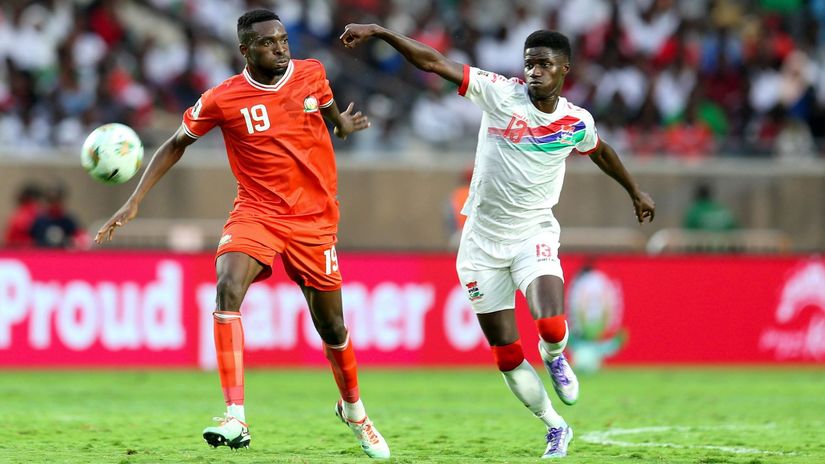
Somalia, though conceding early, did not collapse. Their out-of-possession (OOP) structure resembled a 5-4-1/4-1-4-1, designed to stay compact in central areas. At corners, they deployed four zonal markers supplemented with man-to-man marking to deal with Uganda’s aerial presence.
In possession, Somalia preferred a 4-2-4 shape, with inside-forwards tucking in and attempting to progress centrally through short combinations.
They also looked to bypass Uganda’s structured high press with direct long balls, targeting space behind the backline.
However, Uganda’s quick recovery transition neutralised most of these attempts.
Uganda’s Controlled Possession and Transitions
By the 26th minute, Uganda had settled into a rhythm of controlled possession, baiting Somalia’s compact mid-block (4-4-2).
Their in-possession structure rotated between 3-2-5 and 3-3-4, giving width through the full-backs while Okello and Jude Ssemugabi operated between the lines.
Transitions were especially lethal.
When Uganda regained the ball, they quickly launched 3v2 overloads on the left wing, exploiting Somalia’s slower defensive recovery.
This nearly paid off in the 30th minute, when Rodgers Mato found space and shot past the goalkeeper, only for a defender to clear.
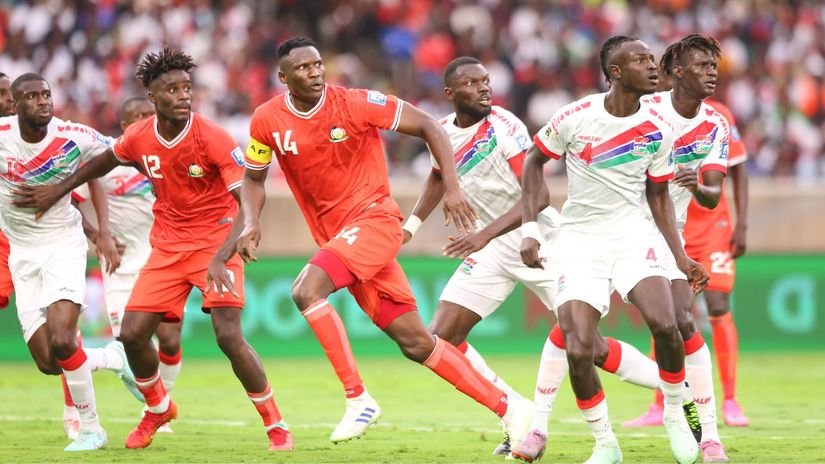
Uganda’s persistence in wide attacks bore fruit in the 39th minute.
Once again, Kayondo surged forward and delivered a cross into the box.
After an initial header from Stephen Mukwala was saved, Jude Ssemugabi pounced on the rebound, firing Uganda into a deserved 2–0 lead.
From there, Uganda dictated tempo through midfield switches, stretching Somalia’s defensive lines and neutralising their counterattacking ambitions. The first half ended with the Cranes firmly in control, both tactically and psychologically.
Half-Time Score: Uganda 2–0 Somalia
Second Half
Somalia’s Attempts to Recover
Somalia resumed with their 4-1-4-1 OOP shape, hoping to stay compact and then transition quickly.
However, Uganda continued to target the flanks with quick switches in high transitions, ensuring that Somalia’s defensive block was constantly shifted laterally.
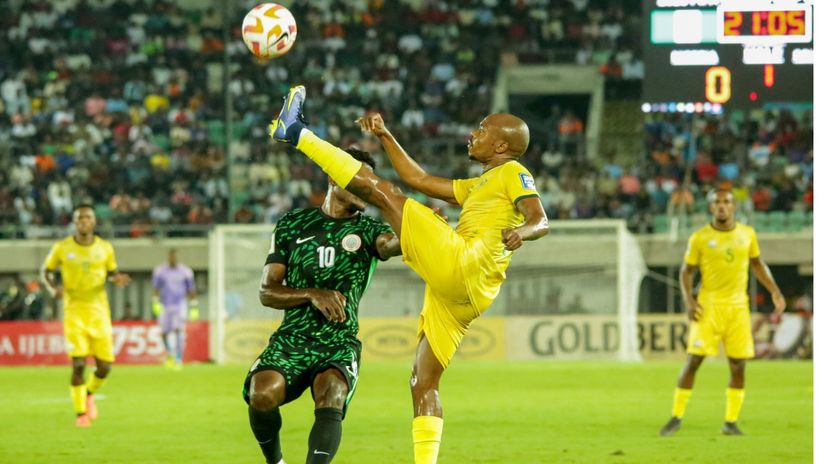
The Cranes’ midfield orchestrator, Okello, thrived in the pockets between midfield and defense, linking play fluidly and connecting with forwards.
In the 51st minute, his combination play led to a big chance, but Mukwala failed to convert.
Rodgers Mato, often dropping deep to collect possession, combined well with Ssemugabi to progress into the final third, highlighting Uganda’s layered attacking approach.
Adjustments in Defensive and Attacking Structures
Uganda demonstrated tactical flexibility by shifting into a 5-4-1 out-of-possession shape when defending deeper, particularly as the game entered its middle phase.
The back five allowed them to absorb Somalia’s higher pressing phases while leaving the left-back to still venture forward in attack. This created a 3-2-5 in possession system, with the right-back more reserved.
Somalia, sensing urgency, deployed a high press, using misplaced touches and loose passes as pressing triggers.
While they managed to force a few turnovers, they lacked the cutting edge to convert these into meaningful chances. Their commitment to a high defensive line also left them vulnerable to Uganda’s forwards running in behind, though the Cranes often opted not to over-commit, protecting their lead.
Substitutions and Game Management
In the 70th minute, head coach Paul Put introduced Denis Omedi for Mukwala, injecting fresh energy into the forward line.
Meanwhile, Somalia maintained their high defensive line, attempting to catch Uganda’s attackers offside and compress the space.
Uganda, however, responded by shifting toward controlled possession, slowing the tempo and prioritising recycling of the ball.
This adjustment reflected maturity: with a two-goal cushion, they resisted the temptation to over-pursue a third and instead focused on minimising risks.
Defensive Solidity and Late Chances
One of Uganda’s centre-backs, Elio Capradossi, made a rare forward surge in the 75th minute, linking with Ssemugabi before his effort was cleared off the line by Somalia defender Faisal Othman.
This was one of the few late attacking highlights as Uganda gradually tightened the game.

Semakula played an increasingly important role in the second half, dropping deep to link defence and midfield, while Aucho stayed slightly higher to progress possession forward.
This rotation prevented Somalia from locking onto one passing lane, ensuring Uganda’s buildup remained secure.
By the closing stages, Uganda were in full game-management mode: circulating possession, pulling Somalia from side to side, and denying them rhythm.
Somalia’s pressing energy faded, and without penetration or numerical superiority, they struggled to create clear chances.
Full-Time Score: Uganda 2–0 Somalia
Uganda Cranes’ victory was defined by four tactical strengths.
Their flank exploitation proved decisive, with wide overloads and quick switches repeatedly stretching Somalia’s compact 5-4-1 and producing both goals through Kayondo’s advanced runs and crosses.
Their flexible structures provided balance, shifting between 3-2-5/3-3-4 in possession to create width and overloads, and a compact 5-4-1 out of possession to block central progressions, showing adaptability in both proactive attack and controlled defence.
In midfield, their dynamics ensured stability and creativity - Aucho’s deep pivot covered transitions and enabled full-back surges, Okello linked play between the lines, and Semakula’s late deep drop allowed Uganda to recycle possession and manage tempo.
Finally, their game management after going two goals up underlined maturity, as they slowed the tempo, recycled the ball, and neutralised Somalia’s pressing triggers to preserve control.
For Somalia, the contest highlighted both weaknesses as their compact shape limited central access but left them vulnerable to Uganda’s wide overloads and rapid transitions.
Their reliance on a risky high line further exposed them, as without synchronised pressure on the ball, Uganda found time and space to exploit gaps in behind.
In attack, they offered a limited threat - their 4-2-4 buildup allowed central progression but broke down in the final third, leaving Uganda’s defense comfortable.
Even their energetic pressing, though it forced turnovers, lacked efficiency, as rushed execution and poor decision-making meant few meaningful chances were created.
In conclusion, Uganda’s 2-0 win over Somalia showcased a side that combined width, flexibility, and discipline with intelligent game control, underlining their credentials as a serious qualifier contender.
Somalia, meanwhile, showed glimpses of progress with their structural organisation and ambition to play, but their susceptibility to transitions, reliance on a high-risk defensive line, and lack of cutting edge in attack remain areas demanding urgent improvement.
Ultimately, the game highlighted Uganda’s upward trajectory as a team capable of both dominance and control - qualities vital for success in international football qualifiers.