


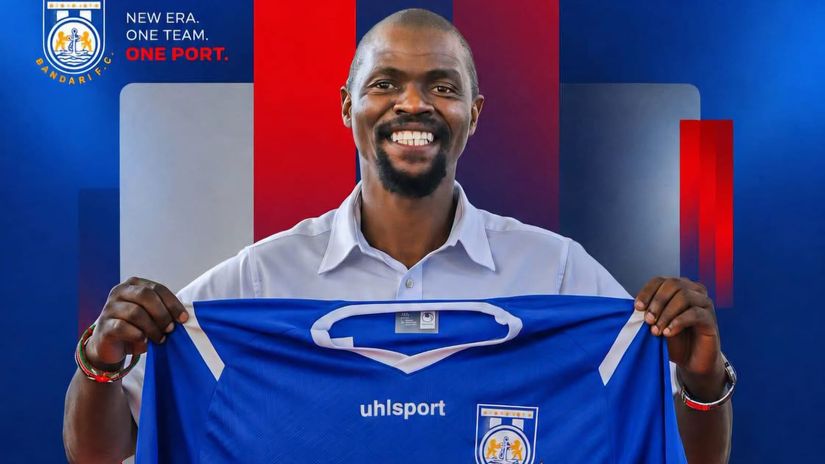
TACTICAL ANALYSIS: Inside Charles Okere’s playbook expected at Bandari
.jpg)






.jpg)
Reading Time: 5min | Sat. 18.07.26. | 17:26
Okere inherits a Dockers side that has historically knocked on the door of domestic glory but has never lifted the elusive top-flight league title
Following a 12th-place finish in the 2025/26 FKF Premier League campaign, Bandari FC have turned to former Tusker FC tactician Charles Okere to oversee a technical resurgence.
Download our Mozzart Sport app for more news
Arriving at the port city five months after he departed from the Ruaraka-based Brewers, Okere inherits a Dockers side that has historically knocked on the door of domestic glory but has never lifted the elusive top-flight league title.
Backed by the arrival of Elvis 'Valdo' Ayany as assistant coach and Patrick Gitagia as an analyst, Okere is tasked with instilling structural clarity and modern tactical concepts into the squad.
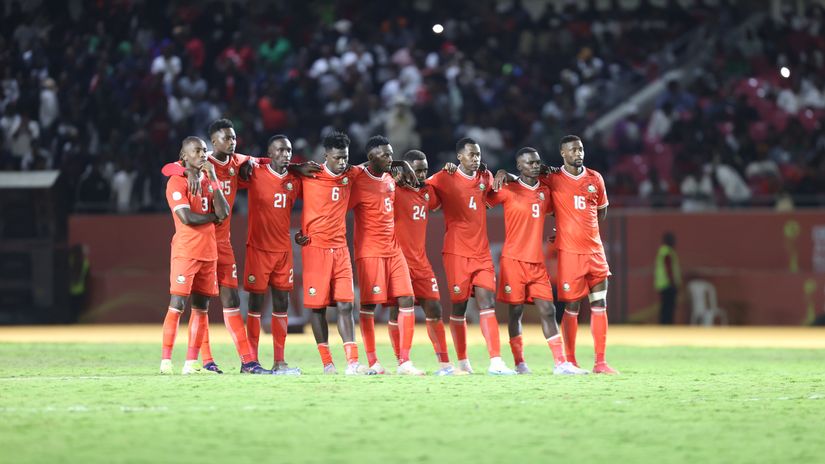
By analysing his previous tactical foundations - most notably a defining 2-1 victory over league giants Gor Mahia in January 2025 - we can paint a comprehensive picture of the system, style, and tactical patterns that will define the new-look Bandari.
On paper, Okere’s preferred tactical architecture begins in a balanced 4-2-3-1/4-4-2 system. This shape acts as a highly flexible platform that transitions seamlessly based on the phase of play.
In possession, Okere emphasises structured attacking football that heavily prioritises wide progression and spatial exploitation along the flanks.
Rather than over-complicating deeper build-up phases, Okere is comfortable instructing his goalkeeper to bypass the opposition’s first line of engagement by launching direct, long restarts from goal kicks.
This direct approach is not merely a clearance, but a calculated mechanism designed to pin the opponent back and win the second ball in the middle or final third.
During these direct restarts, Okere focuses intensely on the ball drop zone.

The target is typically a physical and mobile advanced midfielder who is supported closely by the centre-forward and inverted wingers.
The advanced midfielder’s primary objective is to contest the aerial duel, looking to execute a cushioned knockdown or flick-on into the path of the high-pressing striker or the wide wingers running inside the half-spaces.
Once possession is sustained in the opposition half, Bandari’s primary attacking mechanism under Okere will revolve around the creation of wide overloads.

The system relies on intricate, well-rehearsed wide triangles formed between the winger, the ball-side central midfielder, and the drifting centre-forward or overlapping fullback.
These triangular combinations are deployed to destabilise the opponent’s defensive block, manipulate wide spacing, and generate crossing opportunities.
Once these wide passing lanes are unlocked, Okere’s teams systematically spam crosses into the penalty box.
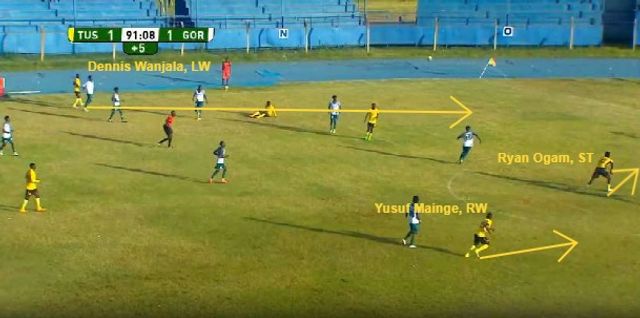
This pattern of play targets not only the central striker pinning the opposition centre-backs, but also relies on the late, aggressive arrivals of the far-side winger and central midfielders crashing the box.
This vertical overload exploits the natural blind spots of a retreating defensive line, overwhelming opponents with numerical superiority inside the danger area.
A hallmark of Okere’s attacking philosophy is his preference for a highly creative and technically gifted profile in the advanced midfield role. He actively seeks out a playmaker capable of carving out incisive vertical passes through the opponent's defensive lines.
This "number 10" is given the creative freedom to drop into pockets of space between the lines, acting as the primary orchestrator of through-balls for runners breaking beyond the last line of defense.
This vertical penetration was the exact tactical mechanism that unlocked Gor Mahia's backline for a clinical open-play goal during Okere's tenure at Tusker.
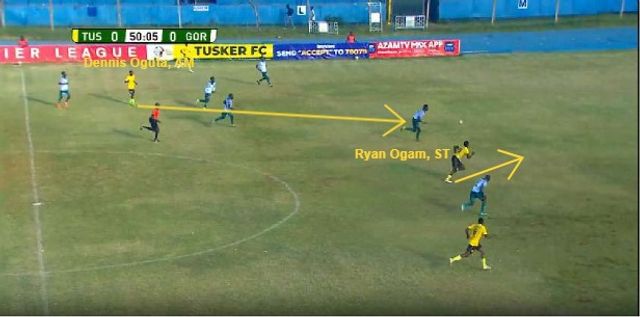
Beyond settled possession, Bandari supporters can expect a relentless emphasis on rapid attacking transitions. The moment possession is turned over, Okere’s forward line is instructed to immediately look up and launch vertical passes into the final third.
The objective is to exploit the space left by an expansive opponent before their defensive shape can revert to a compact low block. This transition game heavily relies on a front-foot approach, looking to force technical errors and turnovers in the middle and upper blocks.

By squeezing the pitch and initiating immediate counter-pressures around the opponent’s penalty area, Okere’s forwards transform forced errors into high-value goal-scoring chances in the blink of an eye.
When the ball is lost, Okere’s system transitions into a highly disciplined, compact 4-4-2 defensive shape.
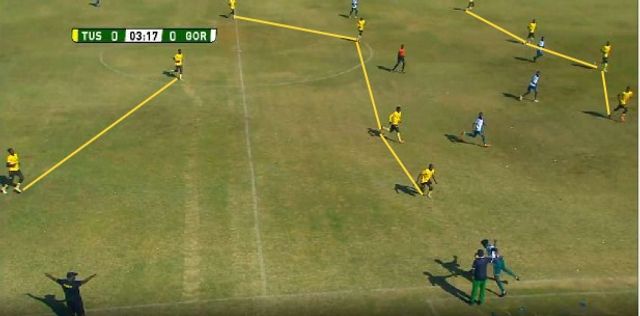
Out of possession, the team utilizes a hybrid defensive scheme that balances strict zonal marking with aggressive, man-oriented triggers.
The first line of engagement - consisting of the centre-forward and the advanced midfielder - is responsible for containing the opponent's deep pivot and central defenders.
They shift their pressing lines in perfect synchrony, maintaining central compactness and cutting off central progressive passing lanes.
The primary pressing trigger occurs when the ball is forced wide into the opposition's fullbacks. The moment an opposing fullback receives the ball, the wingers are instructed to jump aggressively out of the mid-block to apply intense pressure on the ball.
This front-foot pressure is designed to deny the opponent the ability to build cleanly from deep areas, funnelling all opposition attacks toward the flanks.
By closing off the interior channels and restricting central progression, Okere’s defensive setup ensures that the opponent cannot access the high-value central spaces in front of the penalty box.
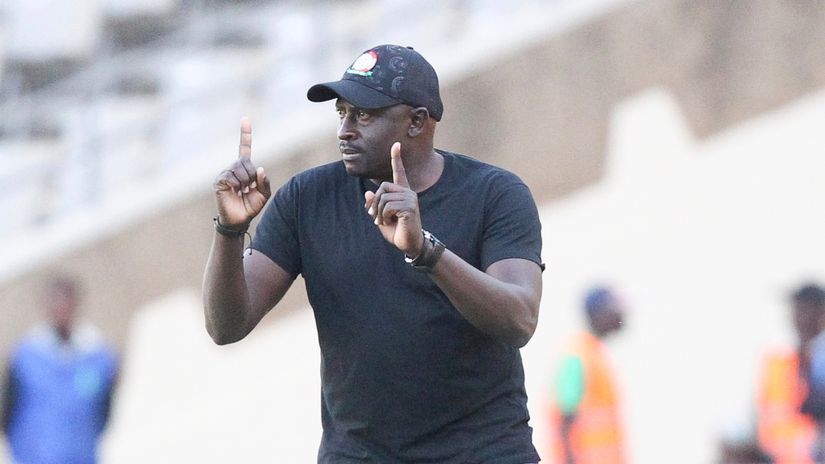
This aggressive flank trap systematically suffocates deep build-up play, forcing the opposition to hit low-percentage long balls into a prepared underloaded defensive zone where Bandari's physical centre-backs can comfortably sweep up possession.
While the defensive organisation is heavily structured and difficult to break down centrally, it does carry inherent risks.
Due to the aggressive nature of the front-foot press and the desire to squeeze the playing lines, the system can become susceptible to direct balls over the top of the block.
Highly organised opponents with intelligent runners capable of timing their breaks from deep can exploit the space left behind Okere's high defensive line.
Bandari's back four will need to maintain elite communication and seamless covering distances to mitigate these vertical runs into the channels when the primary press fails to register a turnover.
Finally, set-pieces will form a crucial pillar of Bandari’s point-construction strategy under Okere’s guidance. The tactician treats dead-ball situations as premium opportunities to carve out high-quality chances on goal.

At Tusker, his meticulously rehearsed attacking free-kicks and corners consistently yielded critical breakthroughs, often featuring clinical, one-touch dispatches inside a crowded penalty area.
While Bandari must remain vigilant against elite set-piece specialists on the defensive end - as evidenced by conceding a direct free-kick against Gor Mahia - their offensive set-piece productivity is bound to skyrocket under Okere’s meticulous training ground routines.
Charles Okere brings a modern, highly disciplined, and structurally sound footballing identity to the Mombasa-based club.
Bandari fans can expect a team that defends with a cohesive, aggressive 4-4-2 block, dominates the flanks through calculated wide progression, and strikes with rapid verticality through a highly creative advanced playmaker.