


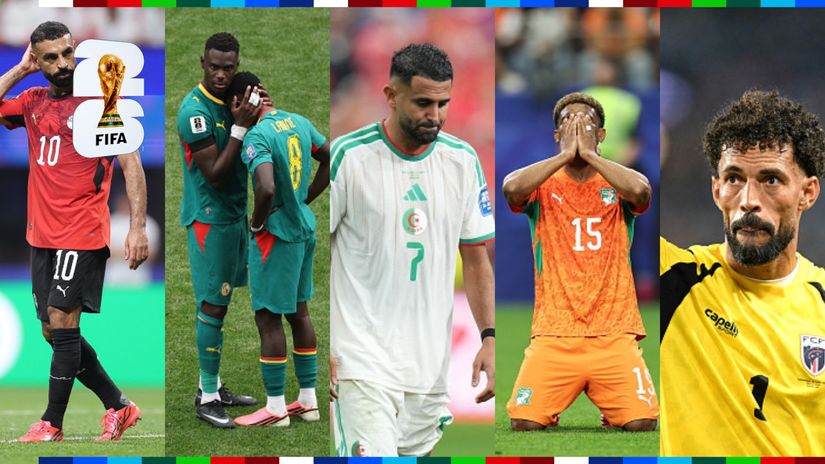
TACTICAL ANALYSIS: Inside three major flaws that ruined World Cup dreams for African teams



.jpg)


Reading Time: 11min | Fri. 10.07.26. | 20:03
The recurring nature of late goals points directly to three systemic structural flaws rather than mere bad luck
For Africa's representatives at the FIFA Club World Cup, the Round of 32 proved to be the defining hurdle.
Their exits were not fueled by technical inferiority, but the impact of elite game management, squad depth, and mental composure under the unforgiving pressure of knockout football.
Download our MozzartSport App For More News
Out of the possible ten, nine African nations that proceeded to the knockout rounds (South Africa, Cape Verde, Ghana, Algeria, DR Congo, Tunisia, Egypt, Senegal, and Ivory Coast), most of them collapsed early or failed to survive their first direct knockout tests.
Only Egypt and Morocco breached the threshold to reach the Round of 16, where they too suffered an identical tactical breakdown.
The data exposes a hauntingly consistent paradox: African teams routinely dominated the opening 70 minutes of matches, pairing high-energy transitions with clinical initial execution, only to surrender completely to European and South American comebacks in the dying embers of the game.
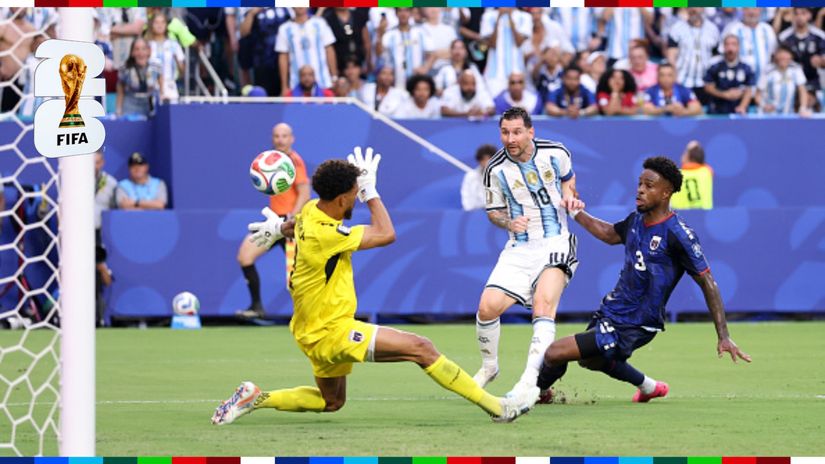
Before dissecting the collective tactical collapse of the prominent performers, two nations must be separated as anomalies of total structural failure: Algeria and Ghana.
Algeria
Unlike their continental peers, these two showed zero early promise.
Algeria controlled 56% of the ball against Switzerland but succumbed to an empty, circulating possession structure that resulted in just two shots on target and a 2-0 defeat.
Nominally a 4-3-3, they transformed into an expansive 3-1-6 or 2-2-6 in possession, with Nabil Bentaleb dropping into the back line and Fares Chaibi rotating from the interior spaces out to the left flank to generate massive numerical overloads.
However, their fatal tactical flaw was an absolute lack of vertical depth in their attacking play, combined with a highly compromised defensive transition structure.
Algeria intentionally sacrificed a permanent penalty-box presence by deploying Ibrahim Maza as a false nine.
While this helped them dominate early midfield possession, it resulted in a static final third where almost all passes were played into feet rather than stretching Switzerland's center-backs.
Right-back Rafik Belghali was instructed to advance aggressively into the attacking line, with Ramiz Zerrouki sliding across into the right-back space to provide cover. Switzerland ruthlessly exposed this lateral distance.
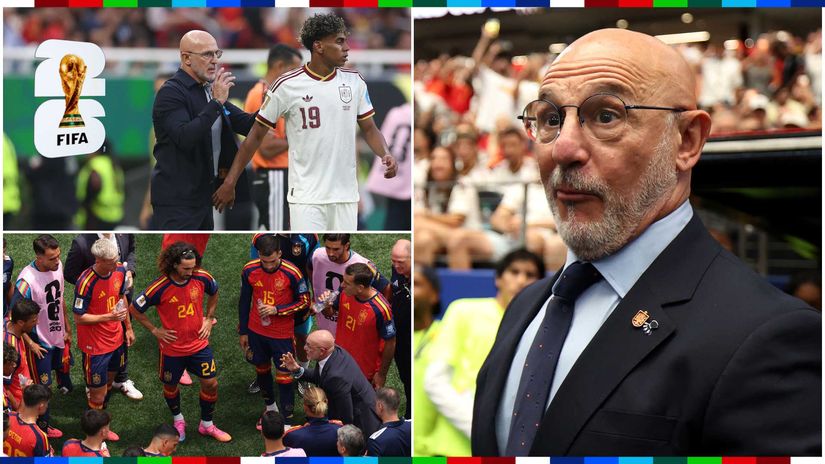
Upon winning possession, Johan Manzambi immediately exploited the vacant channel before Belghali or Zerrouki could structurally recover, assisting Breel Embolo for the opener.
Trailing 2-0 after a second-half defensive lapse, Algeria abandoned their mid-block for an aggressive, man-oriented high press.
However, Switzerland easily bypassed this by dropping Remo Freuler deep to create a numerical overload, leaving Algeria’s advanced defensive line exposed to direct 1v1 isolations.
Despite controlling possession, Algeria lost the xG battle 2.52 to 0.73, thoroughly punished for their structural imbalances.
Ghana
Ghana’s performance against Colombia was even more catastrophic.
Registering an abysmal 27% possession, zero shots on target, and a final expected goals metric of just 0.27, the Black Stars failed to create a single genuine chance.
Ghana lined up in a compact 4-3-3 designed specifically to protect central corridors and deny Colombia's dynamic midfield line penetrative access.
Carlos Queiroz’s side dropped into a tight 4-1-4-1 or 4-5-1 mid-block, inviting Colombia to circulate possession wide while completely congesting the half-spaces.
Ghana’s elimination is a stark testament to the dangers of pure defensive pragmatism without a functional offensive counter-strategy.
Ghana’s reluctance to press Colombia's deep build-up allowed the South Americans to comfortably establish a 3-1-6/2-2-6 attacking layout.
When Ghana did win possession, their own build-up was overly cautious, completely failing to progress past Colombia’s highly athletic counter-press and mobile rest-defense.
Ghana finished the match - and the tournament - with a truly damning statistic: they became the only team in World Cup history to fail to register a single shot on target across all four of their matches.
Against Colombia, they were structurally suffocated, generating a microscopic 0.26 xG compared to Colombia’s 2.19 xG.
Colombia's lone goal by Jhon Arias perfectly exposed Ghana's lateral shifting deficiencies.
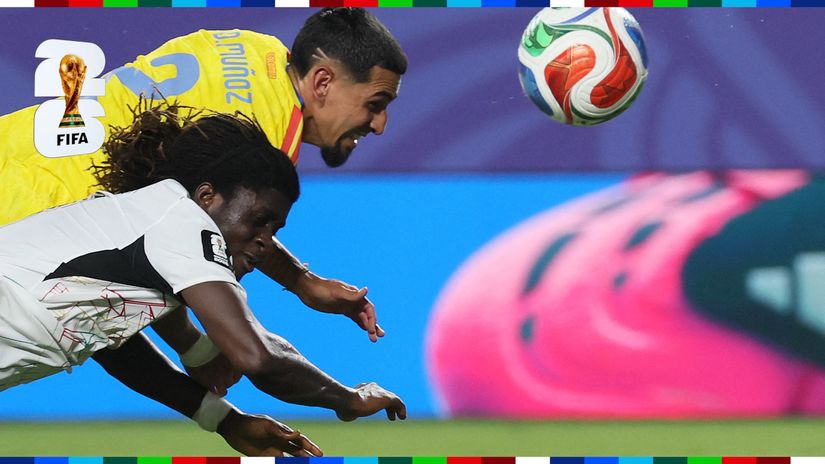
Colombia intentionally overloaded Ghana's left flank before executing a rapid switch, finding Arias attacking the back post completely unmarked due to Gideon Mensah’s delayed tracking.
For the rest of the continent, the story was vastly different - and far more painful.
These teams did not just compete; they dictated tempos and led elites, until the 70th minute arrived.
In the clash between DR Congo and England, the Leopards executed a brilliant initial press, disrupting England’s build-up phase to score an early goal and control the match's rhythm.
Operating in a fluid 4-3-3, they built play using a variable back three, dropping a midfielder between the center-backs to generate a highly effective 4v2 overload against England’s narrow diamond press.
This allowed them to cleanly bypass England's first line of pressure and exploit the wide channels, leading to Brian Cipenga’s brilliant opening goal.
Out of possession, DR Congo defended in a highly disciplined 4-1-4-1/5-4-1 block, using Samuel Moutoussamy to completely shadow Harry Kane and deny him his preferred deep link-up play, while Aaron Wan-Bissaka put on a 1v1 defensive masterclass on the right flank.
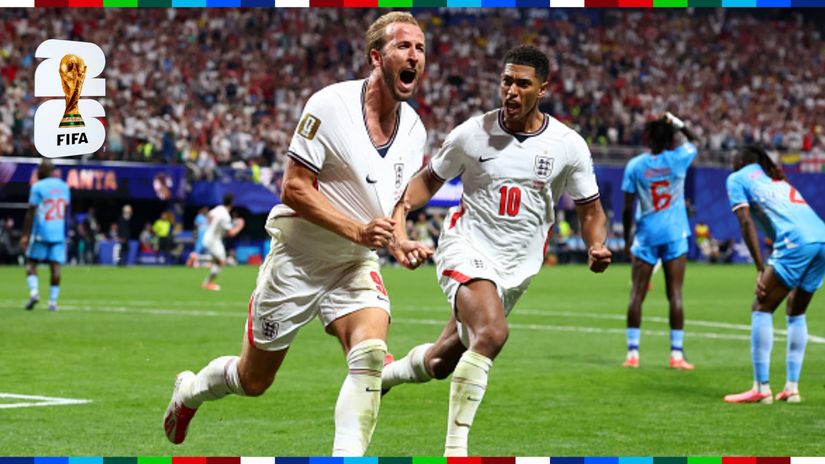
Yet, as physical fatigue set in during the final 20 minutes, Thomas Tuchel introduced high-velocity substitutes like Saka, Eze, and Gordon.
DR Congo’s man-oriented defensive scheme required continuous, high-intensity lateral shifts, and once physical fatigue set in, the distances between their defensive and midfield lines expanded rapidly.
The structural compactness that had stymied England for over an hour vanished.
The gap between DR Congo's left-back and left center-back widened, allowing Declan Rice and Anthony Gordon to penetrate the box unchallenged and supply Harry Kane for a quick-fire double, sealing a 2-1 comeback victory engineered by an 86th-minute defensive lapse.
Senegal
Senegal’s exit stands as one of the most agonizing collapses in World Cup history, driven by an inability to adapt to a sudden shift in the opponent's physical and tactical profile.
The Teranga Lions put on an attacking clinic early on, scoring two quick goals while creating - and wastefully missing - four big chances. Senegal's 4-3-3 base structure thoroughly outplayed Belgium for 80 minutes.
Idrissa Gana Gueye anchored the midfield perfectly, staying deep to solidify the rest-defense while Pape Gueye and Habib Diarra operated with complete positional freedom.
In attack, Senegal used intricate, synchronized rotations, with Iliman Ndiaye drifting inside and Ismail Jakobs delivering sharp underlapping runs to completely unbalance Belgium's zonal block.
Leading 2-0, Senegal was completely destabilized by the introduction of Romelu Lukaku.
Belgium abandoned their patient, disconnected possession and went entirely vertical, pumping direct balls and wide crosses into the penalty box.
Rather than maintaining their compact mid-block to pinch the service at its source, Senegal panicked and retreated deep into their own six-yard box.
The team shifted from controlling space to frantically protecting the result, completely destroying their defensive compactness.
Statistically, Senegal completely dominated, winning the underlying expected goals battle by a massive 3.54 to 1.80.
Belgium created less than 1.0 xG from open play across 120 minutes.
Yet, individual mistakes under heavy physical pressure - culminating in Lamine Camara's late, chaotic challenge on Kevin De Bruyne - gifted Belgium the win.
Three late Belgian goals in the 86th, 89th, and a staggering 127th minute completed a brutal 3-2 turnaround as the bench depth was tested.
A similar narrative played out for South Africa and Ivory Coast.
Bafana Bafana matched Canada stride for stride in a disciplined tactical display, only to concede an unlucky, heartbreaking stoppage-time goal in the 92nd minute to lose 1-0.
Ivory Coast
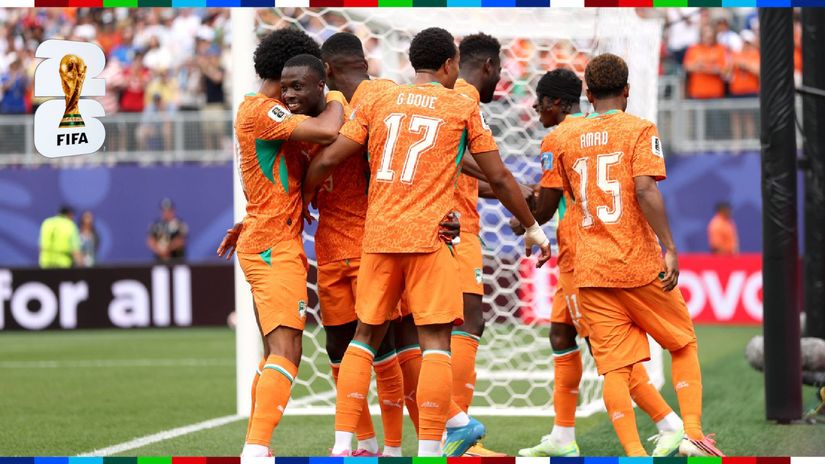
Meanwhile, Ivory Coast displayed immense resilience against Norway. Ivory Coast’s 4-3-3 system demonstrated outstanding attacking fluidity against Norway.
Their primary offensive mechanism relied on rapid switches of play designed to isolate Nicolas Pépé and Yan Diomande in 1v1 wide scenarios.
Christ Oulai dropped into the left half-space as an auxiliary left-back, creating dynamic wide triangles that completely stretched Norway's narrow diamond press.
The Elephants fought back to equalize in the 74th minute via Amad Diallo’s stunning individual strike, but their parity lasted just twelve minutes.
Immediately following the goal, Ivory Coast completely lost their tactical discipline. Instead of consolidating their shape to handle the inevitable Norwegian response, their defensive intensity plummeted.
Pressing actions became entirely uncoordinated, recovery runs slowed to a walk, and the distances between the defensive lines fractured.
The space between the Ivorian left-back Ghislain Konan and left center-back Odilon Kossounou became a highway for Norway.
Oscar Bobb ruthlessly exploited this enlarged gap, slipping a pass to Patrick Berg, who squared it for Erling Haaland’s 86th-minute winner.
Ivory Coast dominated the traditional box scores, unleashing 14 shots and forcing an astonishing 14 corners, but their actual tactical maturity was incredibly low; during a crucial 91st-minute crossing opportunity, Elye Wahi was left as the sole Ivorian shirt inside the penalty box while his teammates lingered passively on the edge.
The recurring nature of these late goals points directly to three systemic structural flaws rather than mere bad luck.
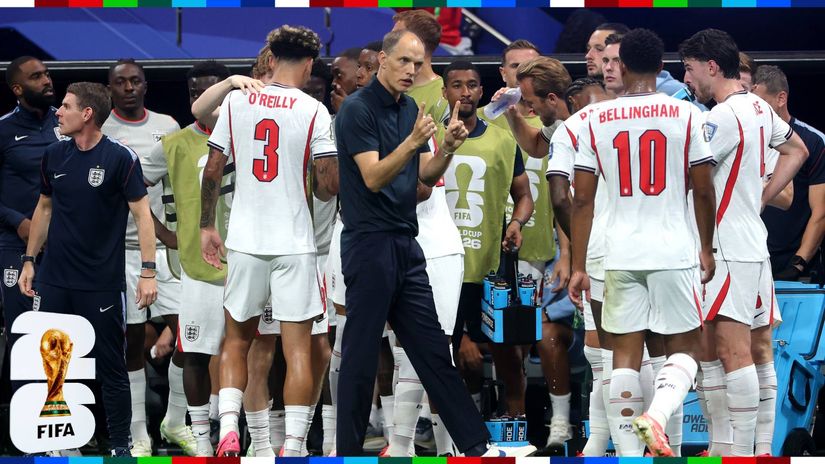
The primary catalyst for these comebacks was an immediate, subconscious shift to a hyper-reactive low block once a lead was established or the 70-minute mark approached.
Instead of maintaining an active defensive shape - where a mid-block pressures the opponent's creative midfielders - African teams routinely sat deep behind the ball.
By dropping their defensive line right onto the edge of their own 18-yard box, they invited sustained, suffocating pressure.
This reactive play surrendered the half-spaces and allowed European and South American opponents to comfortably cross, cycle possession, and commit numbers forward without fear of a counter-attacking threat.
The second flaw is destructive substitutions and a clear lack of squad depth.
Modern international football requires five high-level substitutions to sustain high-pressing or compact defensive systems across 90 minutes.
Here, the disparity in squad depth was glaring. While opponents brought on elite, tactical modifiers from the bench who could maintain structural intensity, the African substitutions frequently disrupted their own teams' chemistry.
Poorly timed changes altered established defensive partnerships or injected players who lacked the tactical awareness required to manage high-stakes defensive sequences.
The third flaw lies in big-stage game management.
Winning in the knockout phases requires a dark art: slowing down play, drawing fouls to break an opponent's momentum, safely circulating possession to tire out the chasing team, and exploiting spaces left vacant by desperate opponents. Instead,
African teams frequently rushed their attacking patterns when winning, turning over possession cheaply and forcing their already exhausted midfielders into immediate transition sprints.
Cape Verde
Even in heartbreak, Cape Verde emerged as the tournament's tactical darling.
Facing the defending champions, Argentina, the Blue Sharks put on a masterclass in tactical discipline.
Competing in their first-ever knockout phase, Cape Verde executed a highly flexible 4-1-4-1 defensive shape that retreated into low 4-5-1 and 4-4-2 blocks out of possession, compressing the spaces between the lines and making central progression impossible for the South Americans.
Head coach Bubista utilized selective pressing triggers - specifically targeting passes into Argentina's full-backs or dropping pivots - to successfully close interior passing lanes.
When they recovered the ball, their attacking transitions were lethal, allowing them to come from behind twice to equalize at 2-2.
.jpg)
However, Cape Verde's elimination was defined by an inability to sustain their mid-block compactness when Argentina introduced direct, vertical runners.
The opening goal exposed Cape Verde's relatively high defensive line when Lisandro Martínez bypassed their midfield with a long ball over the top to Lionel Messi.
When Cape Verde dropped into a settled low block, they frequently defended with eight players inside their own box, creating an edge-of-the-box vacuum directly ahead of the midfield line.
Deroy Duarte briefly rescued them with a clinical equalizer, but the team's ongoing hesitancy to play riskier forward passes in the final third prevented them from punishing Argentina’s vulnerable 2-1/3-1 rest-defense.
Ultimately, physical and mental fatigue manifested during dead-ball situations.
Diney Borges’ unfortunate extra-time own goal came from an uncoordinated defensive jump against Cristian Romero, proving that even a highly organized block will fracture if it continuously invites pressure through sterile possession, ending a heroic 3-2 battle in the 111th minute.
Egypt
Egypt, utilizing their extensive tournament experience, managed to reach the Round of 16.
Facing Argentina, the Pharaohs went up 2-0 and appeared completely in control. Egypt’s conventional 4-4-2 mid-block initially nullified Argentina’s 4-4-2 diamond.
In possession, Egypt transformed into a fluid 4-2-4, leveraging their center-backs and a double pivot of Mohammad Lasheen and Marwan Attia to establish numerical superiority against Argentina’s zonal press.
Mohamed Salah operated with immense freedom, orchestrating transitional counters that allowed Mostafa Ziko to double Egypt's lead. Yet, the same continental curse struck.
Despite a commanding 2-0 cushion, Egypt’s undoing stemmed from a series of reactive defensive adjustments made after the first-half drinks break.
Fearing Argentina’s central overloads, the wide midfielders dropped into the defensive line, morphing the shape into a low 5-4-1 or a temporary 6-3-1.
This over-correction and lowered block led to central corridor suffocation and a severe rest-defense sacrifice.
By dropping their wide players so deep, Egypt completely severed the connectivity required for an effective transitional release.
Salah became structurally isolated, and Egypt’s possession sequences lacked horizontal or vertical depth, consistently playing to feet rather than into space.
Although Egypt led, they conceded an astonishing 1.51 expected goals before half-time - the highest scoreless first-half xG accumulated by any team in the tournament.
This metric proved that Argentina's central combinations were already systematically dismantling Egypt's block long before the goals arrived.
As structural fatigue set in, Egypt could no longer sustain the physical demands of defending a continuous low block. In the 78th minute, structural fatigue and a regression into reactive play allowed Argentina to break through.
The lack of coordination during defensive jumps allowed Enzo Fernández to arrive completely unmarked from deep midfield to head home the 93rd-minute winner, exposing Egypt's absolute defensive regression under pressure and stealing a 3-2 victory.
The tournament proved that African football possesses the raw talent, tactical dynamism, and athletic profile to dominate global giants for over an hour.
However, until CAF nations address squad depth, refine their substitution strategies, and banish the instinct to retreat into a passive low block under pressure, the final twenty minutes of knockout football will remain a barrier they cannot cross.