


TACTICAL ANALYSIS: How lowly Estonia edged Harambee Stars at FIFA Series







Reading Time: 5min | Sat. 28.03.26. | 21:02
While the result will be recorded as a draw in normal time, the match itself offered a rich tactical battle defined by structural adjustments, pressing dynamics, and second-half control from Kenya
Harambee Stars faced Estonia in a tightly contested FIFA Series encounter that ultimately ended 1-1 before the European nation edged Kenya on penalties.
Download our MozzartSport App For More News
While the result will be recorded as a draw in normal time, the match itself offered a rich tactical battle defined by structural adjustments, pressing dynamics, and second-half control from Kenya.
This analysis explores how both sides approached the game, the key tactical mechanisms that shaped phases of play, and how momentum shifted across the 90 minutes.
From the outset, Kenya set up in a 4-2-3-1 structure, with Ian Otieno in goal behind a back four of Rooney Onyango, Alphonce Omija, Frank Odhiambo, and Abud Omar.
The double pivot of Richard Odada and Manzur Okwaro provided balance, with Zech Obiero operating as the central playmaker.
William Lenkupae and Job Ochieng occupied the wings, supporting striker Ryan Ogam.
.jpg)
Estonia, in contrast, lined up in a 4-4-2 base formation, with Karl Andre Vallner in goal.
The back four featured Kristo Hussar at right-back, Kristofer Kaic and Erji Tougjas as the centre-backs, and Tanel Tammik at left-back.
In midfield, Kevor Palumets and Markus Poom occupied central roles, while Patrick Kristal played on the right wing and Michael Larsen on the left.
Up front, Rauno Sappinen led the line as the striker, supported just behind by Mattias Mannilaan in an attacking role.
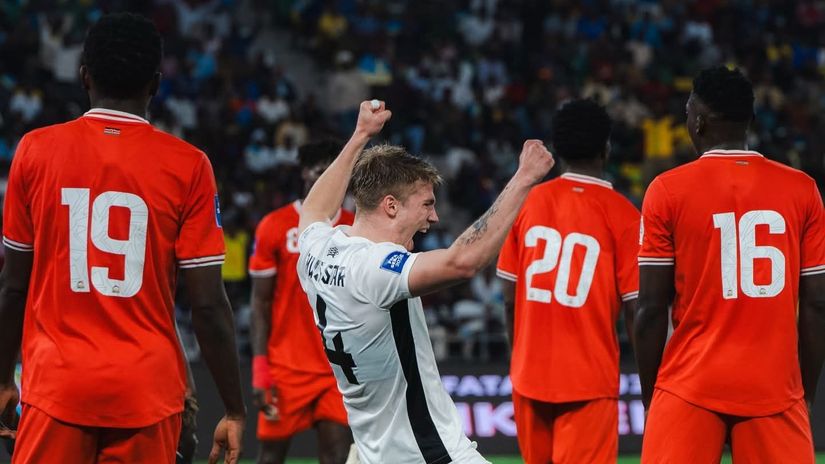
Out of possession, Estonia’s defensive approach was initially a compact 4-4-2 mid-block, which later morphed into a 5-3-2 and even a 5-4-1 in deeper phases.
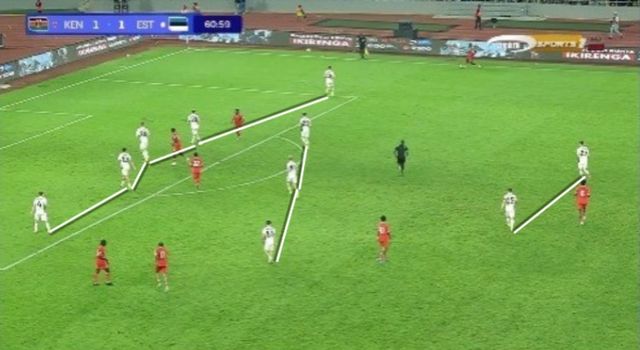
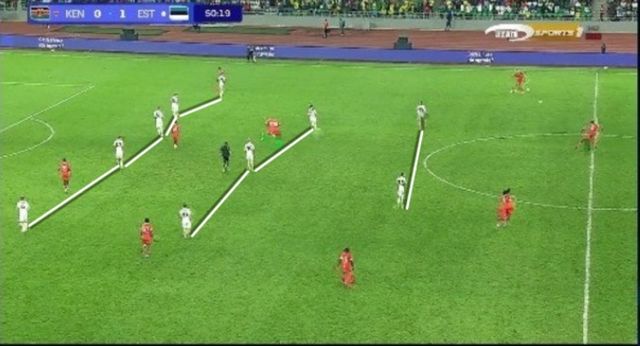
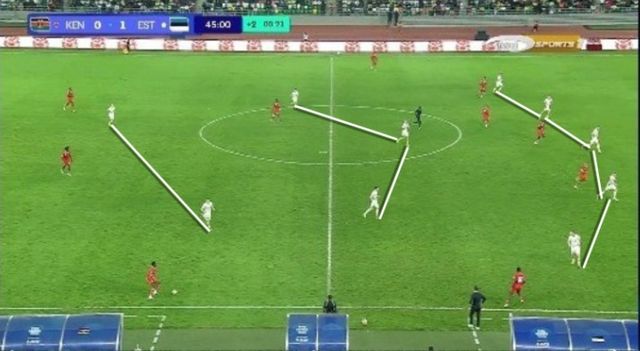
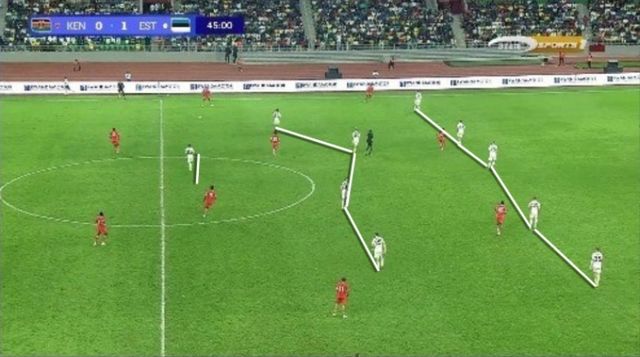
This structural flexibility allowed them to crowd central zones while protecting the width.
Their approach was clearly man-oriented in midfield zones, enabling them to disrupt Kenya’s build-up by aggressively contesting second balls and loose passes.

This proved effective early on, as Kenya struggled to progress cleanly through central areas.
Kenya, meanwhile, maintained a notably high defensive line, often positioning themselves near the halfway line.
This approach aimed to compress space and catch Estonia’s forwards offside, but it also left space in behind.
Estonia looked to exploit this through direct and penetrative passes, particularly targeting runs from Sappinen.
Their build-up was relatively conservative, often involving the centre-backs and a dropping midfielder, often Palumets or forward to form a temporary pivot, drawing Kenya forward before attempting vertical progression.
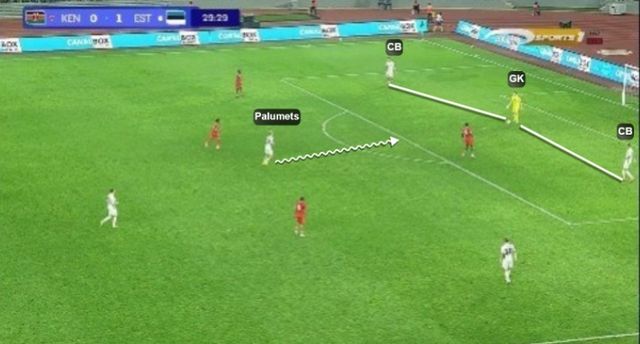
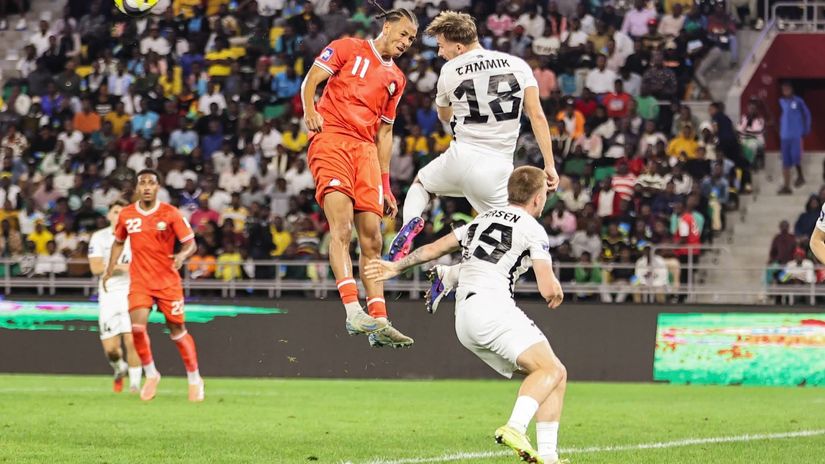
The opening goal in the 20th minute highlighted a key defensive lapse from Kenya.
Estonia scored from a corner, with Tanel Tammik finding space to head home unmarked. The issue stemmed from poor tracking, as Manzur Okwaro lost his marker, combined with indecision from the goalkeeper in claiming the cross.
.jpg)
In possession, Kenya showed a tendency to progress the ball wide rather than through central channels.
Despite having Obiero positioned between the lines, the central defenders and midfielders often opted for safer wide passes.
This limited their ability to exploit interior spaces and reduced the effectiveness of their attacking structure.
Crosses from the right, particularly via Rooney Onyango, were a common outlet, though they lacked a consistent aerial target in the box.
Estonia’s pressing scheme also played a role in disrupting Kenya’s rhythm.
Their front two pressed aggressively, often curving their runs to block central passing lanes while forcing play wide.
This created turnovers in Kenya’s half and prevented sustained build-up sequences.
However, Kenya still managed a few attempts, notably a long-range effort from Ryan Ogam late in the first half.
The second half marked a significant tactical shift from Kenya.
One of the key changes was the increased fluidity in their attacking rotations.
Ben Stanley, who had come on for the injured Job Ochieng late in the first half, began drifting into half-spaces, allowing Abud Omar to push higher and provide width, which also happened in the opposite wing.
This created better spacing and more dynamic movement across the frontline.
Kenya’s equaliser in the 51st minute was a direct result of improved structure and execution.
Zech Obiero received the ball between the lines and delivered a well-weighted through pass into the right half-space, where Ryan Ogam finished clinically over the goalkeeper.
The goal exemplified the importance of central access and coordinated movement, something Kenya had lacked earlier.

Another notable adjustment was the switch of wingers, with Lenkupae moving to the left and Stanley operating on the right.
This change enhanced Kenya’s attacking balance, with the left side becoming a primary outlet.
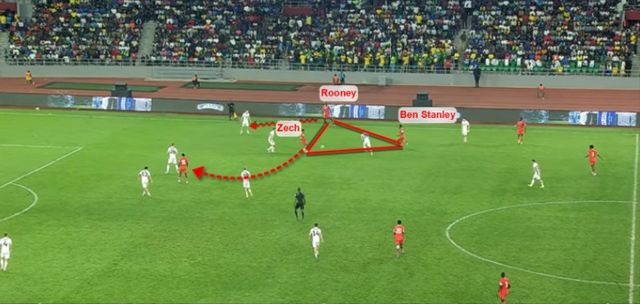
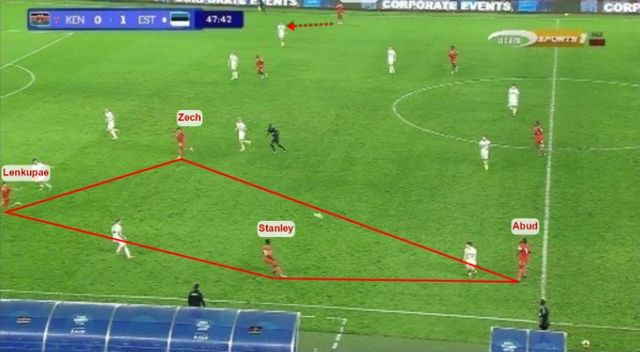 Ben Stanley drifted to the left flank to create overloads alongside Abud at left-back and Lenkupae on the wing, with Zech Obiero operating between the lines; this shift triggered a ripple effect on the opposite side, freeing Rooney to advance high on the right wing.
Lenkupae’s ability to stretch play and combine with overlapping runs created overloads that Estonia struggled to contain.

After the break, Kenya raised the intensity of their pressing, transitioning from an earlier zonal 4-2-3-1 into a more compact 4-4-2 mid-block.
They maintained a tight defensive shape while applying a higher and more aggressive press.
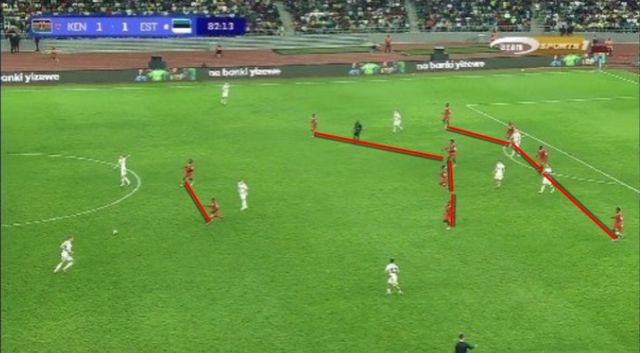
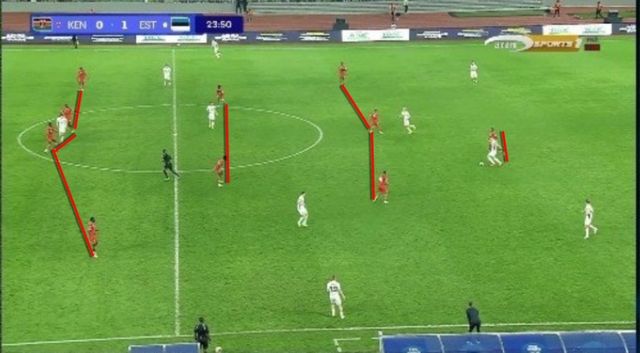
This led to multiple turnovers in Estonia’s half and allowed Kenya to sustain pressure.
Their rest-defence structure improved as well, with players positioned closer together to quickly counterpress and prevent Estonia from launching transitions.

Midway through the second half, Kenya made a triple substitution, introducing Austine Odhiambo, Chrispin Erambo, and Lawrence Okoth.
This altered their structure slightly, with Manzur shifting to left-back and Austine taking over as the advanced playmaker.
The introduction of Okoth also saw Kenya transition into a more flexible attacking shape, at times resembling a front two, with Ogam and Okoth stretching the defensive line horizontally.
These changes further enhanced Kenya’s attacking threat.
Austine Odhiambo’s presence added creativity, particularly in wide overloads and third-man combinations.
Kenya’s ability to switch play from one flank to the other became more pronounced, creating gaps in Estonia’s defensive block.
Despite their dominance, Kenya were unable to find a second goal.
The closest chance came in the 82nd minute when Lawrence Okoth narrowly missed from close range.
Estonia, for their part, remained dangerous on transitions, particularly down the right flank, but were largely contained by Kenya’s improved defensive organisation.
In the final stages, both teams pushed for a winner, leading to an open and end-to-end phase.
However, neither side could break the deadlock, and the match proceeded to penalties. Estonia eventually prevailed 6-5, with Richard Odada missing on the spot-kick.
In conclusion, this match was defined by contrasting phases.
Estonia’s structured defensive approach and early efficiency gave them the advantage in the first half, while Kenya’s tactical adjustments, improved rotations, and aggressive pressing saw them dominate the second period.
The key takeaway is Kenya’s ability to adapt and control the game through structural changes, though their inability to convert chances ultimately proved costly.