


TACTICAL ANALYSIS: How 10-man Nairobi United overcame Mathare United in fiery encounter
.jpg)
.jpg)

.jpg)

Reading Time: 5min | Mon. 27.04.26. | 16:36
The result not only secured valuable points for Nairobi but also reinforced the effectiveness of proactive pressing and disciplined defending
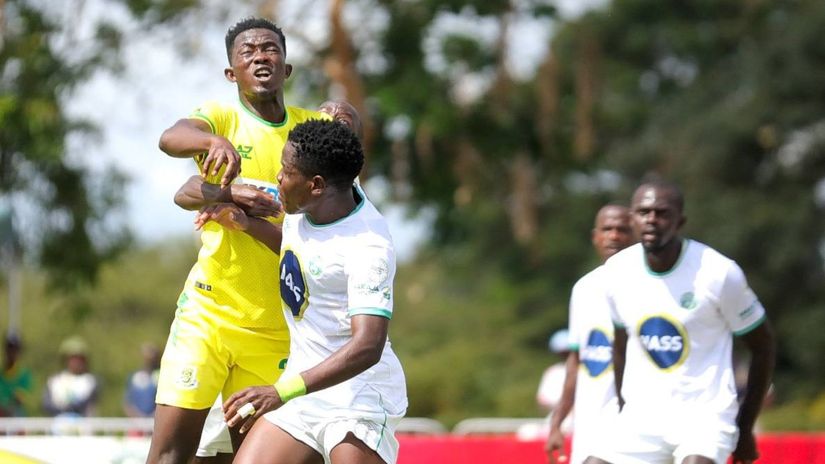
The FKF Premier League clash between Mathare United and Nairobi United, which ended in a 2-1 win for the latter, was shaped by early tactical dominance and late-game survival.
Coming into the fixture, both sides had clear but contrasting objectives - Mathare United aiming to assert themselves through possession and structured build-up, while Nairobi United sought to disrupt, press aggressively, and capitalise on transitions.
Download our MozzartSport App For More News
What followed was a match defined by early intensity, a decisive pressing scheme, and a second-half siege that ultimately fell just short.
From kickoff, the structural contrast was evident. Mathare United deployed a traditional 4-3-3 formation, anchored by goalkeeper Kevin Ouru behind a defensive unit consisting of Hillary Kiprotich, John Nyawir, Ian Omondi, and Francis Kayugi.
Their engine room featured a midfield three of Brian Ochieng, Mohammed Kilume, and Brian Ouru, while the attack was spearheaded by John Mark Makwatta, flanked by Isaac Omweri and Musa Masika.
They had a clear intention to build from the back through their centre-backs Ian Omondi and Francis Kayugi, supported by Brian Ochieng as the pivot.
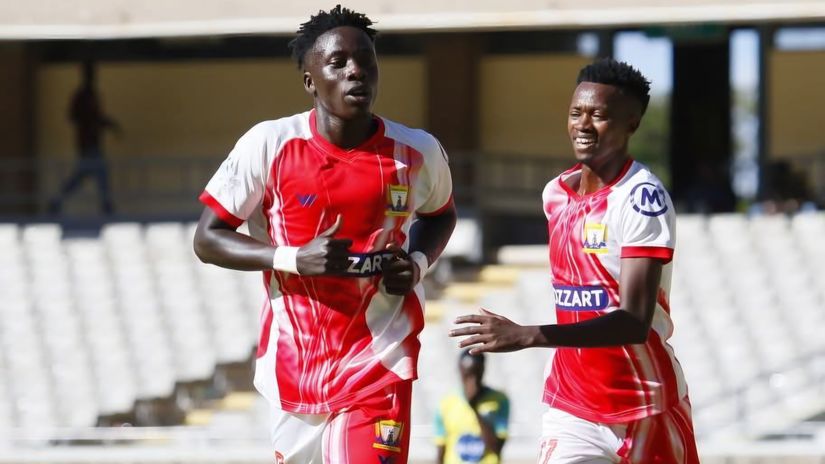
In contrast, Nairobi United opted for a 4-1-2-3 setup with Benard Jairo in goal. The backline comprised Yusuf Mainge and Kevin Osanya as fullbacks, with Lenox Oguttu and John Otieno in central defense.
Brian Magare operated as the lone holding midfielder, sitting behind the advanced duo of Enock Machaka and Kevin Wangaya.
Leading the line was Michael Karamor, supported by Mustafa Kizza and Duncan Omalla on the wings.
Magare anchored midfield, and in front of him were two advanced interiors, Machaka and Wangaya, tasked with pressing and exploiting spaces between the lines.
The front three of Kizza, Omalla, and Karamor were crucial in initiating the press and stretching Mathare’s defensive line.
The opening fifteen minutes set the tone. Nairobi United executed a coordinated high press, their front line moving in synchrony to block passing lanes and force Mathare into uncomfortable decisions.
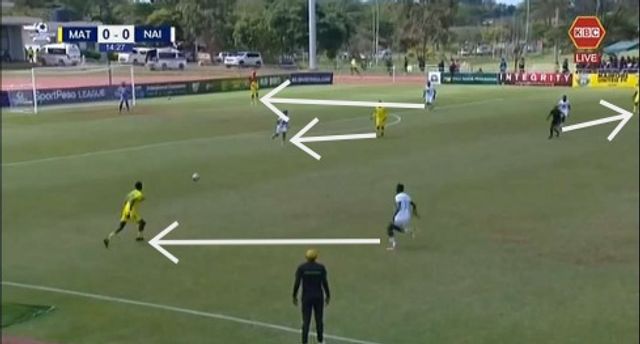
The pressing triggers were clear - any backward pass or heavy touch from Mathare’s defenders prompted an aggressive step-up.
This denied Mathare the ability to progress centrally and forced them wide or long. The result was territorial dominance and a series of corners, with Kizza and Wangaya delivering dangerous balls into the box.
Mathare’s initial response was to bypass the press. Around the 18th minute, they began going long from restarts, targeting Mohammed Kilume and Brian Ouru between the lines.
The idea was to win second balls and then spread play wide for crosses. While this offered a temporary outlet, it lacked consistency and exposed them to quick turnovers.
The breakthrough came in the 19th minute and perfectly encapsulated Nairobi United’s pressing success.
A forced error from the goalkeeper, under pressure, led to a loose pass toward the pivot zone.
Wangaya, reading the lane expertly, intercepted and finished into an empty net. It was a classic example of high press efficiency - forcing mistakes in high-value areas and converting immediately.
Even after taking the lead, Nairobi United maintained their aggressive approach.
Their press remained man-oriented, with Mathare struggling to find a free man. In response, Mathare attempted to create overloads by dropping Brian Ochieng deeper and splitting their center-backs wider.
However, this only partially alleviated the pressure, as Nairobi’s midfield continued to close spaces quickly.
Nairobi’s second goal in the 32nd minute highlighted their vertical threat. Opting for direct play, their center-backs delivered diagonal passes into the half-spaces.
Dancun Omalla exploited the gap behind Mathare’s defenders, making a well-timed run onto a through ball from the left channel.
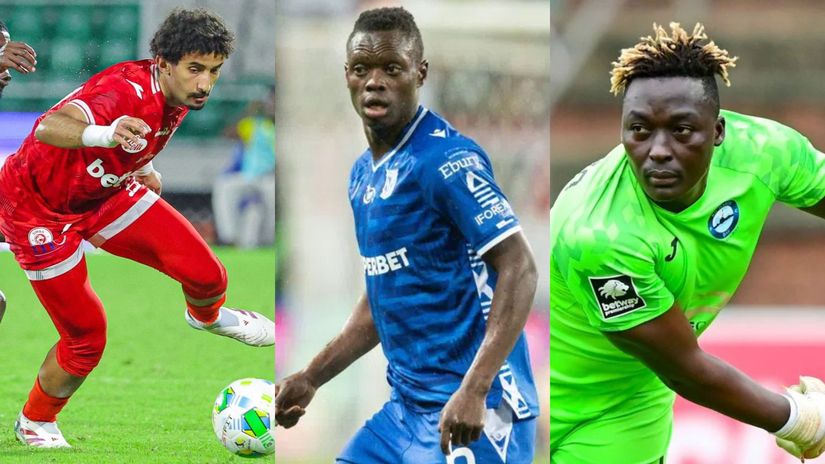
His composed finish against the advancing goalkeeper made it 2-0 and exposed Mathare’s vulnerability in transition, particularly their rest defense when pushing numbers forward.
Trailing by two goals, Mathare increased their attacking intent. They pushed more players forward and relied heavily on wide play, delivering crosses toward the back post.
Musa Masika and Isaac Omweri provided width, while Makwatta occupied central defenders.
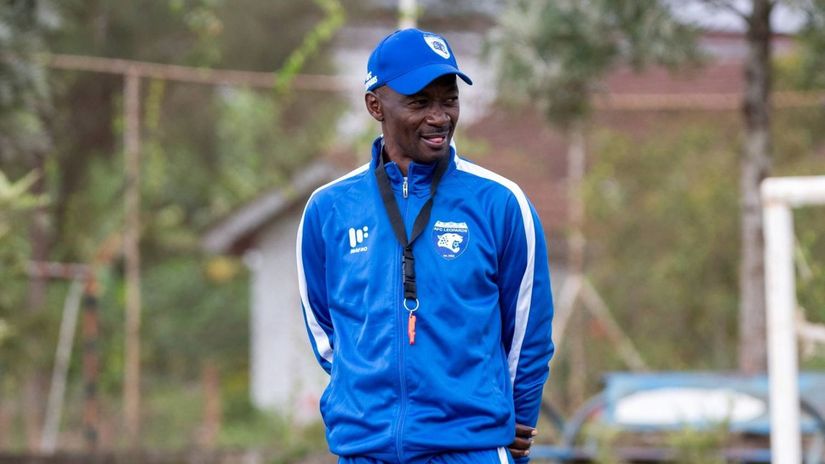
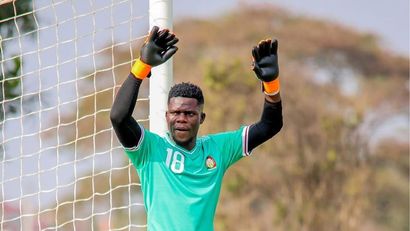
A notable moment came when Ouru nearly scored from a cross, only to be denied by a strong save from Benard Jairo. Despite these efforts, Nairobi’s defensive structure held firm going into halftime.
The second half introduced a shift in momentum. Mathare made early substitutions, bringing on Adams Nyambane and Paul Kinyanjui to inject energy and creativity.
Their approach became more aggressive, with full-backs pushing higher and Brian Ochieng dropping deeper to facilitate build-up. This created a 3-2 structure in possession, aimed at circulating the ball more effectively and sustaining pressure.
Mathare’s improved second-ball recovery became a key theme.
By winning loose balls and maintaining territorial control, they began to pin Nairobi back. The pressure paid off in the 61st minute when Makwatta won a penalty after being fouled by Kevin Osanya.
However, the turning point came not from the goal, but from the miss - Jairo’s save preserved Nairobi’s lead and shifted psychological momentum.
Moments later, the game tilted further with Brian Magare’s red card in the 65th minute. Reduced to ten men, Nairobi United transitioned into a deep low block, abandoning their high press and focusing on compactness.
Their defensive shape became narrow and disciplined, with minimal space between lines, forcing Mathare to rely even more on crosses and long-range efforts.
Mathare responded with further attacking adjustments, introducing Eli Asieche to add forward thrust. Ouru dropped deeper to dictate play, while full-backs occupied advanced positions.
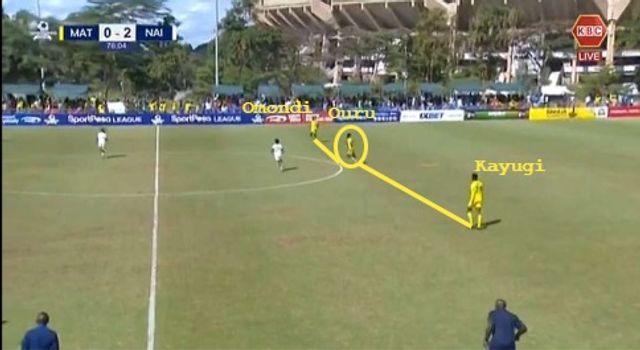
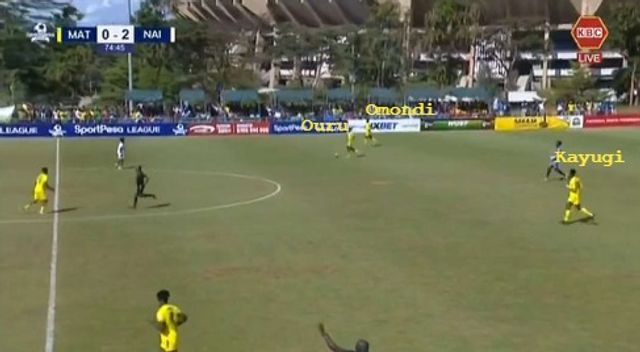
The wingers tucked into half-spaces, creating overloads in central areas. This sustained pressure eventually led to a goal in the 77th minute.
Makwatta, receiving in the left half-space, executed a sharp turn to create separation and finished from a tight angle - a moment of individual brilliance amid structured pressure.
The final phase of the match was defined by siege versus survival. Mathare dominated possession, committed numbers forward, and continuously probed for an equaliser.

Nairobi, however, showed tactical discipline in their low block, clearing crosses, winning duels, and using Ovella Ochieng as an outlet in transitions.
A late substitution saw Michael Karamor replaced by Roy Okal, reinforcing midfield solidity and helping manage the closing stages.
In the end, Nairobi United’s early tactical execution and clinical finishing proved decisive.
Their high press disrupted Mathare’s build-up, while their direct attacking exploited defensive gaps. Mathare, despite a strong second-half response and numerical advantage, were undone by missed chances and a lack of cutting edge in the final third.
The result not only secured valuable points for Nairobi but also reinforced the effectiveness of proactive pressing and disciplined defending in managing game states.