



TACTICAL ANALYSIS: How 10-man Al Hilal handed Rhulani Mokwena's MC Alger their first defeat of the season


.jpg)

Reading Time: 5min | Sat. 22.11.25. | 15:53
Fresh from resoundingly beating FKF Premier League champions Kenya Police FC, Al Hilal showed their mettle in a tactically sound display that saw them edge the Algerian giants in Rwanda
The opening CAF Champions League Group C fixture between Al Hilal and MC Alger produced a tactically rich contest defined by structural contrasts, deliberate pressing schemes, and constant exploitation of wide and half-space corridors.
Both teams came into the match with well-defined game models, but it was Al Hilal’s verticality, wide superiority, and late defensive resilience that ultimately delivered a hard-fought 2–1 victory in Amahoro Stadium.
Follow our WhatsApp channel for more news
The first half began with Al Hilal operating from a 4-2-3-1 structure aimed at balancing central compactness with expansive wing play.
Soufiane Farid started in goal behind a centre-back pairing of Saeed Ahmed and Mustafa Karisum, with Ernest Luzolo and Ebuela Stephen providing width from full-back.
Salah Al Hassan Adel and Walieldin Khedir acted as the double pivot, securing rest defence and supporting early build-up, while Abdelrazig Taha Omer occupied the advanced midfield role behind striker Sunday Damilare.
Girumugisha Jean Claude and Adama Coulibaly provided direct, wide options, positioning themselves aggressively to exploit any transitional space.
Rhulani Mokwena lined MC Alger in a 4-1-4-1 system that emphasised stability in the centre and flexibility in the wide zones.
Alex Guendouzi started in goal behind full-backs Aimen Bouguerra and Ghezala Ayoub, with Ayoub Abdellaoui and Reda Halaimia forming the centre-back pairing.

Larbi Tabti served as the lone pivot, facilitating ball circulation and offering progressive passes between lines.
Ahead of him, Oussama Benhaoua and Zakaria Naidji supported wingers Zinedine Ferhat and Junior Kipre, while Soufiane Bayazid operated as the isolated front man.
From the early exchanges, Al Hilal deliberately avoided extended patient build-up. Instead, they repeatedly drew MC Alger’s first-line pressure before launching long balls into wide channels, half-spaces, or directly toward the target man, Damilare.
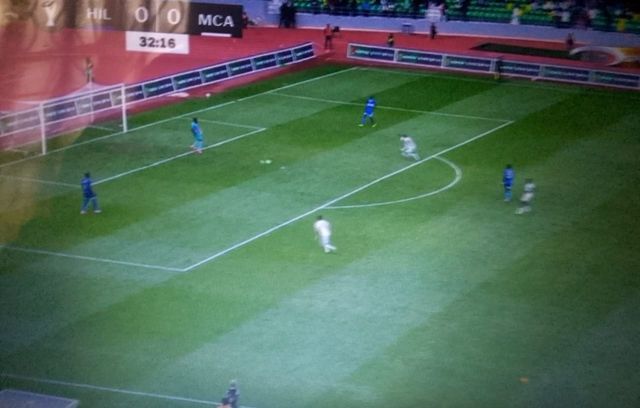
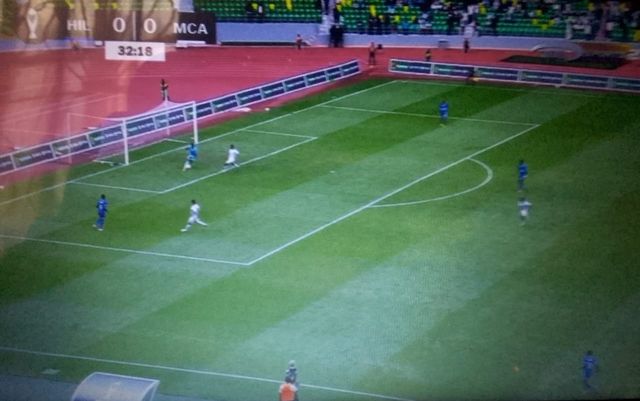
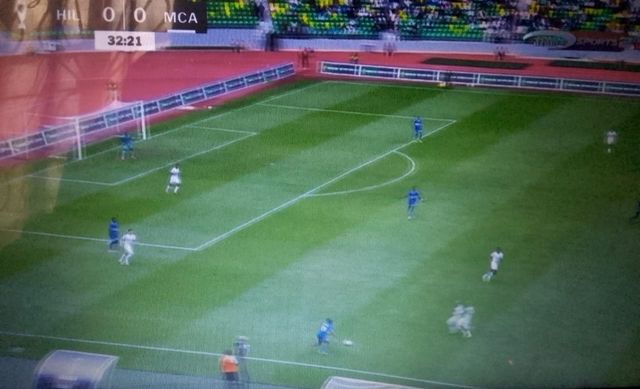
Al Hilal consistently bypassed patient build-up, deliberately inviting MC Alger’s first-line press before hitting direct long balls into the wide channels to exploit space and isolate their fullbacks and wingers in advantageous duels.
This approach allowed Al Hilal to manipulate MC Alger’s defensive structure, especially through Damilare’s intelligent movements.
His ability to receive with his back to goal, drag defenders away from their zones, and combine with Omer made Al Hilal’s vertical progression highly effective.
A consistent attacking pattern emerged: centre-back circulation → half-space reception by Omer → wide distribution to either winger.
This sequence was repeated throughout the half and stretched MC Alger’s 4-2-3-1 mid-block, which later shifted to a 4-1-4-1.
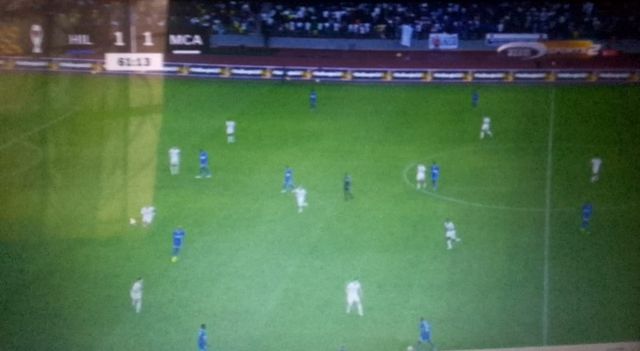 MC Alger defended in a compact 4-1-4-1 mid-block, closing central lanes and guiding Al Hilal’s progression toward the flanks
Out of possession, Al Hilal relied on an aggressive 4-1-3-2 high press.
Their pressing triggers - backwards passes, slow horizontal switches, or pivot isolation - forced MC Alger into rushed decisions and reduced their capacity to build cleanly from the back.
MC Alger were forced into longer, less controlled passes and struggled to activate their wide players early in possession.
Their first major setback arrived when left-back Ghezala Ayoub suffered an injury in the 12th minute and was replaced by Marouane Khelif, interrupting their early rhythm.
Al Hilal’s attacking intent eventually paid off in the 47th minute after a well-executed sequence down the left.
Girumugisha isolated his marker and delivered a driven cross into the box, perfectly meeting the late run of Abdelrazig Taha Omer, who finished with a composed low effort.
The goal reflected Al Hilal’s game model: wing overloads, dynamic third-man runs, and rapid wide-to-centre combinations.
Interestingly, this pattern was similar to what MC Alger themselves sought to create when building around the half-spaces and overlapping full-backs.
The second half saw a drastic shift in momentum as MC Alger began to play with heightened intensity.
Their full-backs pushed higher, their wingers inverted into half-spaces, and both Benhaoua and Naidji made aggressive late runs around the edge of the penalty area.
Their attacking patterns relied on short combinations, third-man runs, and overloads in the right half-space.
Al Hilal, meanwhile, continued to rely on long diagonals - especially from Saeed Ahmed - directed toward either full-back or Coulibaly to bypass the Algerian mid-block.
.jpg)
MC Alger’s persistence paid off in the 53rd minute when Benhaoua scored via a deflected strike.
The move began with Zakaria Naidji dropping from midfield to draw Luzolo out of position, creating space on the right for a fluid passing triangle that ended with Benhaoua’s shot.
The structure and mechanics of the goal mirrored Hilal’s opener, reaffirming the tactical symmetry in both teams’ reliance on wide progression.
Momentum remained tight until the 75th minute when substitute Mohamed Yousif, making his return from injury, scored seconds after entering the pitch.
The goal originated from the right flank, where Ebuela Stephen delivered a precise cutback. Yousif met the pass with a controlled low finish, restoring Hilal’s advantage at 2–1 and highlighting the value of their wide-to-centre transitional patterns.
The closing stages of the match intensified significantly.
MC Alger altered their defensive corner structure to three zonal markers and four man-markers, signalling a shift toward control in set-piece defence while committing more bodies forward in open play.
However, Al Hilal suffered a blow when Al Hassan Adel received a second yellow card in the 87th minute for a foul on Benhaoua. Reduced to ten men, Al Hilal immediately reorganised into a compact 5-3-1 defensive block, retreating deeper and prioritising central protection.
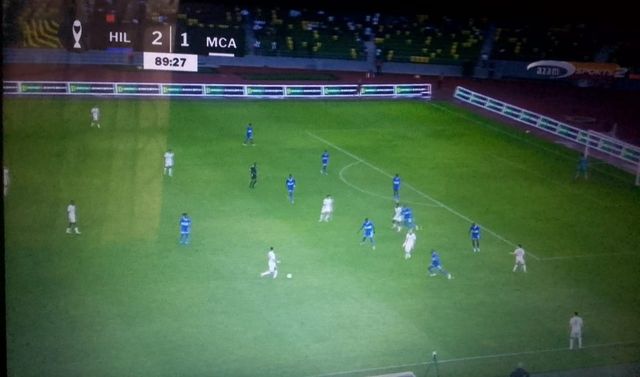 Reduced to ten men, Al Hilal dropped into a compact 5-3-1 defensive block, sealing off central channels and denying MC Alger any ability to progress through the middle.
With seven minutes added on, MC Alger applied constant pressure with high positional occupation, but Al Hilal’s disciplined defensive reshaping - boosted by late substitutions - enabled them to close the match professionally.
In conclusion, this CAF Champions League Group C opener showcased a high-level tactical contest shaped by deliberate structural choices.
Al Hilal’s direct verticality, strong wing dynamics, pressing intelligence, and ability to adapt after going down to ten men ultimately secured them a crucial 2–1 win.
MC Alger displayed impressive positional play, fluid half-space attacks, and strong second-half momentum, but were undone by Al Hilal’s efficiency in transitional moments. In a tightly contested group, these fine margins may prove decisive as the campaign unfolds.