


.jpg)
TACTICAL ANALYSIS: A look at AFCON's group of death featuring Ivory Coast, Cameroon


Reading Time: 7min | Sat. 20.12.25. | 16:02
Group F will be decided less by talent accumulation and more by whose tactical identity survives pressure
With Africa’s premier football showpiece gracing us once again, Mozzart Sport brings you in-depth tactical analysis of all the 2025 Africa Cup of Nations (AFCON) participating teams, what to expect from the coaches, the key players that make the systems work, and who might advance to the next round.
Follow our WhatsApp channel for more news
Group F of AFCON 2025 stands out as one of the most tactically rich and competitively layered sections of the tournament, blending continental pedigree with structural contrasts and stylistic clashes.
With defending champions Côte d’Ivoire, five-time winners Cameroon, an explosive but unstable Gabon side, and ambitious underdogs Mozambique, this group is less about reputation alone and more about how clearly each team can impose its game model across three decisive matches.
The margins will be fine, and tactical coherence - particularly without the ball - may matter more than star power.
Mozambique
Mozambique arrive with a clear narrative of historical struggle but growing tactical ambition. They have never won a match at AFCON nor progressed beyond the group stage, and their most recent appearance yielded just two points, both coming from 2–2 draws against Ghana and Egypt in a tough group also featuring Cape Verde.
Despite that record, this iteration of Mozambique is arguably their most structurally refined yet. They possess genuine quality in players such as Geny Catamo, Reinildo Mandava, and Ratifo Stanley, and while their defensive frailties remain evident, they have developed a repeatable attacking identity capable of unsettling stronger opponents.
Tactically, Mozambique are best understood through their 3-5-2 organisational structure.
In possession, this shape allows them to collapse the right flank defensively while reserving the left side as their primary attacking corridor.
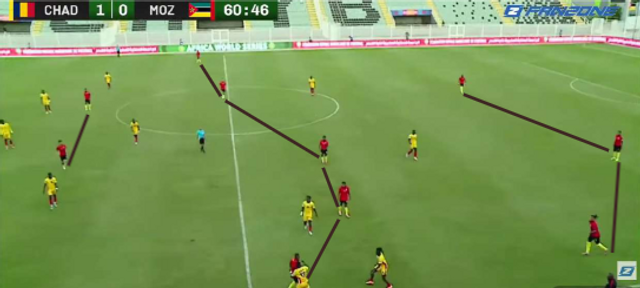
One central midfielder routinely drops into the back line to cover for aggressive wing-backs, creating a temporary back four or five, depending on the phase.
Their build-up is patient and methodical, starting from the back with short circulation before progressing centrally through midfield.
From there, they look to activate late runners in the half-spaces, especially on the right, where overloads are manufactured through decoy underlapping runs.
These movements are not always designed to receive the ball but to disorganise defensive lines, opening channels for cutbacks and low crosses into the penalty area.
The problem for Mozambique is less about chance creation and more about defensive collapse when transitions go against them - something Group F opponents will ruthlessly target.
Gabon
Gabon, by contrast, are a side built almost entirely on attacking volatility and transition moments. Their recent form raises serious defensive concerns, having conceded soft goals in the 2026 FIFA World Cup qualifiers against The Gambia and Nigeria in the playoffs.
That loss to Nigeria in the playoffs will heighten the pressure heading into AFCON, particularly with the sense that this could be Pierre-Emerick Aubameyang’s final tournament.
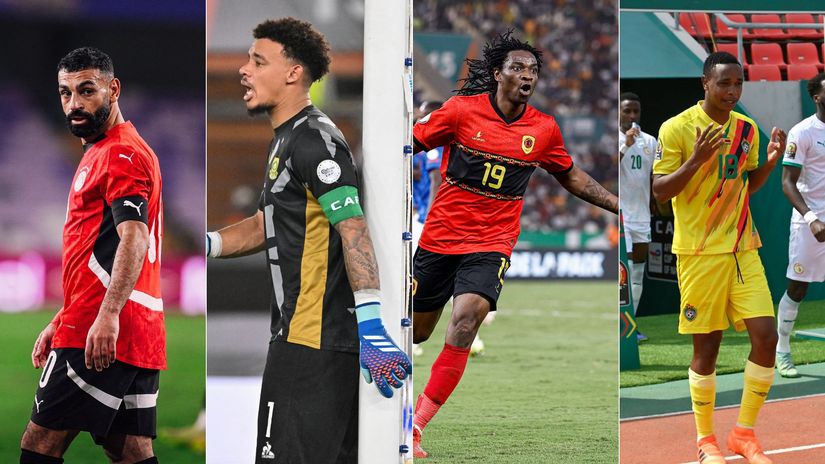
Gabon do not have the midfield depth to dominate games structurally, even with players like Mario Lemina and Guélor Kanga, so their tactical identity leans heavily toward directness, wide progression, and vertical running.
Their attacking framework prioritises fast transitions, especially through the terrifying pace and timing of Aubameyang, Jim Allevinah and Denis Bouanga.
Upon regaining possession - particularly after defending set pieces - Gabon look to flip the momentum instantly, pushing runners beyond the opposition back line before rest defenses can reset.
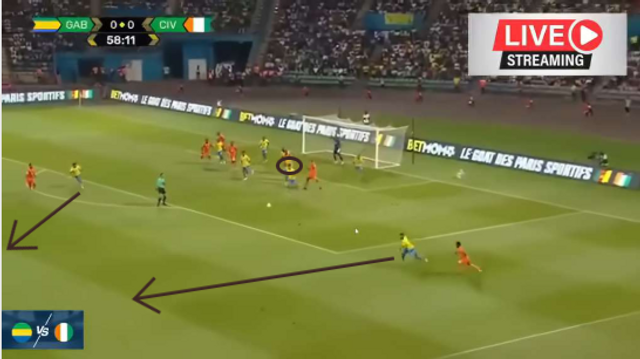
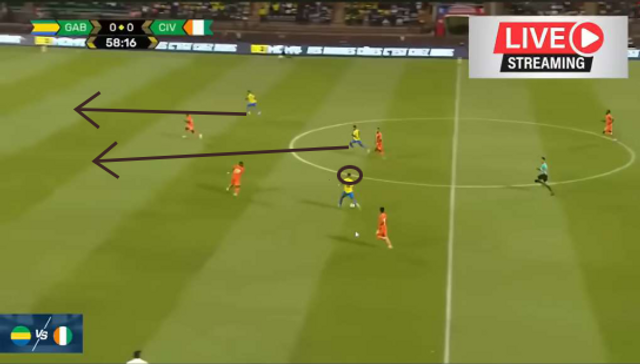 Gabon’s wide players instantly tuck in alongside the lone rest-attack outlet on regain, surging forward with pace to drive a high-tempo attacking transition
In settled possession, they rely heavily on wide areas, using full-backs as progression tools when pressed during build-up.
A notable pattern is the consistent overloading of the left flank, with Charles Bouanga acting as the main outlet to penetrate the final third.
Midfielders drop into half-spaces to receive on the half-turn, releasing wide players early for crosses. The issue is that this attacking ambition is not mirrored by a defensive structure; Gabon’s rest defense is often thin, leaving them exposed if transitions fail or if opponents bypass their first press.
Cameroon
Cameroon enters the tournament amid internal turbulence, which makes their tactical outlook fascinating but unpredictable.
With Samuel Eto’o’s administration overseeing major changes - including the sacking of Marc Brys and the appointment of local coach David Pagou - there is an unavoidable sense of transition.
The squad itself reflects this shift: no André Onana, no Vincent Aboubakar, but a wave of new profiles such as Etta Eyong, Enzo Boyomo and Christian Kofane from Bayer Leverkusen.
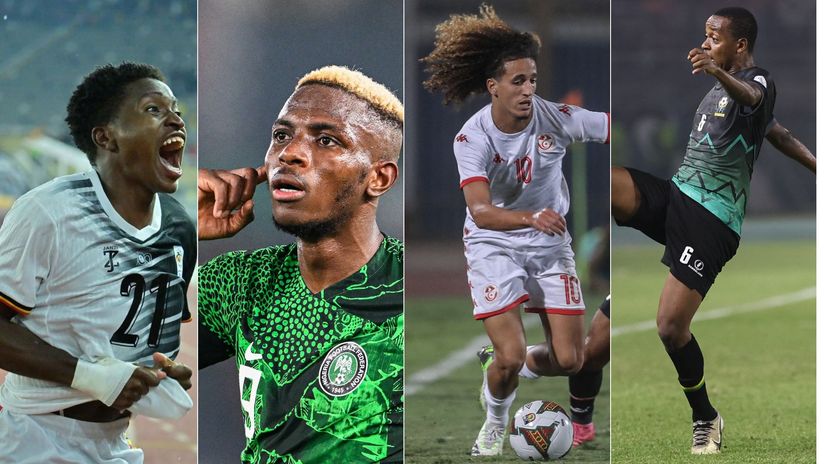
Still, the core Cameroonian identity remains intact through players like Carlos Baleba, Bryan Mbeumo and Nouhou Tolo.
On the pitch, Cameroon’s game model is defined by intensity without the ball and verticality with it.
They consistently look to transition through wide areas, with full-backs pushing high to join attacks and wingers acting as both offensive outlets and defensive triggers.
Their high, man-oriented press is aggressively orchestrated by the wingers, who direct opposition build-up into pressing traps near the touchline.
The striker’s role is out of possession more about tucking in to track the opposing pivot, cutting central progression lanes.
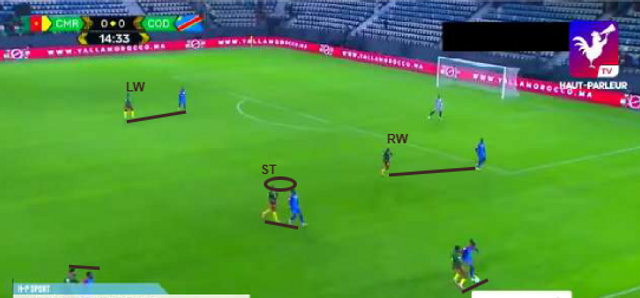
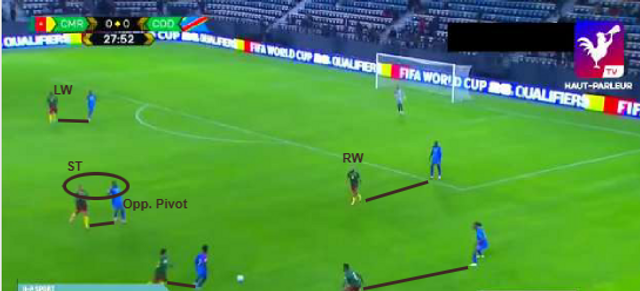 Cameroon’s high, aggressive man-to-man press sees Mbeumo and Eyong curve their runs onto the wide centre-backs while angling their bodies to screen the goalkeeper, with Magri pinning the pivot and the entire defensive unit shifting in a synchronised pressing block
This approach makes Cameroon dangerous in forcing turnovers high up the pitch, but it also demands extreme physical and tactical synchronisation - something that could be challenged by recent instability.
Where Cameroon remain consistently elite is on set pieces, particularly wide free kicks near the penalty area, where their timing, physicality, and aerial dominance create constant danger.
Côte d’Ivoire
Côte d’Ivoire, as defending champions, arrive with the most balanced and mature tactical profile in the group, even with notable absences.
Emerson Fae’s squad announcement brought back Wilfried Zaha after two years but left out Simon Adingra, the Best Young Player of the last AFCON, alongside Nicolas Pépé and injured Wilfred Singo.
Even so, the Elephants retain immense depth and structural clarity. The midfield trio of Ibrahim Sangaré., Franck Kessié, and Seko Fofana provides a rare blend of physicality, ball-winning, and forward thrust, while players like Amad Diallo and RB Leipzig’s Yan Diomande add elite 1v1 threat in wide areas.
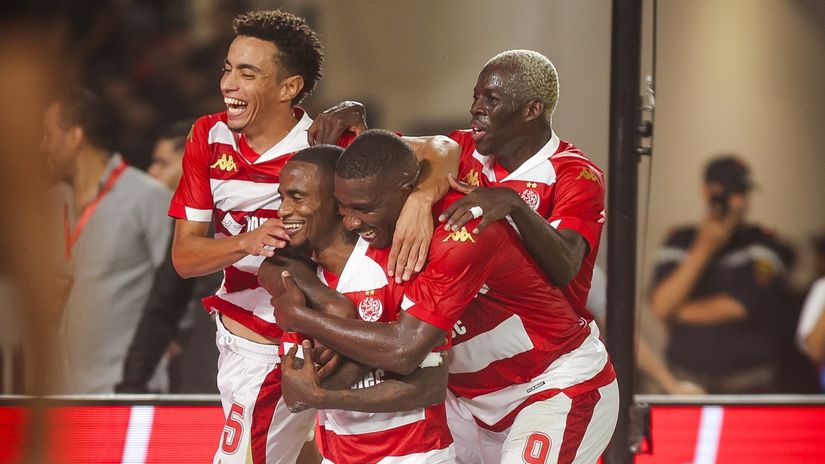
Defensively, the emergence of players like Guéla Doué has ensured continued solidity, and Sébastien Haller remains the focal point in attack.
Their tactical approach is rooted in patience and control during build-up, often spreading the centre-backs wide and using a single pivot, with the goalkeeper stepping in as an extra outfielder to create numerical superiority.
From this base, the Ivory Coast are ruthless in exploiting moments of imbalance. They frequently go long into runners in wide areas once opponents step up, pouncing with vertical speed and direct surges that target poorly structured rest defenses.
A key attacking pattern involves their striker dropping deep to draw defenders out, allowing wingers to surge forward.
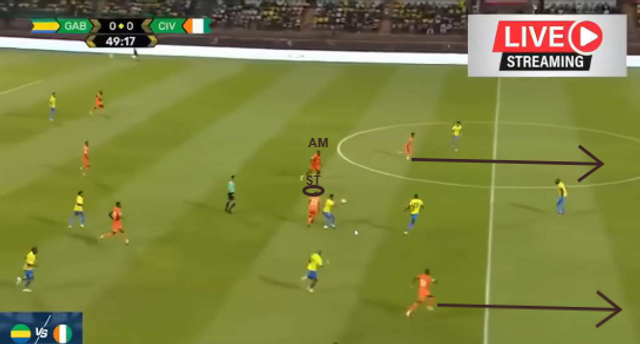
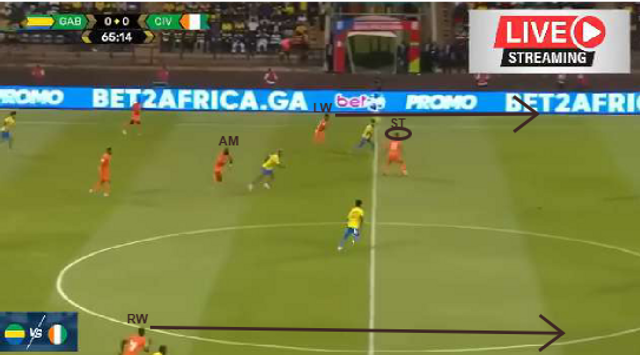 Against Gabon, Sébastien Haller consistently dropped deep to secure and link play with the advanced Fofana, who received on the half-turn to release Diallo and Pépé into forward horizontal and vertical runs
The striker then links play through a midfielder facing the opponent’s goal, accelerating attacks in just two or three touches.
In advanced wide attacking areas, the full-back consistently pushes high while the winger inverts temporarily as an inside forward, creating overloads and shooting lanes. Their aerial dominance and physical profile also give them a major edge in defending and attacking set pieces.
From a group dynamics perspective, Ivory Coast and Cameroon remain the marquee forces, not just historically - three titles for the Elephants, five for the Indomitable Lions - but tactically.
Their likely head-to-head will be a battle of control versus intensity, positional structure versus pressing chaos.
Gabon sit as the ultimate disruptor, capable of punishing any lapse with vertical speed but vulnerable if forced into prolonged defensive phases.
Mozambique, meanwhile, will look to exploit underestimation, relying on structural discipline in possession and half-space manipulation to steal results, even if their defensive record suggests fragility.
Ultimately, Group F will be decided less by talent accumulation and more by whose tactical identity survives pressure. Teams that manage transitions, protect rest defense, and execute their pressing schemes coherently will advance. Those who rely purely on moments may find this group unforgiving.