


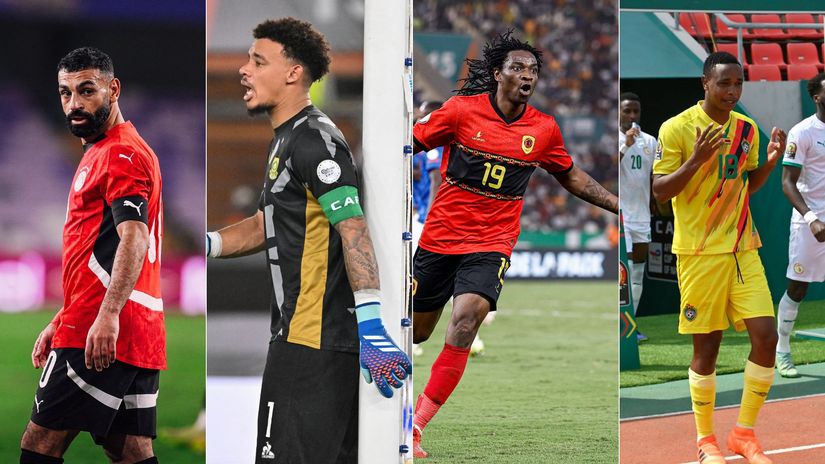
TACTICAL ANALYSIS: AFCON Group B: Unpacking Egypt’s fluid attacking rotations,South Africa’s wide occupations, Angola's set piece threat and Zimbabwe’s direct play
.jpg)
.jpg)

Reading Time: 6min | Fri. 12.12.25. | 20:47
Zimbabwe often rely on long balls and rapid verticality, bypassing midfield and using direct play to exploit second-ball situations
With Africa’s premier football showpiece gracing us once again, Mozzart Sport Kenya brings you in depth tactical analysis of all the participating teams, what to expect from the coaches, the key players that make the systems work and who will advance to the next round.
Follow our WhatsApp channel for more news
Group B of the AFCON 2025, is a pool defined by history, emerging power, structural discipline, and unpredictable intensity.
Egypt, South Africa, Angola, and Zimbabwe bring four sharply distinct identities into a group where pedigree and form collide with tactical complexity.
It will be a battleground shaped by strategy as much as by star quality.
The storyline feels like a clash between an African superpower chasing redemption, a rejuvenated continental force seeking validation, an underdog with disruptive potential, and a returning nation desperate to rewrite its AFCON story after years of stagnation.
Egypt
Egypt, Africa’s record champions, arrive with both pressure and purpose.
Ranked 32nd globally and undefeated in their qualifiers with a 12–2 goal difference, the Pharaohs enter the tournament as Group B favorites, even while carrying notable structural issues.
Hossam Hassan, known for tactical adaptability, has embraced a flexible system that can shift between a 3-5-2 and aggressive transitional structures depending on the opponent.
.jpg)
Egypt’s attacking play is built on fluid positional rotations: the attacking midfielder sliding into a striker role, Omar Marmoush usually playing from the wing drifting inward to function as a playmaker, and the centre-forward rotating wide to disrupt defensive reference points.
This unpredictability makes Egypt difficult to mark, particularly when supported by high, aggressively positioned fullbacks and inverted wingers who attack the box with vertical conviction.
Their transitions are among the most dangerous in Africa - Egypt trap opponents in high wide areas through man-oriented pressing, win recovery moments in hostile zones, and strike quickly before defensive lines reorganize.
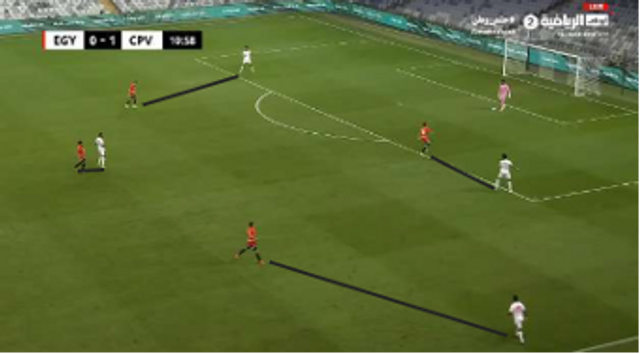
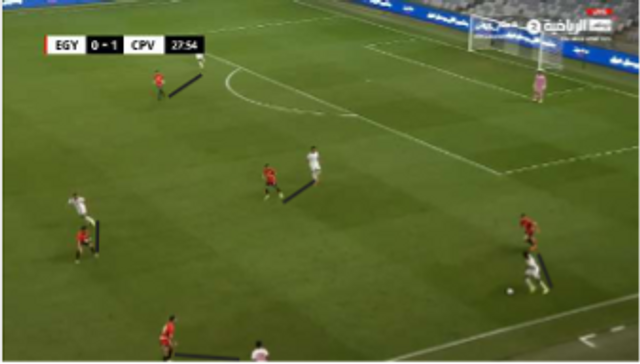
Egypt’s high, man-oriented press pinned Cape Verde in their half, forcing rushed decisions through repeated wide-area traps and sustained territorial pressure, during the 17-11-2025 friendly
However, the vulnerabilities remain clear.
Egypt have defensive stability concerns, worsened by injuries to key centre-back Mohamed Abdelmonem, which may force Ramy Rabia or Ahmed Fatouh into higher-responsibility roles.
The defensive line suffers from lapses that have repeatedly required Egypt to outscore opponents rather than control games through solidity.
Their last AFCON campaign was defined by chaotic scorelines - most notably their repeated 2-2 draws - reflecting a side prone to disorder even while boasting elite attacking talent.
Sixteen years have passed since their last AFCON triumph, and after losing the 2017 and 2021 finals, the psychological weight of expectation sits heavily.
Yet with Mohamed Salah’s leadership and goal-scoring brilliance - Africa’s all-time leading scorer in World Cup qualifiers - combined with Marmoush, Zizo, Trezeguet, and Ibrahim Adel offering depth in the final third, Egypt still possess the firepower to overwhelm opponents if the structural balance behind them holds.
South Africa
South Africa’s rise under Hugo Broos adds intrigue to the group.
Bafana Bafana enter their 12th AFCON appearance with a renewed sense of identity, having finished third in the last tournament and displayed impressive consistency over the past two years.
Coach Hugo Broos has built a united, disciplined squad blending experience with a new generation of talent.
.jpg)
Their tactical approach is defined by controlled possession, fluid positional rotations, and a structured build-up designed to manipulate pressure.
In attack, they frequently shift into 2-4-4 or 3-4-3 shapes with fullbacks pushed high into the last line, creating wide occupation that stretches defensive blocks.
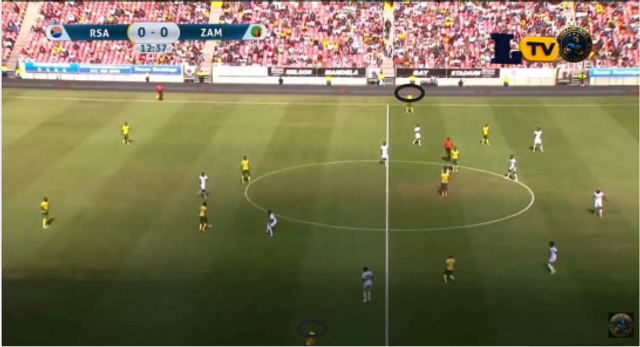
South Africa’s fullbacks pushed high up the pitch to create numerical superiority in advanced zones and amplify their attacking threats
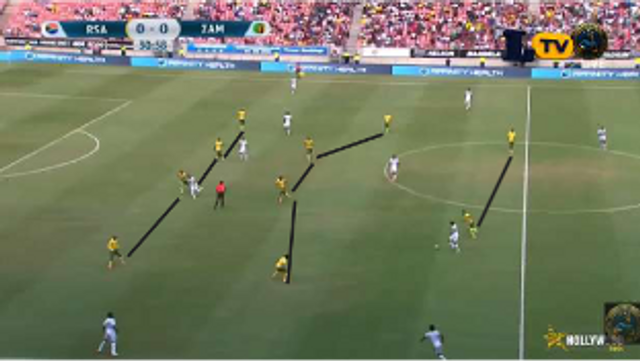
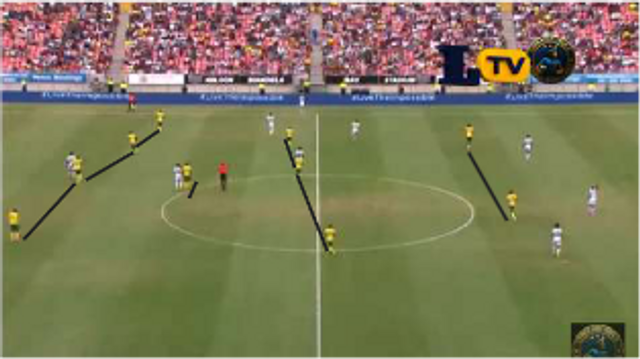
South Africa’s 4-1-3-2 out-of-possession structure, which fluidly morphs into a compact 4-4-2, provided strong central coverage and well-coordinated pressing across the first two lines during their 3-1 friendly win over Zimbabwe on 15 November 2025
The midfield overload becomes the base for isolation patterns on the wings, allowing South Africa to switch play and destabilise opponents with structured, patient circulation.
Their squad depth is notably enriched by emerging talents:Mbekelezi Mbokazi, recently signed by Chicago Fire from Orlando Pirates, brings athleticism and aggression; Shandre Campbell offers creativity, goal threat, and final-third intelligence; and QPR wonderkid Tylon Smith adds flexibility on the defensive line.

These rising profiles join seasoned stalwarts like Ronwen Williams, Khuliso Mudau, Aubrey Modiba, Teboho Mokoena and Themba Sithole, and attackers such as Lyle Foster, Relebohile Mofokeng, Oswin Appollis, and Evidence Makgopa.
South Africa’s challenge remains maintaining concentration and avoiding overconfidence, but structurally and mentally they are one of the continent’s most complete teams and favorites for this tournament.
A tactical identity founded on cohesion, vertical timing, and ball retention positions them as Egypt’s biggest threat in the group.
Angola
Angola arrive with volatility but also with genuine dark-horse energy.
After the dismissal of Pedro Gonçalves, Patrice Beaumelle took over with the goal of stabilizing a team talented in transition but fragile in defensive organization.
Angola’s biggest weakness remains their susceptibility to counter-attacks and defensive lapses, often conceding cheap goals despite periods of strong control.
Yet their attacking fluidity and individual quality stand out.
The squad includes Zito Luvumbo, Mabululu, Fredy, and the versatile Gelson Dala - players capable of producing game-changing moments in isolation or combination.
Tactically, Angola typically operate in a 4-1-4-1/4-2-3-1 structure. Their pivot is tasked with tracking the opponent’s playmaker, and out of possession the system compresses into a 4-4-2 block designed to deny central progression.
Their high pressing intentions are clear, but the execution lacks synchronisation and can be bypassed easily when distances stretch.
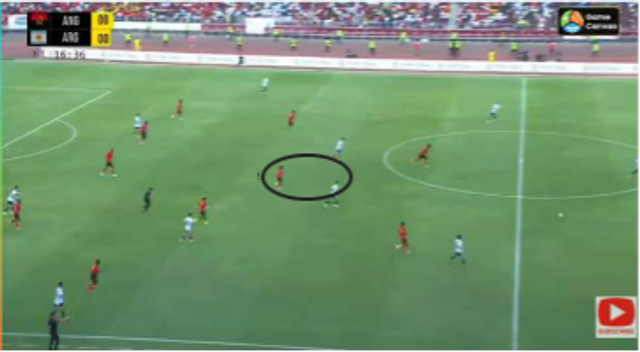
Angola’s pivot tracked Argentina’s playmaker, and out of possession the team compressed into a 4-4-2 block to deny central progression in their 14-11-2025 friendly
Still, Angola pose a meaningful threat through aerial presence inside the penalty box, often creating chances from wide deliveries and second balls.
Their set-piece routines are well rehearsed and represent one of the most efficient aspects of their offensive identity. If Beaumelle succeeds in tightening their defensive transitions, Angola have the potential to frustrate higher-ranked opponents and force a surprise spot in the knockout stages.
Zimbabwe
Zimbabwe complete the group as the ultimate unknown - a side rich in physicality, discipline, and fight, yet lacking reliable goal scorers.
Returning to AFCON for the first time since 2021, the Warriors enter under Marian Marinica, whose priority is improving their chance creation, shot accuracy, and conversion - all areas Zimbabwe have historically struggled with.
Their system is typically a 4-4-2 with an unusually high defensive line, designed to trap opposing forwards offside but leaving dangerous space behind.
The wingers track opposing wide players aggressively, creating a physical out-of-possession structure that frustrates opponents but demands high concentration.
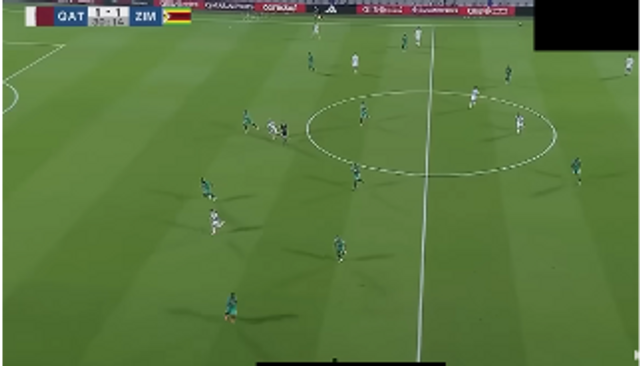
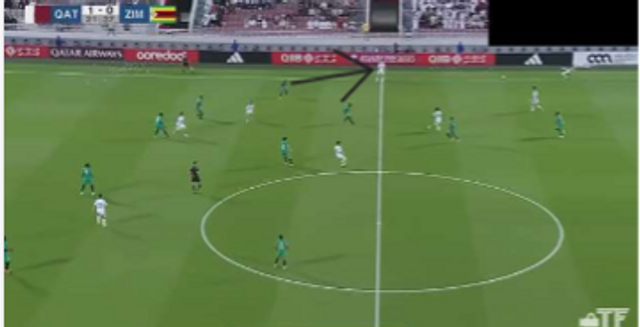
On 17-11-2025, in a friendly, Zimbabwe deployed a high defensive line to catch Qatar players offside, with wingers dropping back to contain pushing fullbacks within a tight 4-4-2 formation
Zimbabwe often rely on long balls and rapid verticality, bypassing midfield and using direct play to exploit second-ball situations.
The midfield unit is strong and combative, featuring talents like Prince Dube, Jordan Zemura, Andy Rinomhota, Wolves’ Tawanda Chirewa, and Motherwell’s versatile Tawanda Maswanhise.
.jpg)
However, injuries to Marshall Munetsi and Tymon Machope remove two influential midfield stabilizers, and Khama Billiat’s absence weakens their attacking threat.
Zimbabwe have never progressed past the group stage in any AFCON, but their World Cup qualifying displays proved they are no longer easy to break down.
Their ceiling depends on whether they can find goals in tight games.
Group B becomes a compelling ecosystem where each team brings sharply defined strengths and clear flaws.
Egypt carry the firepower and history but must manage defensive fragility.
South Africa bring structure, cohesion, and a new generation of stars seeking continental validation.
Angola possess disruptive energy, aerial threat, and individual brilliance but struggle for balance.
Zimbabwe bring grit, physicality, and directness yet must overcome their long-standing final-third inefficiency.
With multiple potential storylines, Group B promises tension, tactical intrigue, and the likelihood of late drama determining who advances.