


My unforgettable trip with Shabana fans to Mombasa for a date with Bandari





Reading Time: 9min | Fri. 03.10.25. | 12:05
I travelled with Shabana fans and this is what I saw
At 10 pm on a restless Nairobi night, we gather on a small traffic island outside TRM Mall, a stone's throw away from the iconic Kasarani Stadium, drawn together by a strange kind of faith.
The city is humming with the sound of engines shaking themselves awake, matatus along Thika Road flashing like carnival floats in the dark.
Follow our WhatsApp channel for more news
The air smells faintly of rain and hot tarmac, and there is a breeze carrying with it the sour tang of roasted maize from a lone vendor who looks at us the way people look at pilgrims, with curiosity, not quite understanding.
We board a van that looks like it has done this many times before. Neon strips glow excitedly along the ceiling, and someone has stuck a tiny plastic Jesus to the dashboard.
He nods solemnly every time the driver taps the accelerator. Around us, buses are filling, one by one, until the road outside TRM feels less like a bus stop and more like the start of a procession.
We are not going anywhere exotic, just Mombasa, but the way we huddle inside, checking bags and saving seats, it might as well be Santiago de Compostela.
The road ahead is a nearly 900-kilometre round trip, a long, black ribbon stretched across the country. But distance has never really mattered to football people.
.jpg)
The measure of devotion isn’t how far you go but how willingly you go without thinking. And so we don’t think. We pile in, laughing, teasing, rearranging ourselves, and then the convoy lurches forward, swallowing the Nairobi night.
Our van is a mismatched congregation, students, boda riders, lawyers, hawkers, people whose lives would rarely intersect in daylight. What binds us is small and simple: a football club named after a hardware shop.
Some of us wear its red and blue proudly, others have only a scarf or a badge. But when Ombati grabs the mic I'm using to take interviews, the chatter quiets a little. He’s the one who keeps our sub-group stitched together, part shepherd, part storyteller.
I first met him two weeks earlier, when I was on the pillion of a boda after a football event at Glee Hotel. By the time we hit Red Hill Road, I knew where he’d grown up, why his first love ended, and the names of three players who, in his words, “died for this club.”
Football people speak like that, with the unguarded honesty of those who’ve already decided what matters most.
We pull onto Mombasa Road, engines humming like a choir. Matatus streak past, sides painted with rappers and saints, speakers rattling windows. The city fades behind us, the orange glow of its streetlights dissolving into the dark. Inside the van, the air thickens with warmth and noise.
Bottles clink. Someone lights a vape, and smoke curls lazily toward the ceiling. A man in a green Harambee Stars jersey starts a chant, softly at first, but the rest of us catch it and build it into a wave.
Voices crack and rise and tumble over one another until they fill every corner of the van. My phone battery blinks red, but I stop caring. Time becomes elastic on journeys like this, the clock doesn’t tick as much as it breathes.
Past Athi River, something in the night changes. Suspicion melts. Names are traded for stories. A student from Kisii and a mechanic from Kayole share a bottle of cheap gin.
"Wekea Shabana na over 2.5"
— Mozzart Sport Kenya (@MozzartSportKe) September 28, 2025
Traveling all the way from Kisii, Shabana fans have turned out in full force at Mbaraki to back their team. pic.twitter.com/fVhJL0KojL
A businessman argues good-naturedly with a corporate lawyer about the best Shabana lineup of the last decade. The usual walls, tribe, class, profession, dissolve into laughter and smoke.
All that remains is the badge on our chests and a single word hurled into the darkness: Shabana.
The club itself began humbly, a team born in the early 1980s from the pocket and stubbornness of Dogo Khan, a Kisii businessman with a small hardware shop and an improbable dream.
Shabana once brushed shoulders with giants in the African Champions Cup. Then came the wilderness years, thin seasons, empty stadiums, relegations survived by a goal or by grace.
They clawed their way back to the big leagues in 23/24, dodging the drop on the final day with a 1–0 win over Murang’a Seal. Fifth last season. Twelve points shy. And now, after two games, just one win away from the top. It is early, but something is stirring, not just hope, but hunger.
Sometime past 5 AM, we stop at Mtito Andei, the unofficial halftime of road trips to Mombasa. The night air tastes of diesel and salt, and the ground hums faintly underfoot from the endless convoys passing by. We spill out like schoolchildren on a break.
Some stretch, some smoke, some vanish into the bush for a quick piss. A young man turns smokies over glowing coals, humming a song I don’t know. A woman selling hot tea and mandazi counts coins into her pocket.
For fifteen minutes, the world pauses. Then the driver honks twice, a whistle for the second half, and we climb back in. The road swallows us again.
By dawn, the world has changed colour. The sky blushes orange, the wind carries with it an unmistakable humidity, and the ocean, vast and indifferent, glints on the horizon.
Sweat clings to us like an extra layer, and beneath the fatigue, excitement hums, thin and electric. I begin to understand why people join cults. It is not madness. It is the deep human need to belong, to dissolve into something larger than yourself.
Football offers that. It takes the raw clay of longing and shapes it into songs, rituals, pilgrimages. It turns strangers into kin
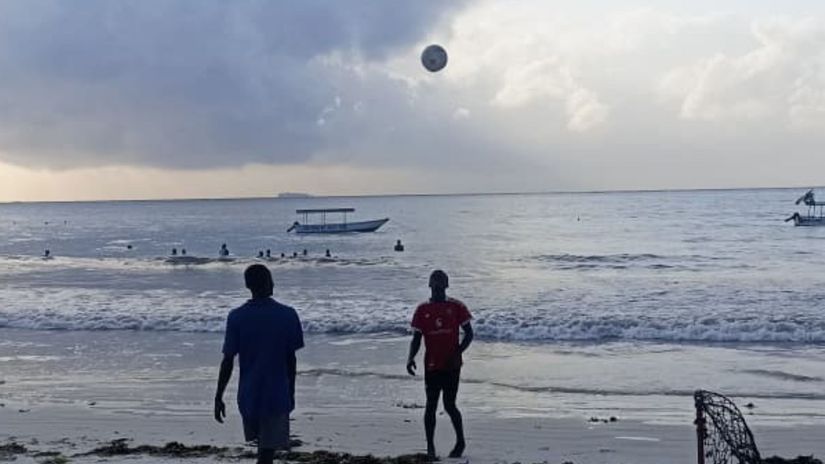
Before we disperse, we drift toward the beach. Some fans have never seen the Indian Ocean before. They stand barefoot on the edge, eyes wide, as if staring at a god.
Others wade in, laughing as waves soak their jeans. Later, we will walk through Fort Jesus. The government has thrown open the gates of national parks for free, and we seize the chance.
Inside the coral walls, Portuguese cannons still point to the sea, relics of old empires and old hangars. Here, where ships once came for spices and slaves, Shabana fan\s sing club songs and pose for selfies.
Football, too, is a kind of conquest, not of land, but of despair. It gives people reasons to move, to dream, to stand in places they never thought they would reach. It takes the ordinary and baptises it in meaning.
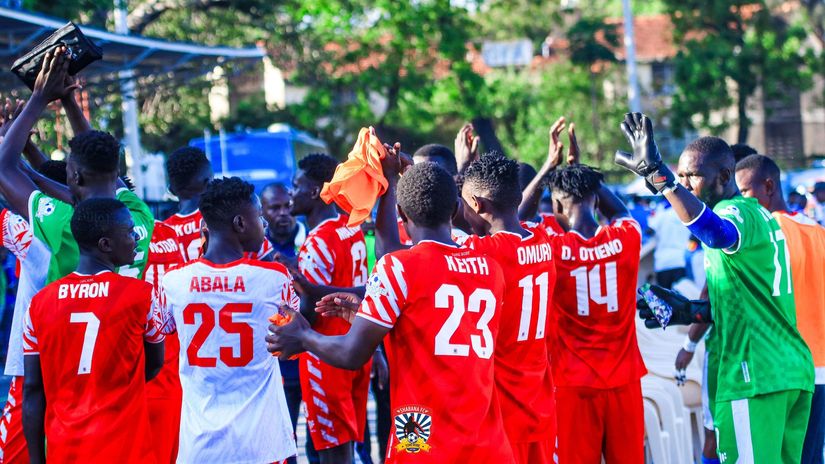
On Sunday, after we partied, slept and woke up for what brought us here, we are at Mbaraki Sports Club at three in the afternoon.
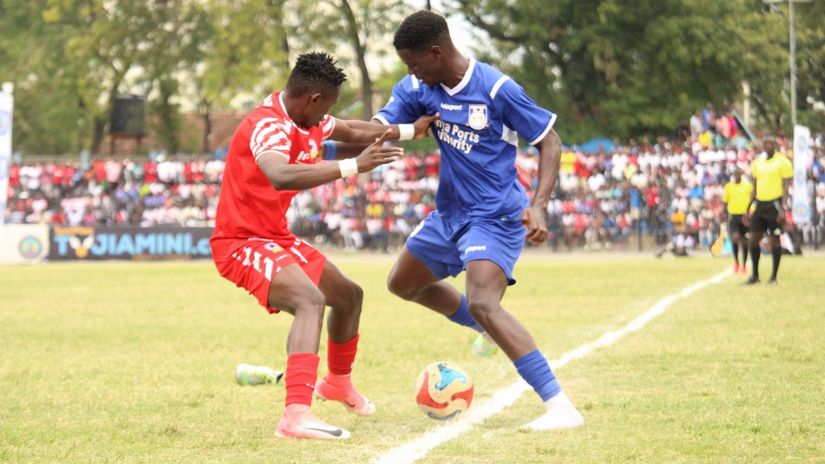
The sun presses down hard, bleaching colour from the grass. Bandari FC look crisp, cleaner kits if I’m being honest, a tighter formation, but Shabana move like they are chasing ghosts. Every ball matters. Every tackle has weight. The match is taut, balanced on a knife edge. And then, the moment.
Brian Michira.
THE Brian Michira. He ghosts into space, chests down a pass, and drives the ball low and hard past Ngeleka, a goalkeeper built like a tree trunk. The net bulges. For a heartbeat, the stadium holds its breath.
Then it erupts. Red smoke bombs hiss. Flags snap. Shrieks rent the air. Strangers fold into each other’s arms. A woman near me cries openly, laughing through her tears. It is chaotic and human and impossibly beautiful.
On The Road With Mozzart: Shabana Edition 🚍🔥
— Mozzart Sport Kenya (@MozzartSportKe) September 30, 2025
We joined Shabana FC’s fans on their trip to Mbaraki for the KPL showdown with Bandari. A 1-0 win lifted them to the top of the table, and with this kind of passion, pundits and rivals agree they’re real title contenders.
Watch… pic.twitter.com/oV2G8i76RJ
For a club written off more often than it has been praised, this is not just a goal. It is a declaration: Shabana are here not just to survive, but to lead.
The win matters more than the scoreline. This was the ground where points slipped away last season. This time, they leave with all three.
Redemption, however small, is a muscle, it strengthens each time it is used. Football teaches that. It also teaches that identity is fluid.
I am a man from Murang’a, raised to support Murang’a Seal. Yet here I am, hoarse and sunburnt, yelling myself empty for a club named after a hardware shop.
Football makes such betrayals feel like home. It shows you that family is not only who you are born to, but also who you choose to kneel beside.
After the final whistle, the streets fill with song. The road home begins under a sky turning violet. The van is quieter now, the songs gentler, the laughter less urgent.
Yet beneath it all beats the same pulse, that stubborn faith that pulls us back week after week. Somewhere between Mombasa and Nairobi, I scroll through Twitter and see news of a crash near Kikopey.
Thirteen dead. A shaky video shows how easily it might have been avoided, how thin the membrane is between living and not. We didn’t pass through Naivasha, but the news hangs heavy.
Our driver has a pharmacy and a liquor cabinet within reach, but the speedometer climbs anyway. It is a reminder: the chants, the joy, the victory, they are all fragile. Chance rides with us, unseen.
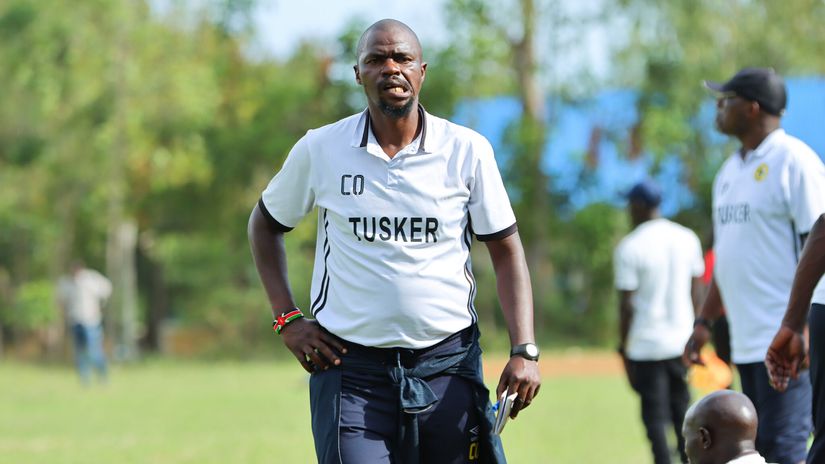
Somewhere past Sultan Hamud, we overtake the team bus, a huge luxury bus from Nyamira Express. It gleams under the sodium lamps, a moving lighthouse. Faces glow faintly behind tinted windows, lit by phone screens.
They look out and see us, this loud, sweating, singing convoy, and the ones that are awake wave. They are heading back to work, to drills and diets and the long grind that will shape their season.
We are heading back to jobs, bills, and ordinary Mondays. But in that split-second where our eyes meet, something invisible binds us. Their victory is ours. Our devotion is theirs.
By the time we roll back into Nairobi, the city is stretching awake. Shopkeepers lift metal shutters. Boda riders rev their engines. The sky softens from violet to pale pink.
The van exhales one last sigh as the engine stops, and for a moment, no one moves. We sit there in the half-light, unwilling to break the spell. I look around at the faces dimly lit by tired bulbs, faces I didn’t know a day ago but now feel tethered to.
We are pilgrims, and this was never just a trip. It was a small, messy, beautiful pilgrimage.
That is the thing about this game. It is never just about the game. It is about belonging. It is about meaning. It is about those rare moments when everything, tribe, class, fear, difference, slips away, leaving only the roar of a crowd and the stubborn joy of being alive.
It is about redemption, about how even a club named after a Kisii hardware shop can dream beyond its beginnings. It is about the journeys, loud, smoky, sometimes dangerous, that lead us closer to ourselves.
As the last of the fans climb out and disappear into the waking city, I stay seated at the stage outside Thika Road Mall a little longer. The air faintly smells of sweat, smoke, and something harder to name, maybe salvation.
I realise this was never just a road trip to Mbaraki. It was a pilgrimage. And like all pilgrimages, it was never really about the destination. It was about the road, the people, the belief, and the stubborn, beautiful hope that football will always give us something worth chasing.