


.jpg.webp)
 K. Teya
How much it costs Gor Mahia, AFC Leopards, Shabana fans to run ultras movements






Reading Time: 7min | Wed. 11.03.26. | 08:02
They do not just cheer; they create choreographed displays, lead chants, and organise community drives.
After languishing in the doldrums of virtually empty stadiums where pindrop silence was a familiar occurrence, Kenyan football seems to be rising from its ashes, thanks to the surge in the number of vociferous ultras injecting life from the stands.
Follow our WhatsApp channel for more news
Football is more than a game. It is a stage where identity, loyalty, and passion converge. Around the world, ultra fan groups have turned this stage into a spectacle.
From the terraces of Buenos Aires to Naples, Liverpool to Cairo, ultras transform ordinary stadiums into arenas of colour, sound, and choreography.
They are not merely spectators; they are the heartbeat of the game, bringing energy, creativity, and community spirit that extends far beyond the pitch.
In Europe, Italy’s Curva Sud of SS Lazio and Napoli’s Ultras are celebrated for their intricate banners, deafening chants, and active role in community initiatives.
In South America, Boca Juniors’ La 12 and Brazil’s Gaviões da Fiel fuse loyalty with social activism, dominating the stadium atmosphere while organising charitable programs.
North Africa and the Middle East are home to groups like Ultras Green Eagles of Al Ahly, whose support transcends football and often carries political and social statements.
Even in Asia and North America, fan collectives such as Jeonbuk Hyundai Motors’ Green Angels and Seattle Sounders’ Emerald City Supporters show that ultras are custodians of culture, symbols of unity, and champions of community engagement.
Until recently, this level of organised, disciplined fan support was alien to Kenyan football. Enthusiastic supporters existed, but most cheering was spontaneous and unstructured.
That has begun to change. The FKF Premier League is now experiencing a rising wave of ultras culture. Clubs including AFC Leopards, Gor Mahia, Shabana FC, and Murang’a Seal have seen passionate, organised fan groups transform matchdays. These groups create atmosphere, identity, and energy that rival global standards.
For these ultras, football is not just a game. It is a stage where loyalty is displayed through coordinated chants, banners, smoke bombs, drums, and tifos. Discipline, preparation, and visual creativity are as important as passion.
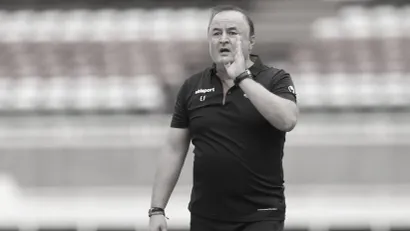
At the forefront of this transformation are figures like Felix Oduor of Ultras Green and Victor Milimu of Ultras 1964. They have turned what was once an idea into structured movements, shaping the experience of football in Kenya.
Gor Mahia and Ultras Green
Ultras Green has been a driving force in transforming the Gor Mahia matchday experience. Felix Oduor, an official of the group, explains how it began:
“The motivation was borrowed from Arabic countries as well as South America, clubs like Wydad Casablanca, River Plate, and Boca Juniors. We wanted to bring a different vibe to the stadium, something beyond the usual drums and cheering.”
The movement officially restarted three seasons ago with just three members. Today, Ultras Green boasts around sixty dedicated members, and it continues to grow.
“We need to contribute ksh10,000 to Ksh15,000 per match. We provide flares, baruti, and extinguishers. We are also trying to get partners for a tifo because it is a bit expensive, but we are making strides,” Felix says.
The group is about more than visual spectacle. Inclusivity and engagement are central to their mission.
“Our group comprises members who are non-Luo, and we wanted to accommodate fans who might not understand the chants. We also aim to get involved in club management and implement the changes we want.
To join us, you must be a registered member of the club. We advocate for better running of clubs. Many struggle with basics like social media management and merchandising, and we want to push for positive changes.”
Challenges remain, particularly in funding and logistics.
“Finding like-minded people is difficult, and financing is also an issue. A tifo, for example, is very expensive.
The lack of proper stadia creates problems. Organising a tifo requires planning with the club and stadium management, but if the match venue changes at short notice, everything comes to a standstill.
Rehearsals are needed, but accessing a stadium before a game is often difficult. Coordination is a major challenge because of unreliable venues and frequent changes.”
Even with these challenges, Ultras Green continues to support the wider football ecosystem.
“We are happy to see other clubs follow our example. We assist where they need support because, at the end of the day, we want to see the game grow. We want Kenyan football to improve,” Felix notes.
The group also extends care to its members off the pitch.
“A few years ago in Machakos, during a match against Bandari, the game ended in chaos, and some of our members were injured.
Through our kitty, we were able to help them with medical care and other needs. The movement is not just about what happens on the pitch; we also support our members when they are in need.”
Looking forward, Felix hopes to grow both membership and influence:
“We want the movement to expand, and we are open to new members. Let them join us so we can increase the stadium experience. Ultimately, it is Gor Mahia winning, and the more members we have, the merrier.”
AFC Leopards and Ultras 1964
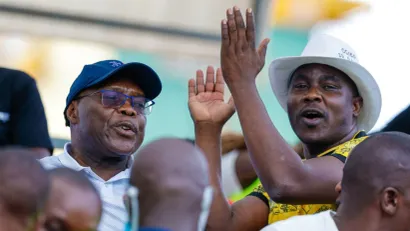
Across Nairobi, AFC Leopards has been shaped by Ultras 1964, founded by Victor Milimu. He reflects on the inception of the movement:
“The idea of Ultras in Kenya had been around for a while, but it wasn’t until 2023 that it really came into action. The FootballKE community encouraged fans of several clubs to start planning and organising themselves into official Ultras groups.
AFC Leopards and Gor Mahia’s Ultras Green were the first to explore the concept. Gor Mahia fully launched their group in late 2024, and Leopards fully took off in 2025.”
Milimu emphasises that the movement is about more than cheering. It is about creativity, discipline, and visual spectacle.
“At the beginning, the biggest challenge was getting enough dedicated members and ensuring we had the money to consistently buy the materials we needed, smoke bombs, flags, tifos. But we knew that if we wanted to make an impact, we had to start strong.”
Ultras 1964 became pioneers in Kenya and the region.
“We were the first in Eastern and Southern Africa to have a tifo and also produce banners in the stadium. That was a milestone not just for us, but for Kenyan football fan culture as a whole.”
The group invests heavily in time and finances.
“Running Ultras is expensive. On a normal match day, costs are never less than Ksh20,000. Home games are sacred for us, and sometimes the investments can go as high as Ksh50,000. Members fund most activities, but friends of the group also contribute, even if they don’t attend the matches.”
Discipline is central to the group’s identity.
“We have a strict dress code, and membership is serious. Anyone showing slack dedication risks being dropped. We also arrive at the stadium at least three hours before kickoff to prepare and ensure everything runs smoothly.”
Ultras 1964 and Ultras Green have also mentored other emerging groups.
“Other clubs have learned from us. Shabana and Seal are now stable, while Tusker struggled despite attempts to start one. The biggest challenge remains funding, especially for away matches out of town.”
Regarding league management and branding, Milimu explains:
“It is a culture designed to prevent clubs from being dragged into problems with branding or league disputes. League management has struggled to adjust to this new culture.
They sometimes try to stop us from doing our activities, while FKF doesn’t provide even basic funding, like for a simple PA system. Yet we continue, because passion and commitment drive us.”
Shabana Red Ultras
In Gusii County, Shabana FC has embraced ultras culture through the Shabana Red Ultras. Allan Omache, a founding member, explains:
“Over the years, Shabana has never had a problem pulling numbers. Every matchday, Gusii Stadium is filled, but the environment was never intimidating enough for visiting teams.
Shabana Red Ultras was created to channel passion into organised support, creating a proper atmosphere for the team while intimidating opponents.”
The group celebrates both local culture and club history.
“Shabana Red Ultras intends to create a distinct fan culture that borrows from our Kisii heritage and the history of the team. In our chants and flags, we honour legends like the late Dr. Nyandoro Kambi, Peter Maestro Ogechi, and the late Evans Obutu, who gave his life defending the Shabana badge.”
Murang’a Seal
Recently, Murang’a Seal launched its own ultras movement, which is rapidly gaining momentum. This demonstrates how ultra culture is spreading across the FKF Premier League, transforming matchdays, and creating a new era of organised, passionate fan support in Kenya.