


Story of captured Kenyan athlete tricked into joining Russian army




Reading Time: 3min | Mon. 29.09.25. | 16:39
He insisted that he travelled to Russia for athletics but ended up being coerced into military service after signing documents he said he did not understand
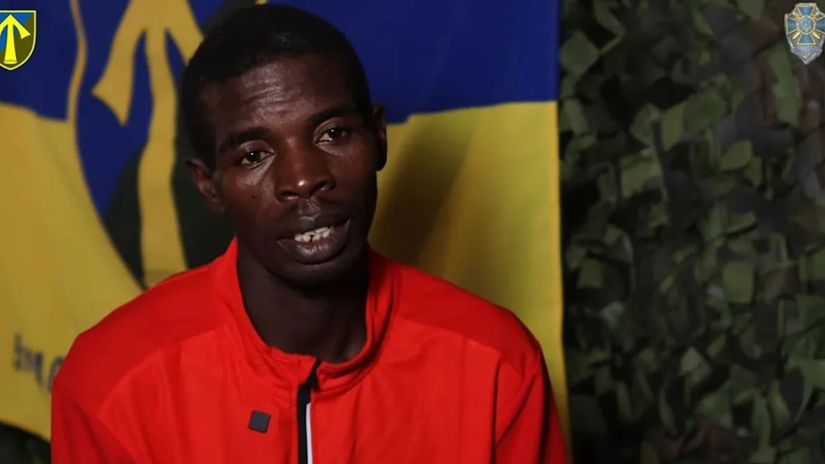
“I will die there,” Evans Kibet is seen saying in a video released on Wednesday, 17 September by Ukraine’s 57th Separate Motorised Infantry Brigade.
Follow our WhatsApp channel for more news
Dressed in a red sports top, with the brigade’s flag pinned behind him, the 36-year-old Kenyan long-distance runner waves his hands as if reaching out for help.
Kibet has made a desperate appeal from captivity in Ukraine, pleading not to be returned to Russia.

The aspiring athlete, who once trained in Iten and competed in road races across Europe and Asia, said that he was allegedly deceived into joining the Russian army.
He insisted that he travelled to Russia for athletics but ended up being coerced into military service after signing documents he said he did not understand.
Kibet’s background
Kibet grew up in Mount Elgon in Western Kenya and built his identity around running.
Family and friends described him to the BBC as a humble man deeply dedicated to the sport.
According to relatives, he had been struggling financially and was eager to find new opportunities when a sports agent allegedly promised him a chance to race in Russia.
“He was very excited when he told me he was going to race in Russia,” his brother Isaac Kipyego told the BBC.

His cousin, Edith Chesoi, said she personally saw him off at a bus park in July. Carrying only a small suitcase, Kibet told the family he would be gone for two weeks.
But shortly after arriving in Russia, his circumstances allegedly changed.
Kibet said his host offered him a job to extend his stay and presented papers written in Russian for him to sign. He claimed the documents turned out to be military enlistment forms.
According to Kibet, he was driven for several hours to a military camp, where his passport and phone were confiscated.
He was allegedly told: “Either you fight or we’ll kill you.”
Kibet said he underwent a week of basic training, learning to handle an automatic rifle through shoves and gestures as none of his commanders spoke English.
He insisted he never engaged in combat.
On the way to what he believed was his first mission, he abandoned his equipment and fled.
After two days wandering through a forest near Vovchansk in north-eastern Ukraine, he approached Ukrainian soldiers and surrendered.
“I went there with my hands up. I said: ‘I am a Kenyan, please don’t shoot me,” he recalled in the video.
Family in shock
Back home, Kibet’s relatives are still processing the video.
“I am so traumatised. I did not sleep at night,” Chesoi told the BBC.
Kipyego described his brother as a pillar of the family and appealed for his safe return.
“If he made a mistake, let them forgive him. We only want him back,” he said.
Though shaken, the family expressed relief that Kibet was in Ukrainian rather than Russian custody.
Wider concerns
While foreign recruits in Russia’s army are not unheard of, Kibet’s case is unusual as it involves a captive speaking on video.
Petro Yatsenko, Ukraine’s spokesperson on the treatment of prisoners of war, told the BBC that citizens of Somalia, Sierra Leone, Togo, Cuba, and Sri Lanka are among those currently held in Ukrainian prisoner-of-war camps.
.jpg)
“Most of these individuals come from poorer countries and end up on the Russian side in different ways. Some are deceived, promised jobs at factories, while others join the war voluntarily.
It is important to understand that very few are captured alive; most are either killed or seriously injured,” he said.
Kenya’s position
Kenya’s Ministry of Foreign Affairs has acknowledged reports of nationals allegedly trafficked into Russia and later captured in Ukraine.
Principal Secretary Korir Sing’oei said Nairobi was “pursuing the matter with all diligence” through its mission in Moscow.
Ukraine has indicated it is open to discussing Kibet’s possible repatriation if Kenya formally requests it.
However, Yatsenko noted that some African states have allegedly shown little interest in reclaiming such citizens.