


.jpg)
Kenyan sprinter reveals minimum amount required to fund athlete's season
.jpg)


Reading Time: 5min | Sat. 18.07.26. | 15:41
The figure may sound staggering, but the sprinter insists it is not an exaggerated estimate. If anything, it is the bare minimum
Behind every sprint, every finish line and every Kenyan flag draped over an athlete's shoulders is a financial battle few ever get to witness.
Download our Mozzart Sport app for more news
While fans celebrate medals and personal bests, many of the country's top athletes are quietly fighting another race, one against the rising cost of training, travel, nutrition and medical care.
For five-time national champion Zablon Ekwam, earning a place at the Commonwealth Games has not just demanded speed on the track, but hundreds of thousands of shillings off it.
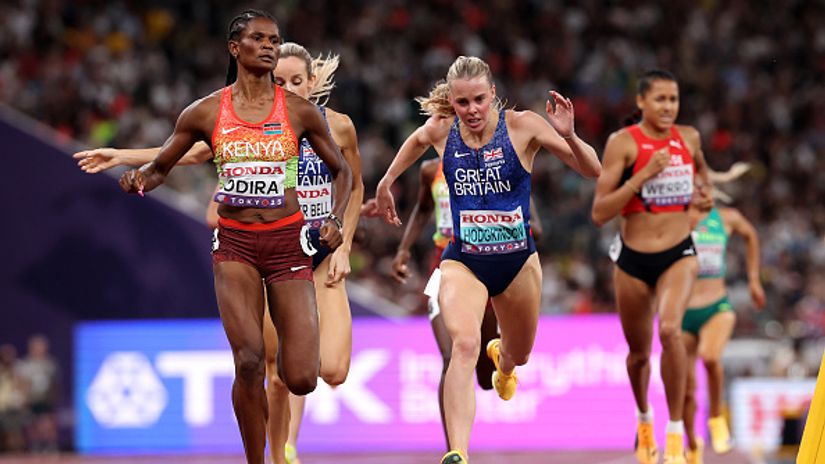
From Thursday, 23 July to Sunday, 2 August, Ekwam will line up in the men's 200m at the Commonwealth Games in Glasgow, Scotland, alongside Elkana Kiprotich.
Curious about the financial realities behind Kenya's sprinting success, Mozzart Sport sat down with Ekwam to understand what it truly costs to chase a place at the Commonwealth Games.
The former 400m specialist laid bare the financial demands of elite sprinting, revealing that an athlete requires at least Ksh300,000 to survive a season and qualify for a major championship such as the Commonwealth Games.
"What I can say to generalise it is you cannot train without money. Moving from your home to the track needs money, supplements need money, good diet also needs money.
And by a good diet, I do not mean eating chapatis and tea and coming for training. There is a lot of a balanced diet needed, for medication, you have to go to the doctor every week or every month to get your body checked,” Ekwam said.
The figure may sound staggering, but Ekwam insists it is not an exaggerated estimate. If anything, it is the bare minimum.
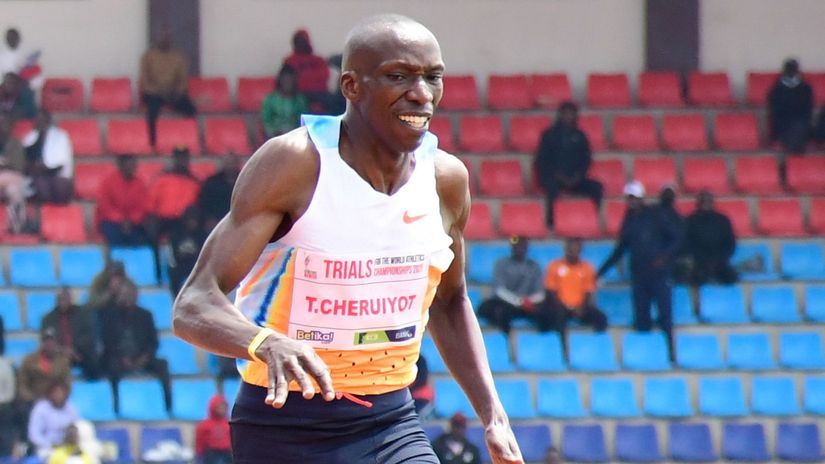
Unlike many people imagine, athletes do not simply report to training and wait for the next competition. Every week comes with expenses, from daily transport to the track and nutritious meals to recovery sessions and routine medical checks.
Then come the competitions.
A three-day track and field meet away from home can quickly drain an athlete's savings before they even step onto the track.
"If there is a track and field meet in Kapsabet or Mombasa, you have to pay for hotel, food, and transport. And I am talking about the bare minimum. That means an athlete travelled by road," Ekwam explained.
His own example paints a vivid picture.
A budget room or Airbnb in Mombasa costs at least Ksh4,000 per night. Staying for the duration of a three-day competition immediately pushes accommodation costs to Ksh12,000.
Then comes transport to and from the coastal city, meals throughout the competition, and local movement between the hotel and stadium.
"Add food, transport, etc., and that is where your money goes," he said.
And that is just one competition.
The costs continue long after the medals have been handed out.
To remain competitive throughout the season, athletes must constantly monitor their health. Blood tests, treatment for injuries, and recovery programs are all part of elite sport.
"Or let us say you need to go to the doctor to do a full hemogram; it will cost like Ksh20,000. Talk about supplements; you need proteins, vitamins, etc. It is very expensive,” he explains.

For Ekwam, these are not luxury expenses; they are necessities.
Without proper nutrition, recovery, and medical care, training quality drops. Without training quality, qualification standards become almost impossible to achieve.
That is why he believes the Ksh300,000 mark should be viewed as the minimum investment needed to compete, not the amount required to live comfortably.
"To be a pro athlete and qualify for maybe the Commonwealth Games, you need to have a minimum of Ksh300,000,” he offered.
Unlike some athletes who struggle to find any source of income, Ekwam has managed to create a financial cushion.
Besides running small businesses, he serves in the Kenya Defence Forces (KDF), whose monthly salary has helped him focus on improving his performance rather than worrying about how to fund his next competition.
"I have small businesses, and I work with the military, where I get some cash because they pay me monthly. KDF have been very helpful in my performance. It is nice being supported,” he said.
He acknowledges that not every athlete enjoys the same level of stability.
Many rely on prize money from local competitions to finance the next race, creating a cycle where one good performance determines whether they can afford to keep chasing qualification.
While some event organisers have increased prize purses, Ekwam believes the current model is not enough to unlock Kenya's sprinting potential.
"Sponsors have not done their best. Some try and have been paying up to number five, and winners win Ksh50,000, and in the finals, they get Ksh250,000. If someone wins that, it will help them to prepare for the next season and represent Kenya at the international level,” he said.
Instead of only sponsoring competitions, Ekwam wants companies to invest directly in athletes, giving them the financial security to concentrate on performance.
"If sponsors can identify specific talents and pick like sprinters, netballers, footballers, etc., and invest in them, and put money in their pockets, and follow up, you will see how far they can go,” he averred.
It is an idea he believes could transform not only sprinting but Kenyan sport as a whole.
Ekwam believes the difference is not talent. It is an investment.
"We have not yet reached our peak because we are limited by finances and facilities,” he concluded.