

Former rugby player finding solace in sprinting after career ending injury


.jpg)


.jpg)
Reading Time: 3min | Tue. 24.09.24. | 10:26
For Juma, sprinting provided an outlet for his passion for athletics without the constant worry of suffering another injury.
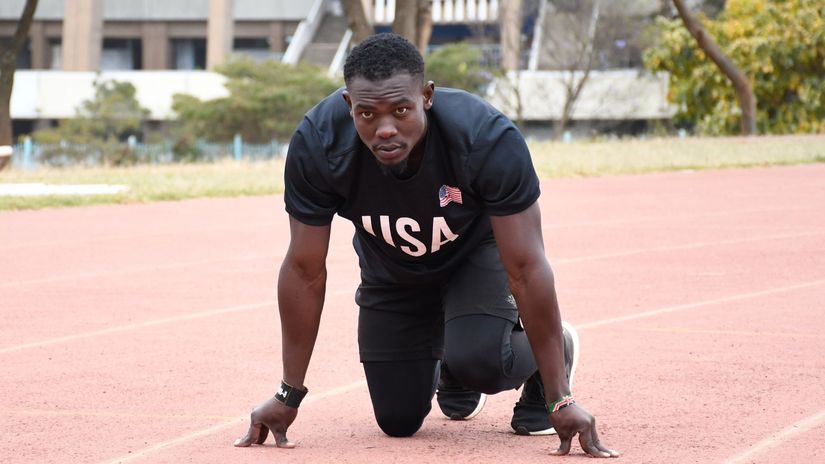
Former Masinde Muliro University of Science and Technology (MMUST) rugby winger Tyson Juma is proof that life setbacks can turn into opportunities. Juma suffered a career-ending injury in 2020 and has since found solace in athletics, where he hopes to excel.
He sustained a skull depression injury during the Kenya Rugby Union (KRU) Championship semifinals against the University of Nairobi's Mean Machine in 2020, after helping MMUST qualify for the Kenya Cup. Doctors described it as a skull depression, which made it difficult for Tyson to return to play due to the severity of the injury.
The incident constantly reminded Juma of the risks associated with rugby, leading him to prioritize his health. It was then that he decided to shift his energy to sprinting. For Juma, sprinting provided an outlet for his passion for athletics without the constant worry of suffering another injury.
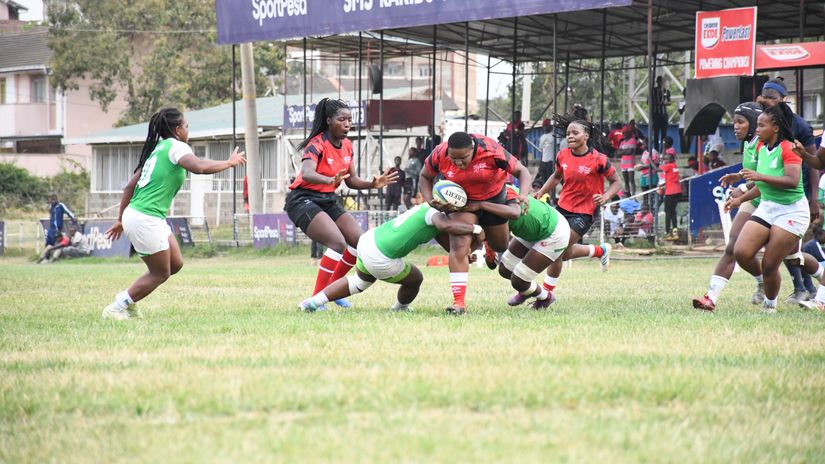
Mozzart Sport caught up with the speedster during one of his training sessions at Kasarani Stadium, where he opened up about his life as a sprinter. He noted that the difference between rugby and sprinting is fundamental. Rugby involves a lot of contact and movement, while sprinting focuses solely on speed and power.
“Rugby is a sprint, especially rugby sevens. The sprinting, power, and strength translate to the track; the only difference is that in track you run in a straight line. The agility and mental aspects are similar to rugby. Most rugby players are good sprinters,” he explained.
Juma further elaborated that athletics demands a higher level of fitness, making it essential for athletes to be in peak physical condition to compete effectively.
“I have placed more focus on training, sacrificing much of my time because the track is very demanding. There were no movements; I grounded myself. Athletics requires a lot of mental strength, especially during training. One must be in the best shape to compete, unlike in rugby. It takes time to prepare and to be in the best shape to run a perfect race,” he said.
Despite the demanding nature of sprinting, he expressed gratitude for his supportive network throughout his journey.
“My teammates and coaches supported my transition because I was fast in rugby. They encouraged me. For the first few weeks, I continued training with my teammates, and they pushed me along the way. My immediate surroundings were very supportive,” he said.
.jpg)
Although sprinting has provided him with a new focus, he admitted that nothing compares to the thrill of scoring tries on the pitch.
“I miss being the try-scoring machine, scoring every time, and experiencing victory after victory. I cannot recall a game where I didn’t score. I miss the rugby environment and just running down the wing to score,” he told Mozzart Sport.
Juma looks up to several sprinters, including Africa’s fastest man, Ferdinand Omanyala.
“Omanyala is the real champion who set the bar. He has made it easier for us to achieve greatness by showing us that it is possible. He is one of the icons I really look up to,” he concluded.
During his heyday, Tyson won the 2017 Braeburn Open, five University 7s circuits in 2020, and was MMUST’s top scorer in 2020. He finished second in the KRU Championship and was the club's top point scorer from 2018 to 2020. He is a graduate in disaster management and emergency response from MMUST.