


 S. Ochieng
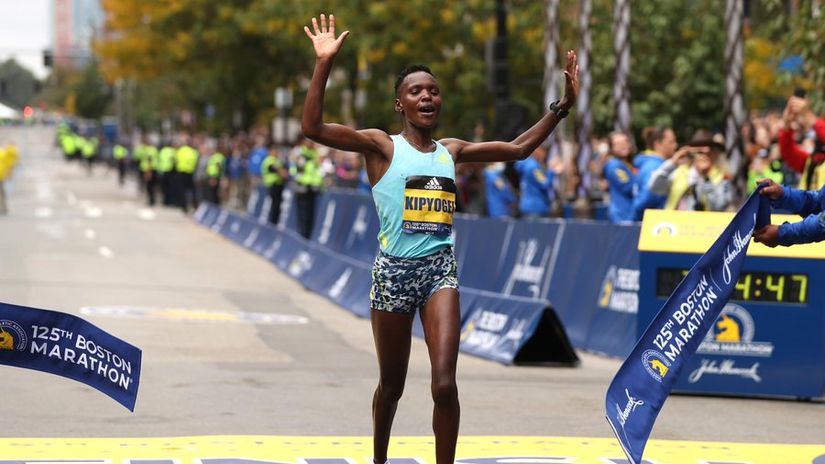
Boston Marathon winner Kipyokei, Rionoripo handed lengthy bans as Lempus faces charge for doping violations



.jpg)

.jpg)
Reading Time: 4min | Tue. 20.12.22. | 18:49
The two were banned for six and five years for violations of the Anti-Doping Rules.
The Athletics Integrity Unit (AIU) has banned two Kenyan marathoners – Diana Kipyokei and Purity Rionoripo – for six years and five years respectively for violations of the World Athletics Anti-Doping Rules (ADR), following thorough investigations which led to doping and tampering charges against both athletes.
As a result, Kipyokei will now be disqualified as the 2021 Boston Marathon women’s winner.
The AIU has banned two Kenyan athletes. pic.twitter.com/G2gCLjnxhP
— Athletics Integrity Unit (@aiu_athletics) December 20, 2022
Kipyokei’s six-year period of ineligibility, started on 27 June 2022 (the date on which she was provisionally suspended by the AIU), while her results have been disqualified since and including 11 October 2021; the date on which she provided a urine sample, following her victory in the Boston Marathon.
That sample returned an Adverse Analytical Finding (AAF) for the presence of a metabolite of Triamcinolone Acetonide, an anti-inflammatory.
Ultimately, with investigative assistance from the Anti-Doping Agency of Kenya (ADAK), the AIU discovered that Kipyokei provided false/misleading information in trying to explain her AAF, including fake documentation which she alleged came from a hospital.
Last year's Boston marathon winner Diana Chemtai Kipyokei and her Kenyan teammate Betty Wilson Lempus have been provisionally suspended over anti-doping rule violations.@ians_india @ANI @PTI_News @AFP @Reuters @NADAIndiaOffice @ianuragthakur @SunielVShetty pic.twitter.com/1ejRpog5Uw
— Dr Saranjeet Singh (@DrSaranjeet14) October 14, 2022
Her two charges – the presence of a Prohibited Substance, namely a metabolite of Triamcinolone Acetonide (Rule 2.1 ADR; two-year sanction); and Tampering or Attempted Tampering with any part of Doping Control (Rule 2.5 ADR; four-year sanction) – were treated under the ADR as a single first Anti-Doping Rule Violation (ADRV) but one considered to warrant six years’ ineligibility due to Aggravating Circumstances (Rule 10.4 ADR). Kipyokei chose not to challenge the consequences imposed in her case.
Rionoripo’s ban stems from an AAF for the presence of Furosemide (a diuretic) in an out-of-competition urine sample given on 30 May 2022 in Kenya.
Purity Rionoripo wins the women's Prague Marathon #praguebot21 pic.twitter.com/OTzCNr4DXw
— Justin Lagat🇰🇪 (@LagatJustin) May 30, 2021
In her explanation, she claimed to have been prescribed medication by a doctor at a hospital to treat an ankle injury and presented supporting documentation.
However, investigations revealed that, though Rionoripo was treated at the hospital, she had altered her prescription form to include Lasix (the commercial name for Furosemide).
She was therefore charged on 21 November 2022 for the presence/use of a specified Prohibited Substance (Rule 2.1 ADR and Rule 2.2 ADR; two-year sanction) and for Tampering or Attempted Tampering with any part of Doping Control (Rule 2.5 ADR; four-year sanction), due to the falsified prescription form.
Due to the presence of Aggravating Circumstances, the AIU sought a six-year ban in total and this was reduced by a one-year due to an early admission and acceptance of the sanction by Rionoripo.
Her five-year period of ineligibility began on 21 November 2022 (the date of her provisional suspension) and her results on and since 30 May 2022 have been disqualified.
Meanwhile, another Kenyan – Betty Wilson Lempus – has been charged with a further ADRV: the presence of a Prohibited Substance or its metabolites or markers (Rule 2.1 ADR; Triamcinolone Acetonide).
This follows her initial charge in October 2022 of Tampering or Attempted Tampering with any part of Doping Control (Rule 2.5 ADR), including obstructing or delaying the AIU’s investigation through the provision of false information or documentation. She remains provisionally suspended.
The charges resulted from an AAF in a sample taken from Lempus on 5 September 2021 after she won the Harmonie Mutuelle Semi de Paris.
.jpg)
The French anti-doping agency (AFLD) initially cleared the athlete of an ADRV for the presence of a metabolite of Triamcinolone Acetonide following the receipt of her explanation for the AAF.
However, upon consultation with the AFLD, the AIU conducted an investigation into the explanation provided by Lempus and charged her with Tampering.
On 16 November 2022, the AFLD revoked its initial decision and referred the results management of Lempus’ AAF to the AIU so it could be treated together with the Tampering allegation.

Noting these three cases have similar trends, namely athletes doping via the misuse of legitimate medications and the provision of false medical explanations, AIU Head Brett Clothier stressed the AIU will not accept such tactics and will use “the full extent of our intelligence and investigative capabilities to uncover the truth and keep the sport of athletics clean”.
Regarding the rise in doping cases among Kenyan athletes over the past year, he said the Kenyan Government’s commitment of US$5 million annually for five years to fight doping in athletics “is a crucial first step and has the potential to be a game changer because it will ensure ADAK and Athletics Kenya have proportionate resources to play their part in the fight against doping.”