


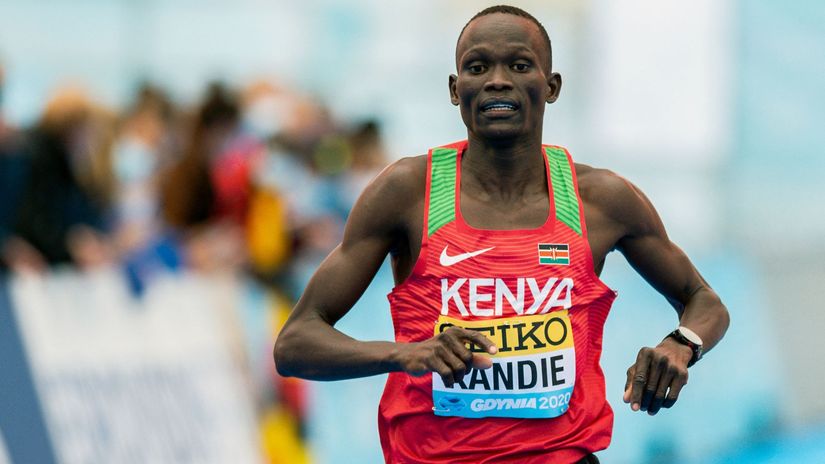
Blow for Kenya as former half-marathon world record holder is handed 7-year ban
.jpg)
.jpg)


.jpg)

Reading Time: 3min | Thu. 25.06.26. | 21:00
He initially faced an eight-year suspension; four years for each violation, but received a one-year reduction after admitting the offences early and accepting the sanction
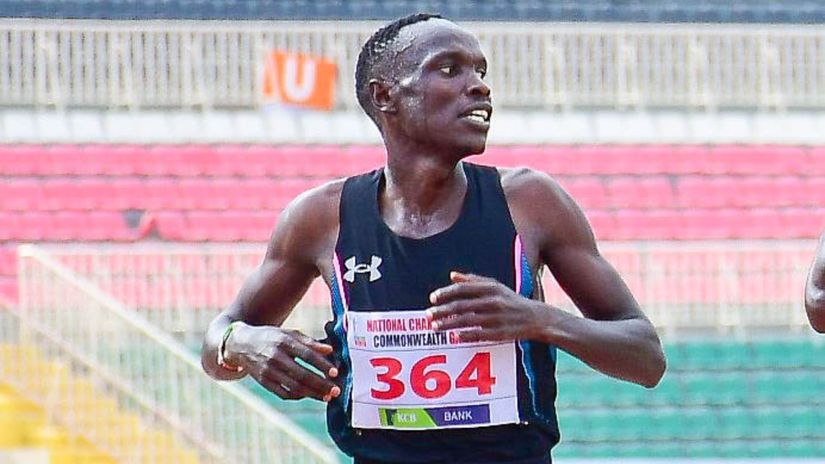
Former half-marathon world record holder and Commonwealth Games bronze medallist Kibiwott Kandie has been banned from athletics for seven years after admitting to two Anti-Doping Rule Violations.
Download our Mozzart Sport app for more news
The violations involve refusal to submit to sample collection and tampering with the doping control process.
The Athletics Integrity Unit (AIU) announced that the 30-year-old Kenyan admitted to breaching Rule 2.3, which covers evading, refusing or failing to submit to sample collection, and Rule 2.5, which relates to tampering or attempted tampering with any part of the doping control process.
_DURING_TRIALS.jpg)
Kandie initially faced an eight-year suspension; four years for each violation, but received a one-year reduction after admitting the offences early and accepting the sanction. His ban runs from March 14, 2025, the date of his provisional suspension, until March 13, 2032.
The sanction brings a dramatic fall from grace for one of the finest half-marathon runners in history. Kandie set the world half-marathon record of 57:32 at the Valencia Half Marathon in 2020 and remains the third-fastest athlete ever over the distance behind Uganda’s Jacob Kiplimo and Ethiopia’s Yomif Kejelcha.
He also won the Valencia Half Marathon three times in 2020, 2022 and 2023.
According to the AIU, Kandie refused to provide an out-of-competition sample on March 1, 2025, after doping control officials visited his residence in Kenya.
Although he acknowledged the testing process by signing the electronic Doping Control Form, the athlete repeatedly delayed sample collection while making several phone calls before informing officials that he needed to travel urgently to Eldoret to make an important payment to National Construction Authority officers who were allegedly about to shut down his construction site.
Despite being warned that refusing a doping test carried the same consequences as returning a positive result, Kandie left the testing location and drove away.
-min.jpg)
The AIU subsequently launched an extensive investigation, which uncovered inconsistencies in the athlete’s explanations.
Forensic analysis of Kandie’s mobile phone revealed that during the attempted test, he made multiple calls to a phone number linked to a registered nurse based in Eldoret.
Investigators, working alongside the Anti-Doping Agency of Kenya (ADAK), also established that Kandie had made 11 financial transfers to the same nurse in the 12 months leading up to the failed test.
When questioned, Kandie claimed the nurse sold him household items and occasionally analysed his haemoglobin levels, insisting they had arranged to meet that day for the sale of household goods.
The investigation took another turn after Kandie sought to have his provisional suspension lifted by submitting documents claiming he had been required in Eldoret for an urgent environmental inspection at his construction site.
However, the AIU, with assistance from ADAK, confirmed with the National Environment Management Authority (NEMA) that the certificate provided by Kandie was fraudulent.
NEMA established that the application reference number did not exist, Kandie’s name was absent from its records, no inspection had been scheduled at the site on the stated date, and the document itself was not genuine.
Following the findings, the AIU added a second charge of tampering with the doping control process on May 6, 2026. Kandie admitted both violations and accepted the period of ineligibility.
AIU Head Brett Clothier said the case demonstrates the body’s commitment to protecting the integrity of athletics.
“This case serves as a reminder that no athlete is above the rules in the sport of athletics. The AIU conducts a sophisticated anti-doping program that rigorously tests the best athletes in the world, and if an athlete refuses a test, it places the integrity of the sport at risk.
The AIU has a strong forensic capability and will thoroughly investigate such cases to ensure the truth comes out in the end,” Clothier said.