


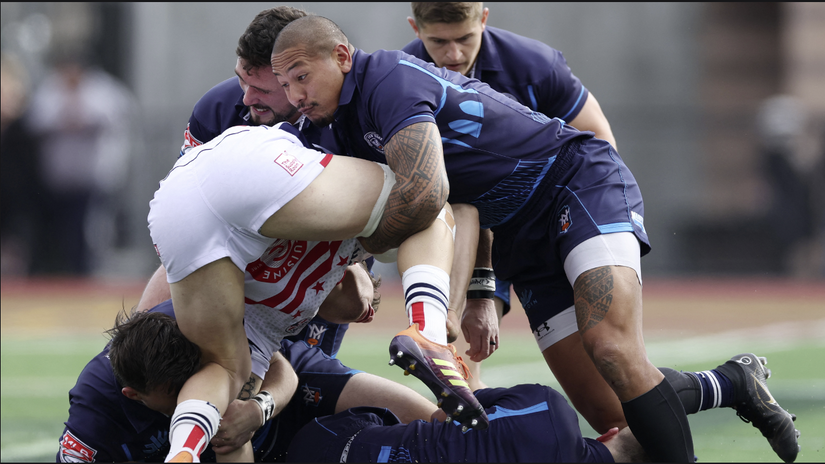
World Rugby plans to lower tackle height to improve playing experience









Reading Time: 2min | Mon. 13.03.23. | 13:37
Reducing the height of the tackle protects both players. The ball carrier is protected directly because head contact leading to injury can be significantly reduced, while the tackler is protected because their head will be in what is known to be safer proximity with the ball carrier’s upper body
The Executive Board of World Rugby has suggested that Unions take part in an opt-in international trial to lower the tackle height in community games to below the sternum (belly tackle).
National unions are now urged to discuss the recommendation with their local rugby league. A thorough education and resource plan that will enable implementation locally at all grassroots levels of the game will serve as the foundation for any future adoption of a lowered tackle height. Unions will also be encouraged to do an official study into the intervention's effects, allowing World Rugby to properly assess the trial and decide on the next course of action.

The announcement follows extensive analysis and consultation with unions over the last six months and reflects the international federation’s primary objective of a global sport for all, seeking to enhance the player experience in order to maintain worldwide engagement.
Lower tackle heights have been the subject of community game pilot tests in France and South Africa that were approved by World Rugby. These studies have demonstrated that they improve both the overall game experience and player safety by minimizing the number of head collisions and concussions and increasing ball in flow. The modifications have contributed to a rise in player engagement in France.

An independent, rigorous study reveals that 74% of concussions are caused by tackles. Both players are protected when the height of the tackle is lowered. The tackler is also protected since their head will be in what is known to be safer proximity to the ball carrier's torso or upper body. The ball carrier is directly protected because head contact that could result in harm can be considerably decreased.
Lowering tackle height will assist both players because tackles, where the tackler's head is in close proximity to the ball carrier's body above the sternum, are more than four times more likely to result in a head injury.
World Rugby is suggesting that the permissible tackle height be lowered as part of a global opt-in experiment in light of this convincing data, which includes research employing the most advanced smart mouthguard technology. Numerous unions have already declared their support for it.
© World Rugby