


.jpg)
Kenya Cup coaches react to new U20 league set to replace ESS









Reading Time: 4min | Thu. 20.11.25. | 16:34
For years, the ESS has served as a second-tier competition, offering valuable game time to reserve players from Kenya Cup clubs
Kenya Cup coaches have expressed mixed reactions to the introduction of the new U20 league, which is set to replace the long-standing Eric Shirley Shield (ESS) at the start of the 2025/26 season.
Follow our WhatsApp channel for more news
The league is expected to kick off on Saturday, 22 November, at various venues across the country.
KRU Chairperson Harriet Okach confirmed the development during a press briefing at the RFUEA Grounds on Wednesday, 11 June, noting that the union aims to create a more structured pathway for nurturing young talent.
According to the union, the shift is designed to provide a consistent competitive platform for emerging players and strengthen the national U20 team, Chipu.

“It has been approved and will be adopted from next season. We have seen the promise in Chipu, but there is still a gap. With the U20 league, we will be able to bridge that gap and have a stronger pool for national team call-ups,” Okach said.
However, with the Kenya Cup just days away, the U20 fixtures are yet to be released, raising questions around the rollout of what is expected to be a monumental shift in Kenyan rugby.
For years, the ESS has served as a second-tier competition, offering valuable game time to reserve players from Kenya Cup clubs. But according to the KRU, the league had gradually lost its value due to frequent walkovers and declining competitiveness.
Mozzart Sport spoke to several coaches who acknowledged the potential of the new model while also highlighting key concerns.
Menengai Oilers assistant coach Lawi Buyachi said that despite the merits of the idea, clubs were not given adequate time to prepare.
“At Oilers, we have about 13 players who are under 20. The model itself makes sense, but it came too late and was rushed. We need more time to recruit properly from schools and build a sustainable pathway,” he said.
.jpg)
Traditionally, recruitment from secondary schools follows structured scouting cycles and annual competitions. With the U20 league introduced just months before the next season, most clubs had not planned for such a significant transition.
Buyachi added that the change leaves transitional players in a challenging position.

“For us, it is tricky because we have players like Alvin Khavoli and Daniel Kipchirchir who have just come from Chipu. They have not fully broken into the senior team, but they’re showing great signs. Where do you take such players?” he posed.
These players, he said, fall into a grey area, too old for U20 but not yet ready for consistent senior-level competition. Under the ESS system, they would have gained regular minutes. Without it, the pathway for players aged 20–23 becomes narrower.
He also pointed out financial and developmental implications, noting that talent matures differently depending on position.
“Players take time to develop. Backs can be ready at 20, but forwards need more years. Players are like wine; the longer they are in the game, the better they become,” he added.
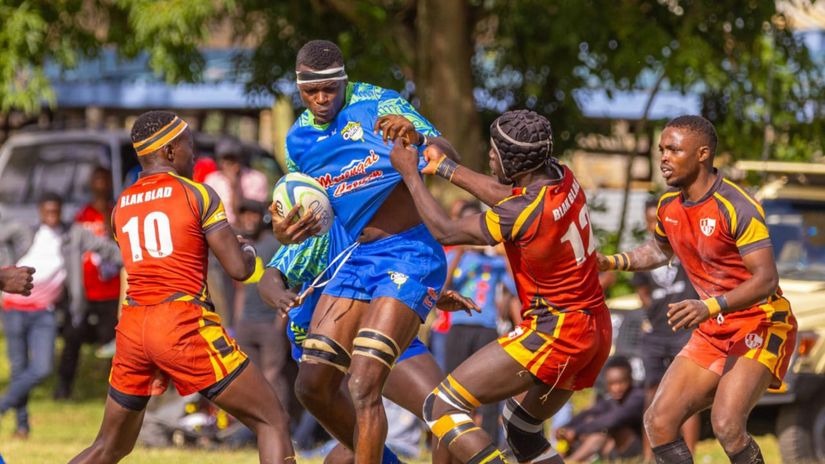
At Kenyatta University’s Blak Blad, the shift is being received more positively. Head coach Benard Rotich says the club naturally benefits due to its youthful squad.
“At Blak Blad, we have about 20 U20 players. Since we are a university side, it is easier to have younger players because many of our first-years fall within that age bracket,” Rotich said.
Unlike community-based or corporate clubs that recruit across various age groups, university teams attract younger players, making the U20 league a better fit for their structure.
Rotich believes the new system addresses long-standing issues within the ESS.
“Overall, the proposal is good because when you look at the current structure, it does not make sense that some ESS players are 28 years old,” he noted.
While ESS was envisioned as a youth development bridge, it became populated with older players, some close to 30, who either dropped from senior squads or had been long-term squad members unable to break into the first team. Rotich argues that this diluted the youth development purpose.
“ESS is supposed to be the feeder to the senior team. Strengthening that pathway means the national team will continually have players in good condition because they have been in a proper development system,” he added.