


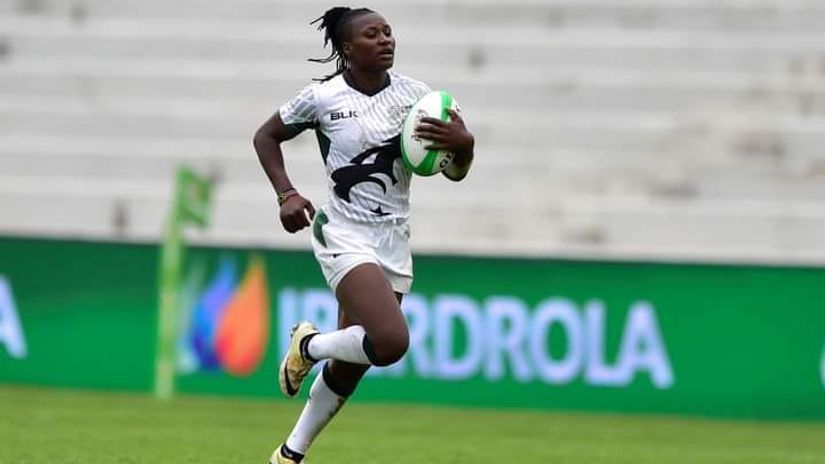
 B. Osano
Janet Okello: Living rugby dream in Japan

.jpg)
.jpg)
.jpg)



Reading Time: 4min | Sat. 10.12.22. | 14:00
She joined the Yokkaichi City-based side on a year-long professional contract earlier in the year
It never occurred to Janet Okello at any given moment that her destiny was not in Athletics, but rugby, a sport she only picked up in her second year at Butere Girls High School in 2010. Right from primary school at Mama Ngina Primary School, Nakuru, Shebesh, as she is nicknamed, was a speed merchant, and that's what she enjoyed; beating her opponents on the track. "I used to take part in 100m and 200m sprints where I would beat my competitors," she told The Saturday Standard in a past interview.
Twelve years down the line, the winger, who is now the skipper of Kenya Lionesses, the senior women's national Rugby Sevens team, boasts many firsts, including being the first Kenyan female rugby player to go professional.
"Playing in Japan or anywhere else I could have been, was my dream. I wanted to play professional rugby, and right from high school to the national team, I knew that, 'this is what I wanted.' Traveling with the national team for international engagements only fueled this passion and dream," Janet told Mozzart Sport.
Janet Okello from way down town 💨@kenyalioness | #7sChallengerSeries pic.twitter.com/ZXIooDwauK
— World Rugby 7s (@WorldRugby7s) August 14, 2022
After an eye-catching outing with the Lionesses at the Olympic Games Tokyo 2020, the former KCB Women RFC and Mwamba Women RFC player's dream of playing professionally came true when Japanese side MIE Pearls Women’s Rugby Football Club came knocking in March this year, and the journey has since been challenging, but highly rewarding.
"This has been my dream since I joined the National team, and it came true, it's good, and I'm catching up with the Japanese language, food, lifestyle, and even the weather."
Playing in Japan she says is a totally different experience compared to what she was used to back in Kenya, where sports is still largely considered a hobby and athletes are more often than not given the short end of the stick by greedy officials.
"Sports in general is a serious business here; on and off the pitch, everything is handled seriously and professionally, from time management, to food…and this cuts across both men and women sports. Training intensity is high same as game intensity, it's a totally different level."
"Japanese people are very supportive and respectful; from the management to players, they don't care where you come from, I do feel at home here and sometimes I even forget that I came from Africa because nobody makes you feel that you don't belong. There's no racism here."
Congratulations to @kenyalioness winger Janet Okello who has been nominated for sportswoman of the year at the @AwardsSoya pic.twitter.com/AxgPydtKYn
— Kenya Rugby (@OfficialKRU) November 29, 2022
Coming from a humble background of peasant famers in Butere, Western Kenya, playing rugby has generously rewarded Janet, and she has been able to support her parents farming ventures and her siblings education.
"I never knew that one day I would be able to share same table with great men and women in society, but rugby has given me that opportunity, I have traveled the world and seen places because of the game. I managed to build my parents a beautiful house back at home, and managed to take my siblings to school, I personally only went up to form four. I came from a poor background, my parents didn't even have a house, but if you visit where Janet comes from now, you will see something, and it's all through rugby."
At 29, Janet is at her prime, with so much still left in her tank, but she's already planning ahead past his playing days.
"I want to retire at my peak, not when my knees cannot carry me anymore. The Japanese are more than willing to help me plan for my future, they have offered that if I start Japanese classes then they will be able to support my in whatever I want to do, whether coaching or strength hand conditioning. As for me, I want to be a strength and conditioning coach."
We would like to wish our captain Janet "Shebesh" Okello all the best as she leaves the country for Japan where she will join MIE Pearls for a professional stint. Go and enjoy the experience Shebesh and keep the #KulabuPride flag flying high. pic.twitter.com/vhHIRS9bes
— Mwamba Rugby Football Club (@MwambaRFC) April 3, 2022
At a time welfare of the Lionesses has come under scrutiny due to non-payment, Janet is hoping that someday players will be well taken cared of so that they can focus solely on delivering on the pitch.
"In Japan, a player's work is purely to deliver on the field, all the things they need to succeed are catered for. If there's money to be given or equipment to be distributed, the players will receive them, but in Kenya, there's always someone waiting to grab money meant for players, that's why players will continue to suffer.
"They think about themselves and not the players, and it is the players who bring all this money, without them they'll be no money to grab. I can say that I'm lucky because after all the suffering, I can now relax and play rugby."