


 L. Matheka
IOC releases framework on fairness, inclusion and non-discrimination on the basis of gender identity and sex variations




Reading Time: 3min | Wed. 17.11.21. | 11:05
The document was developed following an extensive consultation with athletes and stakeholders concerned. This included members of the athlete community, International Federations and other sports organisations, as well as human rights, legal and medical experts. It replaces and updates previous IOC statements on this matter, including the 2015 Consensus Statement.
Following a two-year consultation process with more than 250 athletes and concerned stakeholders, the International Olympic Committee (IOC) released its new “IOC Framework on Fairness, Inclusion and Non-Discrimination on the Basis of Gender Identity and Sex Variations”.
Through this framework, the IOC seeks to promote a safe and welcoming environment for everyone involved in elite-level competition, consistent with the principles enshrined in the Olympic Charter. The framework also acknowledges the central role that eligibility criteria play in ensuring fairness, particularly in high-level organised sport in the women’s category.
International Olympic Committee issues new guidelines on transgender athletes https://t.co/dO4K1bY9Zg
— CurrentTime News (@CurrenttimeN) November 17, 2021
The six-page document states that no athlete should be excluded from competing based on an unverified, alleged or perceived unfair competitive advantage due to their sex variations, physical appearance and/or transgender status.
The document is issued as part of the IOC’s commitment to respecting human rights as expressed in Olympic Agenda 2020+5, and as part of the action taken to foster gender equality and inclusion.
“In issuing this Framework, the IOC recognises that it must be within the remit of each sport and its governing body to determine how an athlete may be at a disproportionate advantage compared with their peers, taking into consideration the nature of each sport,"
World Athletics confirm they will not change their DSD rules after the IOC released its new -- deep breath -- 'Fairness, Inclusion and Non-discrimination on the basis of gender identity and sex variations' earlier.
— Sean Ingle (@seaningle) November 16, 2021
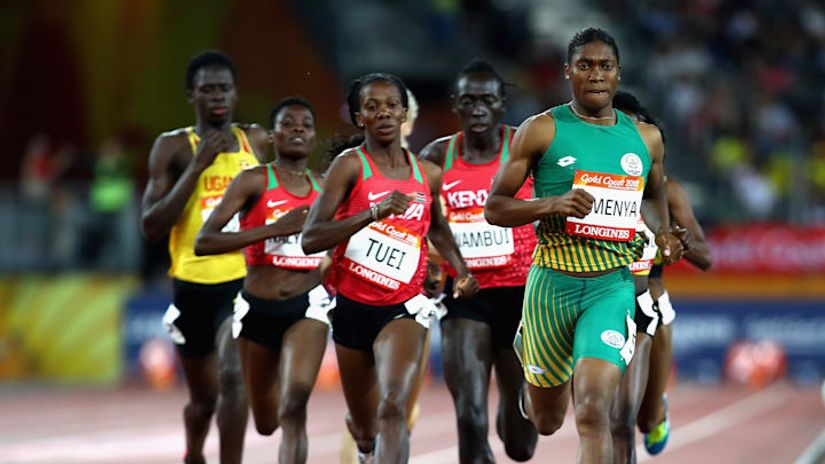
Affects Caster Semenya and other athletes with a DSD pic.twitter.com/0H3NIH4px3
"The IOC is therefore not in a position to issue regulations that define eligibility criteria for every sport, discipline or event across the very different national jurisdictions and sport systems,"
"Therefore, the aim of this framework is to offer sporting bodies, particularly those in charge of organising elite-level competition, a 10-principle approach to help them develop the criteria that are applicable to their sport. Sports bodies will also need to consider particular ethical, social, cultural and legal aspects that may be relevant in their context,” read IOC’s statement.
IOC’s report comes at a time when federations like the World Athletics have barred female athletes from competing in their best events due to naturally high testosterone levels. It is published after the Tokyo Olympics, where the first out transgender woman, weightlifter Laurel Hubbard, competed at the games and defending 800m champion Caster Semenya and Kenya’s Margret Nyairera were among track athletes excluded from their best events.
The two women are among the athletes barred by World Athletics from the 400m through the mile unless they take testosterone-suppressing measures.
Lastly, the IOC notes that most high-level organised sports competitions are staged with men’s and women’s categories competing separately. In this context, the principles contained in the Framework are aimed at ensuring that competition in each of these categories is fair and safe and that athletes are not excluded solely on the basis of their transgender identity or sex variations.