


TACTICAL ANALYSIS: How Tusker dispatched KCB to seal Mozzart Bet Cup final ticket

.jpg)



.jpg)
Reading Time: 5min | Mon. 18.05.26. | 21:35
Tusker may have won through penalties, but their route to the final had already been shaped long before the shootout began
Cup football often produces matches that are decided less by sustained domination and more by tactical control of moments, spaces, and transitions.
Download Our MozzartSport App For More News
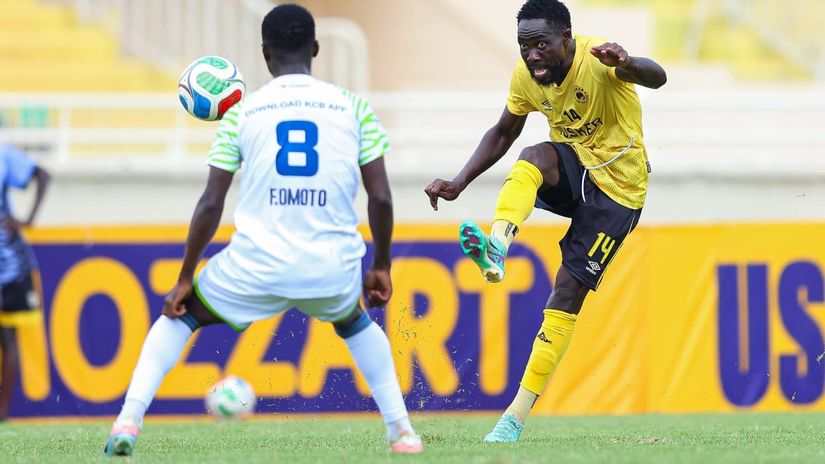
Tusker FC booked their place in the Mozzart Bet Cup final after overcoming KCB FC through a tense encounter that eventually required penalties, winning 4-3 after both sides failed to break the deadlock during regular time.
Despite the drama eventually being settled from the spot, the game itself was a strategic battle involving contrasting methods of progression, calculated defensive structures, and second-half adjustments aimed at gaining territorial superiority.
Rather than a game filled with clear-cut opportunities, it became a contest of positional occupation, pressing structures, and gradual momentum shifts.
This analysis explores the tactical dynamics that shaped the match, from the starting structures to the subtle adjustments that eventually carried Tusker into the final.
Both teams started with nominal 4-3-3 systems, but as always, formations merely provided reference points rather than fixed realities.
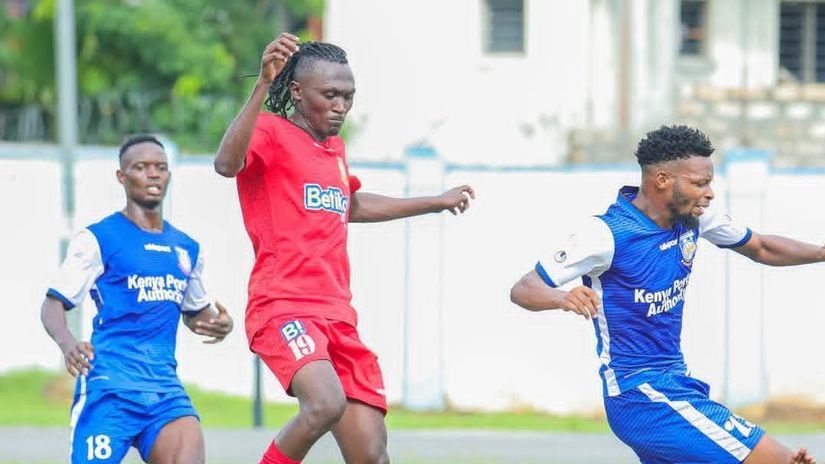
Tusker lined up with Pavelh Ndzila in goal behind a defensive line of Eugene Ikutwa, Thomas Teka, Charles Momanyi, and Servyl Akouala.
Denis Iguma and Fabian Adikiny operated as the deeper midfield pair while Chrispine Erambo functioned as the advanced midfielder behind striker Erick Kapaito.
Stephen Etyang and Thomas Omole occupied the wings.
KCB mirrored the same 4-3-3 structure on paper. Elvis Ochieng started in goal behind Fadhili Masoud, Clyde Senaji, Amatton Samunya and Mohamed Siraj.
Humphrey Mieno and Fortune Omotto formed the midfield base while Richard Omondi operated ahead of them as the advanced creator.
Boniface Omondi and December Kisakah provided width around striker Francis Kahiro.
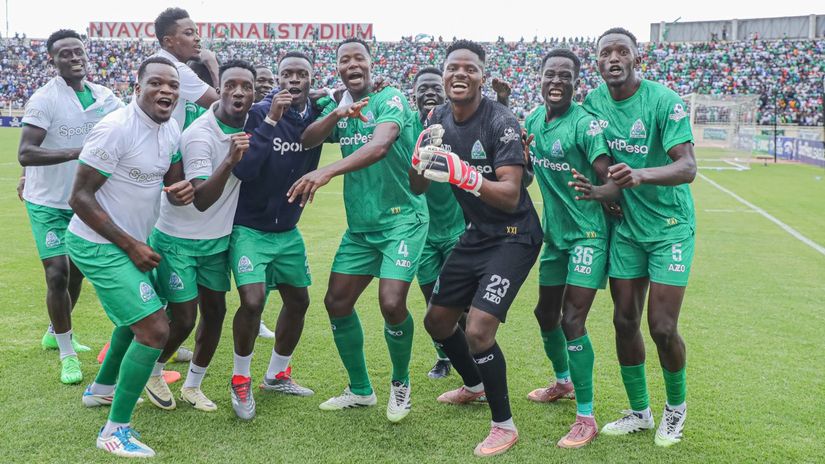
Very early in the game, it became clear that the two teams interpreted their systems differently both in and out of possession. KCB's attacking structure relied heavily on stretching the pitch horizontally and using wide areas as the primary route of progression.
Rather than building centrally for long periods, they frequently sought to access Boniface Omondi and December Kisakah through midfield progression from Humphrey Mieno before delivering into dangerous areas.
Tusker, meanwhile, defended in a compact 4-4-2 mid-block whenever possession was lost.
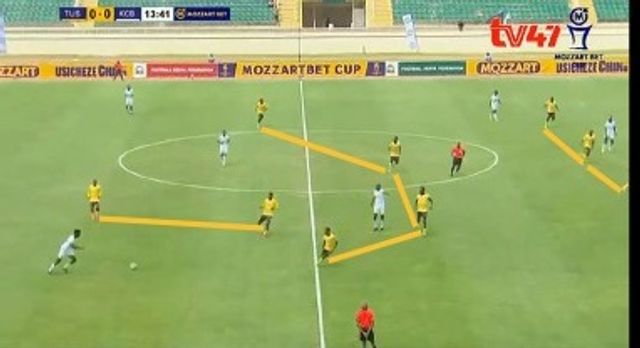
Erambo stepped higher alongside Kapaito, transforming the front line into two players screening central progression while the midfield four stayed compact behind them.
The objective of this structure was clear. Tusker wanted to deny KCB access to the central pockets and instead force them toward the wings.
This defensive setup created an interesting tactical relationship. KCB were already attempting to attack through wide zones, but Tusker's compact shape encouraged this further by closing interior passing lanes.
Consequently, KCB found themselves repeatedly circulating possession into wider areas before attempting deliveries toward Francis Kahiro.
The attacking logic behind KCB's approach was relatively straightforward. Francis Kahiro served as the central reference point, not only as a target for crosses but also as a physical focal point capable of receiving aerial deliveries and bringing teammates into play.
Richard Omondi's late movements into attacking spaces added another layer of unpredictability because he could arrive untracked from deeper positions.
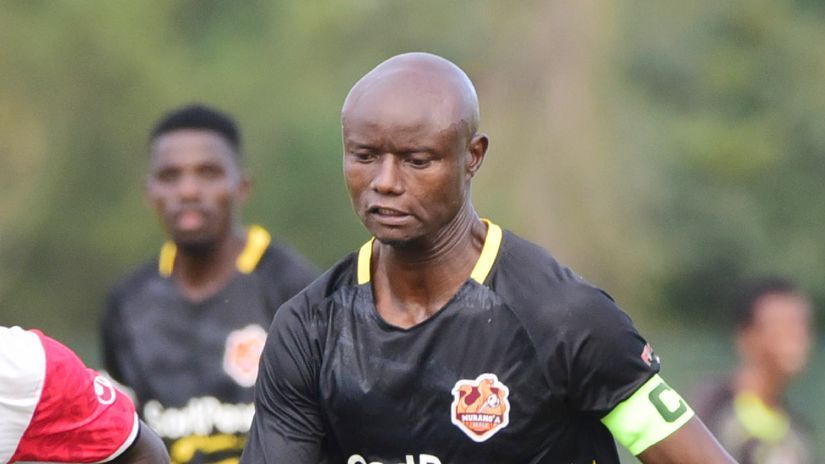
Humphrey Mieno became extremely important in this process. His vertical passing repeatedly attempted to bypass Tusker's pressing structure.
Instead of recycling possession endlessly across the defensive line, Mieno looked to thread passes over or through the midfield block and immediately connect attacking phases.
These vertical actions aimed to break defensive lines quickly and force Tusker's midfield into recovery situations

Tusker's build-up structure offered a very different positional picture. During early progression phases, goalkeeper Pavelh Ndzhila effectively created a deeper base by positioning the central defenders close to him, while the fullbacks also dropped deeper alongside them.
This often created a temporary back-five structure at the base of possession.
Ahead of this deeper line, Denis Iguma and Fabian Adikiny positioned themselves as the next passing platform. The objective behind this setup was to gain superiority against KCB's first pressing line, which resembled a front-four press emerging from their out-of-possession 4-2-3-1 structure.
Rather than simply maintaining numerical balance, Tusker introduced situational rotations to destabilise KCB's shape. Etyag occasionally drifted infield from the left wing into midfield zones, creating additional central numbers.
Simultaneously, right-back Eugene Ikutwa inverted at times, moving inside rather than staying permanently on the touchline.
These movements created decision-making problems for KCB's midfield structure.
Once Etyag drifted centrally and Ikutwa stepped inside, KCB's zonal references had to decide whether to follow movement or maintain shape. Such rotations were not dramatic positional changes, but they subtly manipulated spacing and passing angles.
Tusker's attacking strategy also contained a direct component. Erick Kapaito and Chrispine Erambo continuously made runs behind KCB's defensive line. Instead of building slowly toward the final third every time, Tusker frequently looked for penetrative passes from midfield or direct balls over the top.
Fabian Adikiny played a major role here. Much like Mieno for KCB, he repeatedly looked for line-breaking deliveries capable of bypassing defensive layers. This created moments where Tusker could immediately progress from deeper zones into attacking territory.
Neither side completely controlled the first half. In fact, caution defined much of the opening stages. Both teams attempted long-range efforts, showing a degree of hesitancy in entering crowded central spaces near the penalty area.
Rather than risking overcommitment, they often settled for shots from distance.
The game gradually opened after the 40th minute. KCB's best chance illustrated many of their tactical themes.
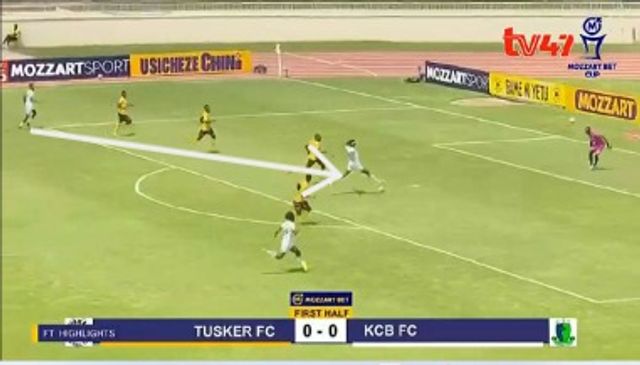
Richard Omondi delivered from the left side toward Francis Kahiro, whose positioning created danger inside the penalty area. However, Charles Momanyi produced an outstanding intervention to prevent a likely scoring opportunity.
The second half began with KCB taking territorial control. Their attacks became more frequent, and their circulation from midfield into wide areas became quicker. They also won several set-piece situations, helping sustain pressure and shift momentum.
Tusker responded decisively in the 62nd minute. The withdrawal of Stephen Etyang and Thomas Omole for Yakeen Muteheli and Ian Simiyu represented more than fresh legs. It signalled a shift in attacking intention.
The new profiles introduced a greater pace and wider positioning. Tusker subsequently became far more direct in transition moments, attacking spaces aggressively rather than emphasising patient combinations.
KCB later responded with substitutions of their own, introducing Kelvin Etemesi and Vincent Ondabu for Boniface Omondi and Kisakah.
While the changes attempted to restore attacking intensity, KCB squandered two important opportunities and failed to capitalise on their territorial superiority.
.jpg)
Ultimately, the tactical battle was defined by structures rather than statistics. KCB controlled wide progression and territorial phases, but Tusker consistently found mechanisms to resist pressure and threaten through direct transitions.
The match became a story of compact defensive organisation, controlled rotations, and adaptation under pressure.