


TACTICAL ANALYSIS: How reigning CHAN champions Senegal edged Nigeria





Reading Time: 4min | Thu. 07.08.25. | 19:35
This match was a classic display of tactical discipline, compact defensive shapes, and ruthless exploitation of transition moments, hallmarks of tournament football
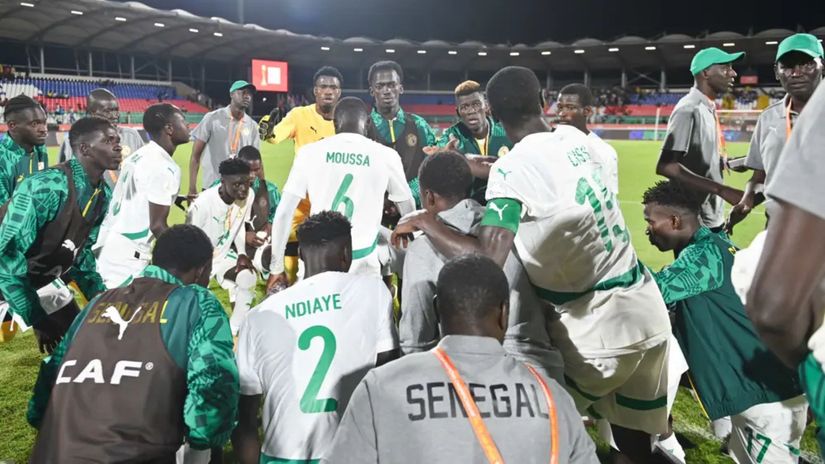
Senegal began the defence of their African Nations Championship (CHAN) crown with a calculated 1-0 win over Nigeria in a tightly contested Group A encounter at Amani Stadium in Zanzibar.
Follow our WhatsApp channel for more news
The result not only earned the Lions of Teranga a perfect start to the tournament but also extended their unbeaten run in CHAN opening matches.
This match was a classic display of tactical discipline, compact defensive shapes, and ruthless exploitation of transition moments, hallmarks of tournament football.
Although Nigeria enjoyed the lion’s share of possession at 58%, they failed to convert control into penetration. Each side managed just a single shot on target, a statistic that underlined both the game’s tactical balance and Senegal’s clinical edge in key moments.
Structure and Setup
Both teams started in identical 4-4-2 formations, providing a structural mirror that led to significant midfield congestion and limited central spaces.
Souleymane Diallo started in goal for Senegal, shielded by a back four of Daouda Ba and Joseph Layousse as fullbacks, with Baye Assane and Seyni Mbaye in central defence.
The midfield double pivot featured Moussa Cissé and Mbaye Yaya, flanked by Libasse Gueye and Ameth Niang, while Christian Gomis and Serigne Koite led the line.
Senegal’s approach blended controlled buildup with more direct verticality. In settled buildup, they often bypassed the midfield entirely, progressing the ball via wide channels or long balls into the front two.
The fullbacks, especially Layousse on the left, played a pivotal role in carrying the ball through the half-spaces, particularly in the first half when Nigeria lacked a natural right winger.

This created recurring isolation scenarios where Layousse could advance with minimal pressure, as Nigeria was forced to stretch a midfielder wide to provide defensive coverage.
Contrasting Attacking Approaches
In possession, Senegal evolved into a 4-2-4 shape, with wingers pushing high and isolating Nigeria’s fullbacks. The plan was to create 1v1s out wide, then shift centrally once the fullbacks overlapped.
When fullbacks like Ba or Layousse joined the attack, Gueye and Niang would invert into the half-spaces, attempting to create overloads and central connections.
However, Nigeria’s central compactness remained solid, often stifling these inside movements before they could develop into high-quality chances.
In contrast, Nigeria’s approach was heavily central. The Super Eagles focused on playing through midfield corridors and short vertical combinations. But Senegal’s defensive structure denied space effectively.
With the wingers marking inside in the defensive phase, Senegal’s 4-4-2 block was tight and suffocating. This closed central lanes and forced Nigeria into wide areas, where they lacked the one-on-one creativity or overlapping dynamism to pose a consistent threat.
Midfield Duels and Disruption
One of the defining features of the game was Senegal’s midfield pressing scheme. While their base shape was zonal, there were extended moments where it morphed into man-oriented pressing, particularly when the ball entered the Nigerian midfield.
Cissé and Yaya closed down quickly, guiding Nigerian midfielders away from vertical passes. At times, it appeared that Senegal were employing a matchup-based press, targeting specific Nigerian ball carriers.
When Nigeria attempted to gain a tactical edge by shifting Jabbar Olasunkamni, their only natural winger, from the flank into central areas to create overloads, Senegal responded intelligently.
Koite dropped into midfield zones, denying Nigeria the numerical superiority they sought. This clever adaptation by Senegal continued to starve the Nigerian front line of service.
The match-winner came in the 75th minute, a product of both Senegal’s tactical awareness and Nigeria’s risk-laden attacking posture. As Nigeria pushed more bodies forward in search of a breakthrough, they left exploitable gaps behind their defensive line.
A defensive clearance by Ndiaye found Libasse Gueye, who had tucked inside during Senegal’s defensive phase. Without hesitation, Gueye released a first-time pass behind the high Nigerian line, exploiting the space vacated.
Serigne Koite timed his run to perfection, beat the Nigerian goalkeeper to the ball, and squared it to Christian Gomis, who arrived on the blind side and applied a composed first-time finish. It was a textbook transition goal, direct, vertical, and clinical.
This match was a masterclass in defensive organization and game management from Senegal. Despite conceding the majority of possession, they maintained tactical discipline, disrupted Nigeria’s central play, and pounced when an opportunity presented itself.
The low shot count, just one on target for each team, underscored how limited the clear-cut chances were, making Senegal’s ruthlessness in front of goal even more significant.
Nigeria, for all their ball control, lacked final-third invention and were ultimately punished for over-committing late in the game. Senegal’s victory was a statement of tactical maturity and efficiency, reaffirming their status as CHAN title holders with aspirations of going deep once again.