


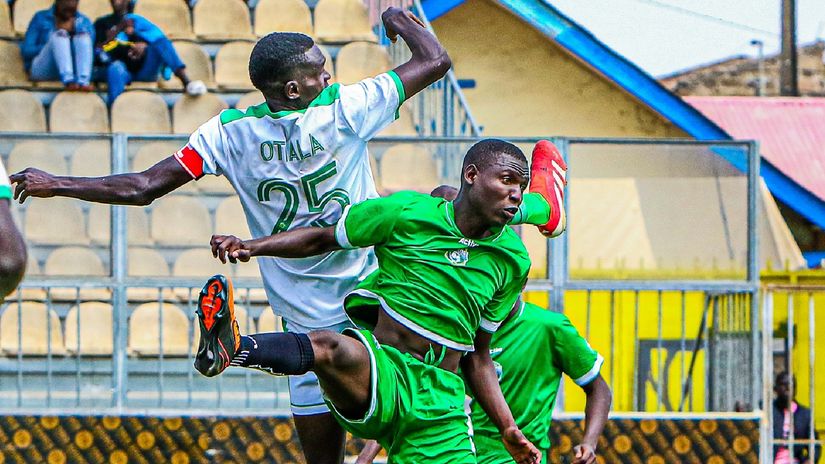
Tactical Analysis: How FKFPL debutants Nairobi United overwhelmed Kariobangi Sharks to clinch Elite Cup


Reading Time: 5min | Mon. 08.09.25. | 10:53
The Mozzart Bet Cup winners will now turn their focus on the league and CAF Confederation Cup assignments
The Elite Preseason Cup clash at Dandora Stadium between Kariobangi Sharks and Nairobi United offered a fascinating tactical battle that underscored the developmental strides both sides have covered ahead of the new campaign.
Nairobi United emerged 3–1 winners after the high-intensity encounter that was defined less by the scoreline, but more by the tactical nuances: pressing structures, in-possession strategies, rest-defense mechanisms, and how substitutions influenced the rhythm of the match.
Follow our WhatsApp channel for more news
First Half: Pressing duels, wing dynamics, mid-block battles, set-piece threats, and key turning points
From the opening whistle, Nairobi United set the tone with an aggressive high pressing scheme in a 4-2-4 out of possession, with Gideon Omondi, Frank Ouya, and Enock Machaka leading a man-to-man high press that consistently disrupted Sharks’ attempts to build from the back.
Despite the pressure, Kariobangi Sharks struck first in the sixth minute.
Marvivian Kesa created separation in Nairobi United’s box, received a central pass, and fired clinically to give Sharks a 1–0 lead.
Nairobi United’s pressing commitment forced turnovers, created early shooting chances, while Sharks’ Andreas Odhiambo attempted to drop between defenders to aid progression, but was often contained by their compactness.
Offensively, Nairobi relied on diagonal switches, with Kevin Osanya’s long passes from the left repeatedly finding Charo Majaliwa on the right.
This stretched Sharks’ back line and created one-v-one isolations, most notably in the 23rd minute when Majaliwa drew a foul in a dangerous area, though Dancan Omalla’s free kick was blocked.
Sharks responded with a high 4-4-2 mid-block built around midfielders Andreas and Patillah Omoto.
Zablon Kutela at left wing back, and Faiz Opande at right-back/RCB, looked to win the ball and hit quick transitions through Andreas before advancing to Kutela on the left and into half-spaces, but Nairobi’s rest defense - typically a back three of Yusuf Mainge, Osanya, and Enock Machaka - largely nullified these attempts.
Set pieces offered moments of tension, as Omalla’s 14th-minute corner deliveries tested Sharks’ mixed zonal-man system, while Nairobi themselves struggled to defend corners but were spared by Sharks’ poor execution.

Key turning points followed: in the 25th minute Gideon Omondi’s pressing forced a turnover in the box only for Ouya to hit the crossbar.
In the 29th minute, Ouya’s dribbling drew a foul in the penalty area, allowing Machaka to convert from the spot and level at 1–1.
Just before the break, Ouya dropped to combine with Lesley Owino, who released Omalla on the right to finish clinically for 2–1 score line.
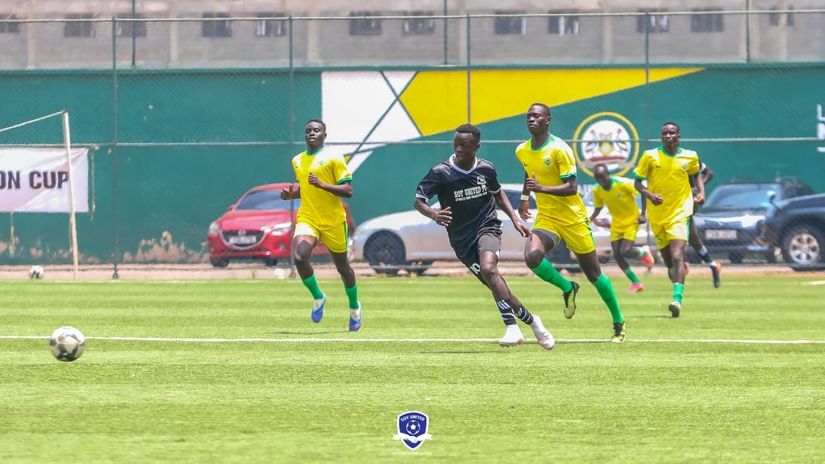
The half ended with Nairobi marginally on top.
Their pressing and wing dynamics carved out clearer chances, while Sharks struggled to penetrate despite neat midfield triangles between Omoto, Andreas, and Kutela.
Second Half: Structural adjustments and substitutions
Sharks began the second half with notable tactical changes, introducing Wayne Mbuya and Humphrey Aroko to refresh the midfield and attack.
Mbuya provided width on the right through combinations with Faiz, while Kutela pushed higher on the left to stretch Nairobi’s defensive line.
Out of possession, Sharks retained their 4-4-2 mid-block, with Aroko and Mark-Vivian Kesa pressing aggressively from the front.
Nairobi, however, responded intelligently: while they maintained man-to-man pressing in advanced zones, they dropped into zonal coverage deeper in their half, tightening central access.
At the hour mark, Brian Margare replaced Lesley Owino to act as a deeper pivot in build-up, while Majaliwa made way for Isaac Omweri on the left, as Omalla switched to the right.
Margare’s ability to drop between the center-backs gave Nairobi stability against Sharks’ pressing, balancing their wide rotations.
Meanwhile, Sharks focused their attacks down the left, where Kutela’s advanced positioning exposed gaps left by Nairobi’s right-back.
Jacob Alvaro’s introduction for Omoto in the 63rd minute furthered their distribution from deep, but despite promising territorial play, Sharks lacked sharpness in the final third.
By the 70th minute, Nairobi refreshed their frontline with Michael Karamor, Ashraf Thaire, and Chris Opondo replacing Ouya, Omalla, and Machaka, shifting into a compact 4-1-3-2 defensive shape.
Their set-piece organization also improved, with two front-post markers and strong six-yard box coverage limiting Sharks’ aerial threat.
Sharks responded with Jahson Wakachala for Andreas (77th minute), seeking creativity.
They did win several fouls in dangerous areas, with Aroko narrowly missing the target in the 80th minute.
.jpg)
However, their sloppiness in possession left them vulnerable to turnovers.
In the 86th minute, substitute Thaire exploited the space behind Sharks’ high line to score from a through ball, sealing Nairobi’s 3-1 victory.
The match’s defining tactical themes were clear: Nairobi’s aggressive man-to-man press against Sharks’ mid-block and transitions.
The emphasis on wide dynamics, with Nairobi’s diagonal switches producing the end product, while Sharks’ left-sided focus lacked payoff, was also a key takeaway from the match.
The decisive impact of substitutions, particularly Magare and Ashraf, and rest-defense structures were also observed in the match.
The 3–1 scoreline reflected Nairobi United’s superior execution of a clear tactical plan.
Their intense high pressing, rest defense organization, and effective use of wide rotations overwhelmed a Sharks side, that showed glimpses of fluid passing but lacked penetration and control in decisive moments.
For Kariobangi Sharks, positives included Kesa’s ability to drop deep and link play, as well as midfield triangles that occasionally bypassed pressure.
Yet their vulnerability in rest defense and inability to turn wide overloads into end product remain areas to refine.
For Nairobi United, this performance underscored a growing tactical maturity.
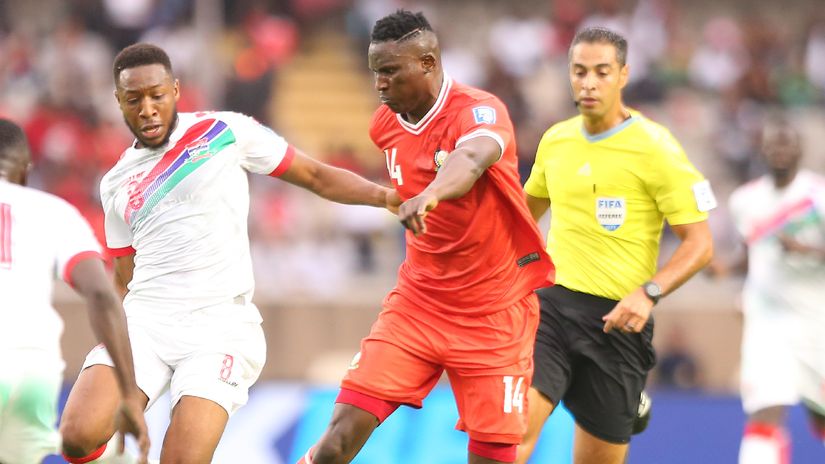
From their pressing triggers to their in-possession balance and impactful substitutions, they demonstrated a team capable of controlling games in multiple phases.
If this match is a marker, Nairobi will approach the coming season as not just participants but genuine contenders.
Final Score: Kariobangi Sharks 1 – 3 Nairobi United
Scorers:
● 6’ Marvivan Kesa (Kariobangi Sharks)
● 31’ Enock Machaka (Nairobi United)
● 44’ Dancan Omala (Nairobi United)
● 86’ Ashraf Thaire (Nairobi United)